5 Health AssessmentBy Kel Healthcare Medical Team
5 Signs You're Overdue for a Full Health Assessment
Life gets busy, and a checkup is easy to keep pushing to "next month." But your body often sends quiet signals long before anything feels seriously wrong, and recognizing these health assessment.
Introduction
Life gets busy, and a checkup is easy to keep pushing to "next month." But your body often sends quiet signals long before anything feels seriously wrong, and recognizing these health assessment signs early can change the entire course of your health outcomes.
Many people assume they're fine simply because they don't feel sick. In reality, conditions like high blood pressure, prediabetes, and early-stage organ strain often show no obvious symptoms until they've progressed. That's exactly why understanding the difference between an annual physical vs comprehensive assessment, and knowing when you actually need the more thorough option, matters so much.
In this article, we'll walk through the five clearest signs that you're overdue for a full health assessment, explain why early detection is so valuable, and give you a simple path forward if any of these signs sound familiar.
Why Health Assessment Signs Are Easy to Miss
Most health assessment signs aren't dramatic. They show up as small, easy-to-dismiss changes:
- Feeling "a little more tired than usual"
- Occasional headaches or dizziness you write off as stress
- Slight weight changes you attribute to diet or season
- Sleep that feels less restorative than it used to
None of these feel urgent on their own. But together, they're often the body's early warning system and the reason many chronic conditions go undiagnosed for years.
Annual Physical vs Comprehensive Assessment: What's the Difference
Understanding annual physical vs comprehensive assessment differences helps you know which one you actually need.
- Annual physical: A shorter visit focused on basic vitals, a general exam, and standard screenings appropriate for your age.
- Comprehensive assessment: A deeper evaluation that includes expanded lab panels, risk-based screenings, imaging when relevant, and a detailed review of your family and lifestyle history.
If it's been more than a year since either type of visit, or if any of the signs below apply to you, a comprehensive assessment is usually the more appropriate next step.
The 5 Signs You're Overdue for a Full Health Assessment
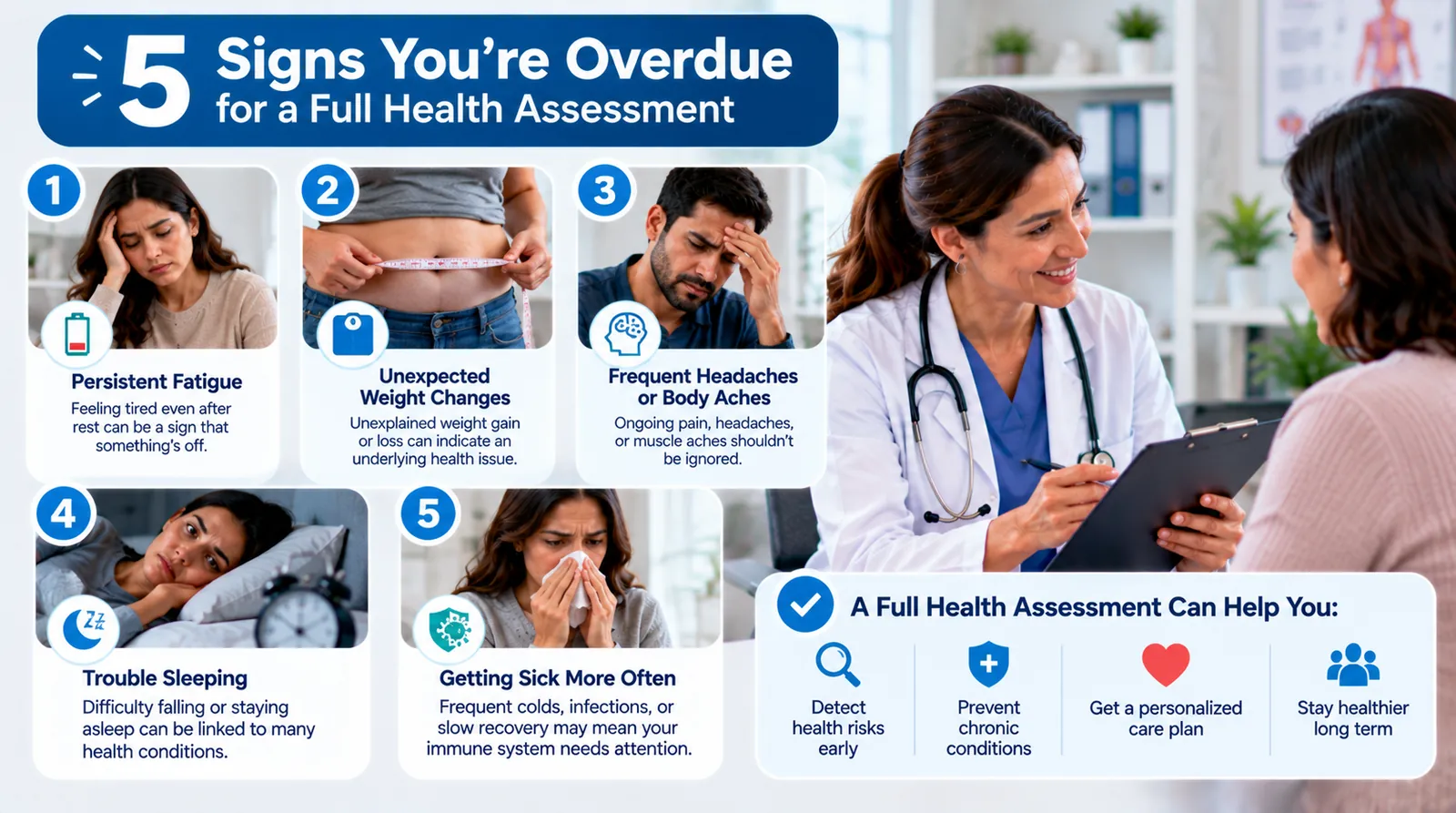
Sign 1: It's Been Over a Year Since Your Last Full Body Checkup
If you can't remember your last full-body checkup, that alone is a sign. Annual screening intervals exist for a reason: many conditions develop gradually, and yearly testing is what catches the shift from "normal" to "concerning."
Sign 2: You've Noticed Unexplained Fatigue or Sleep Changes
Persistent fatigue, despite adequate sleep, can point to thyroid issues, anemia, blood sugar imbalances, or other underlying conditions that only bloodwork can confirm.
Sign 3: Your Weight, Appetite, or Digestion Has Shifted
Unexplained weight loss or gain, appetite changes, or ongoing digestive discomfort are common health assessment signs that deserve a closer look through a comprehensive assessment rather than a quick visit.
Sign 4: You Have a Family History You Haven't Acted On
If close relatives have had heart disease, diabetes, or cancer, your personal risk is higher, even if you feel completely fine. A comprehensive assessment factors in family history in a way a brief physical often doesn't.
Sign 5: You're Managing Stress, but Haven't Checked Your Numbers
Chronic stress affects blood pressure, blood sugar, and heart health. If you've been under prolonged stress without checking your actual numbers, it's a strong sign you're due for a full evaluation.
Why Early Detection Matters More Than You Think
Early detection is one of the most powerful tools in preventive medicine, and here's why it matters so much:
- Conditions caught early are almost always easier and less expensive to treat
- Lifestyle changes are more effective when started before a condition progresses
- Trend data from regular assessments helps your doctor act faster on subtle changes
- Peace of mind reduces the mental load of "not knowing"
What Happens If You Ignore These Health Assessment Signs
Ignoring these signs doesn't make them disappear it usually just delays the diagnosis until symptoms become harder to manage. Common consequences include:
- Conditions progressing from early-stage and reversible to chronic and long-term
- Higher treatment costs and more complex care plans
- Reduced treatment options once a condition advances
- Increased stress and uncertainty about your own health status
How to Act on These Signs Today
If any of these signs sound familiar, here's a simple path forward:
- Book a comprehensive health assessment rather than a basic physical
- Write down your symptoms and family history before your visit
- Ask your provider directly whether an annual physical vs. a comprehensive assessment makes more sense for your situation
- Follow through on any recommended screenings, even if you feel fine
Conclusion
Your body rarely announces serious health issues loudly it whispers through small, easy-to-dismiss signs. Recognizing these health assessment signs early, understanding the real difference between an annual physical vs. a comprehensive assessment, and prioritizing early detection can meaningfully change your long-term health outcomes.
If any of the five signs in this article sound familiar, don't wait for symptoms to get louder. Schedule a comprehensive health assessment and get a clear, complete picture of where your health stands today.
Frequently Asked Questions
More from our blog
 Comprehensive Health Assessment
What Really Happens During a Comprehensive Health Assessment
Most people put off their yearly checkup simply because they don't know what to expect. If the words "physical exam" or "screening panel" make you picture a rushed ten-minute visit and a blood.
Medically reviewed by Kel Healthcare Medical Team
Read Article Walk-Ins Welcome
: How to Get Same-Day Care at Any of Our 2 Locations
Getting sick or injured rarely happens on a convenient schedule, and waiting days for an appointment isn't always an option. That's exactly why KEL Healthcare runs as a true walk-in clinic with no.
Medically reviewed by Kel Healthcare Medical Team
Read Article Book Your Comprehensive Health Assessment
 Woodside NY: What's Included
If you've been searching for a comprehensive health assessment IN Woodside NY residents can rely on, KEL Healthcare has built its reputation on exactly that: thorough, unhurried evaluations that.
Medically reviewed by Kel Healthcare Medical Team
Read Article