Disease Management NeedsBy Kel Healthcare Medical Team
Why Chronic Disease Management Needs More Than a Yearly Visit
For many patients, an annual checkup feels like enough a single yearly appointment to confirm everything is still on track. But for anyone living with a chronic condition, that single visit is only.
Introduction
For many patients, an annual checkup feels like enough, a single yearly appointment to confirm everything is still on track. But for anyone living with a chronic condition, that single visit is only a snapshot, not the full picture. Real chronic disease management happens in the months between appointments, not just during them.
Conditions like hypertension, diabetes, and high cholesterol don't pause between visits. Blood pressure fluctuates with stress and diet. Blood sugar responds to sleep, activity, and medication timing. Without consistent monitoring and support throughout the year, it's easy for small shifts to go unnoticed until they become larger problems.
In this article, we'll explain why one visit a year isn't enough, what ongoing chronic care actually looks like in practice, and how something as common as hypertension management illustrates the difference between reactive and proactive care.

What Is Chronic Disease Management?
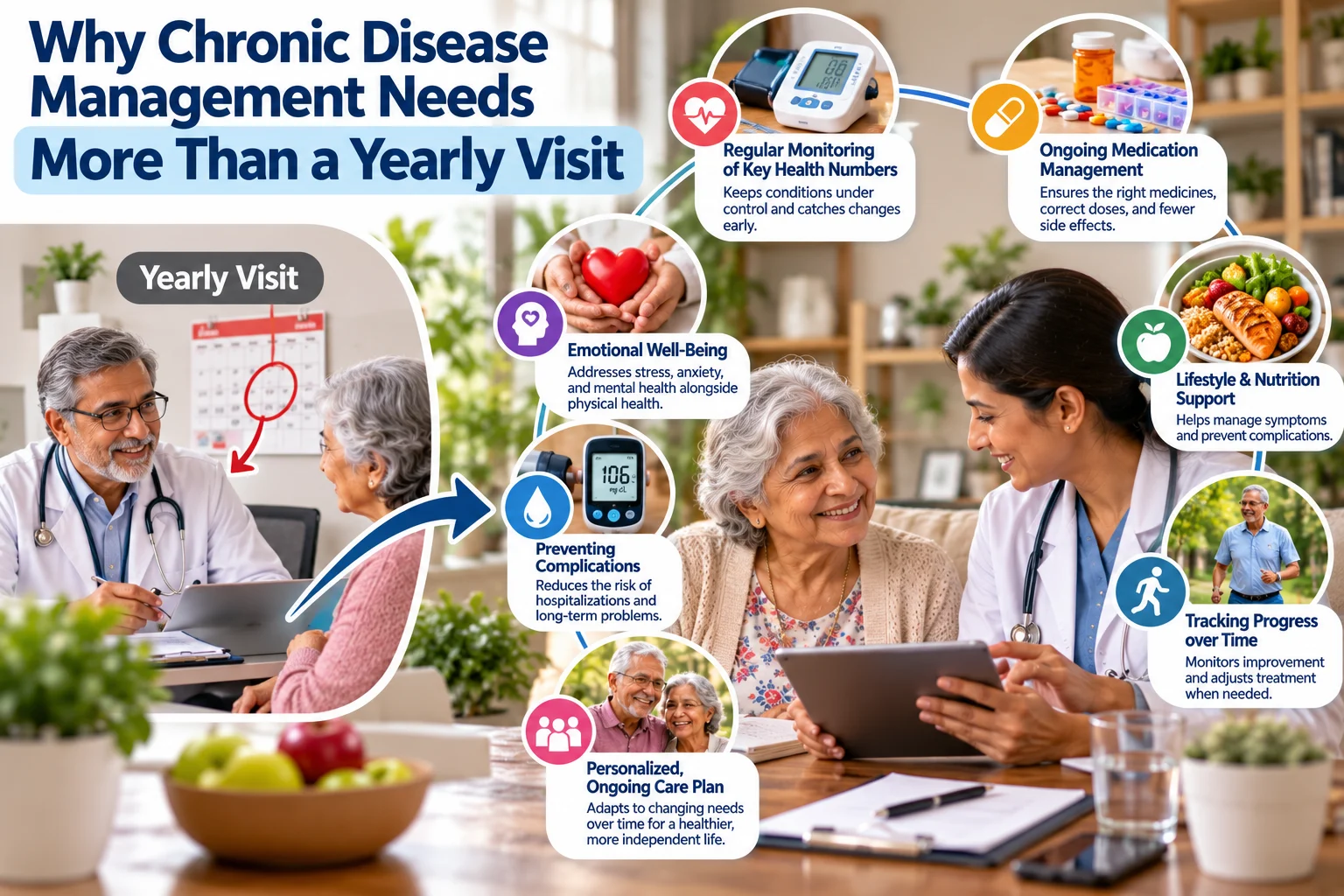
Chronic disease management refers to the ongoing process of monitoring, treating, and adjusting care for long-term conditions, rather than treating them as a one-time diagnosis to check off. It typically includes:
- Regular monitoring of key health markers
- Medication management and adjustments over time
- Lifestyle support for nutrition, activity, and stress
- Coordinated communication between patients and their care team
Unlike acute care, which resolves a single issue, chronic disease management is a continuous relationship between patient and provider.
Why One Visit a Year Isn't Enough
A single annual visit can only capture how you're doing on one specific day. Consider what it misses:
- Blood pressure or blood sugar trends across the other 364 days of the year
- Gradual medication effectiveness changes that build slowly over months
- Lifestyle shifts, a new job, added stress, or diet changes, that affect your numbers
- Early warning signs that would otherwise be caught through more frequent check-ins
By the time a yearly visit reveals a problem, it may have been developing quietly for months.
The Case for Ongoing Chronic Care
Ongoing chronic care shifts the model from reactive to proactive. Instead of waiting for a yearly appointment to catch issues, ongoing care typically involves:
- More frequent check-ins, whether in-person, virtual, or through remote monitoring
- Regular lab work spaced appropriately for your specific condition
- Faster medication or lifestyle adjustments based on real-time trends
- A stronger, more collaborative relationship between patient and provider
This continuous approach tends to catch problems earlier and adjust treatment before small issues become bigger ones.
Hypertension Management as a Real-World Example
Hypertension management is one of the clearest examples of why ongoing care matters. Blood pressure can shift daily based on stress, sleep, diet, and activity, which means a single office reading only tells part of the story.
Effective hypertension management usually includes:
- Regular home blood pressure monitoring between visits
- Tracking readings over weeks, not just a single office visit
- Adjusting medication dosage or timing based on trends, not one-off numbers
- Addressing lifestyle factors like sodium intake, stress, and activity levels

What Effective Chronic Disease Management Looks Like
Strong chronic disease management typically rests on three pillars.

Regular Monitoring
Consistent tracking of key markers, blood pressure, blood sugar, weight, or other relevant metrics, gives your care team real data to work with, rather than a single point-in-time reading.
Medication Adjustments Over Time
Chronic conditions often require dosage or medication changes as your body, lifestyle, or condition evolves. Ongoing check-ins make these adjustments faster and safer than waiting for a yearly review.
Lifestyle Support Between Visits
Nutrition, activity, sleep, and stress management all influence chronic conditions. Ongoing care means these factors are addressed continuously, not just discussed once a year.

Signs Your Current Care Plan May Not Be Enough
Your current approach may need to shift toward more frequent care if:
- You only see your provider once a year, regardless of how your numbers trend
- You don't have a clear home monitoring routine for your condition
- Medication adjustments feel infrequent or delayed
- You're unsure what your numbers have looked like over the past several months
Building a Better Chronic Disease Management Routine
If you're ready to move toward more effective chronic disease management, consider:
- Asking your provider how often you should realistically be checking in, based on your condition
- Setting up a simple home monitoring routine for your key health markers
- Keeping a log of readings, symptoms, and lifestyle changes to share at each visit
- Treating your care plan as something that evolves, not something finalized once a year
Conclusion
Chronic disease management was never meant to happen in a single yearly appointment, it's an ongoing process that depends on consistent monitoring, timely adjustments, and steady communication with your care team. Whether it's hypertension management or another long-term condition, the patients who see the best outcomes are usually the ones treating their care as continuous, not occasional. If your current care plan is built around a single annual visit, it may be time to talk to your provider about a more consistent, ongoing approach.
Frequently Asked Questions
More from our blog
 A Step-by-Step Care Plan
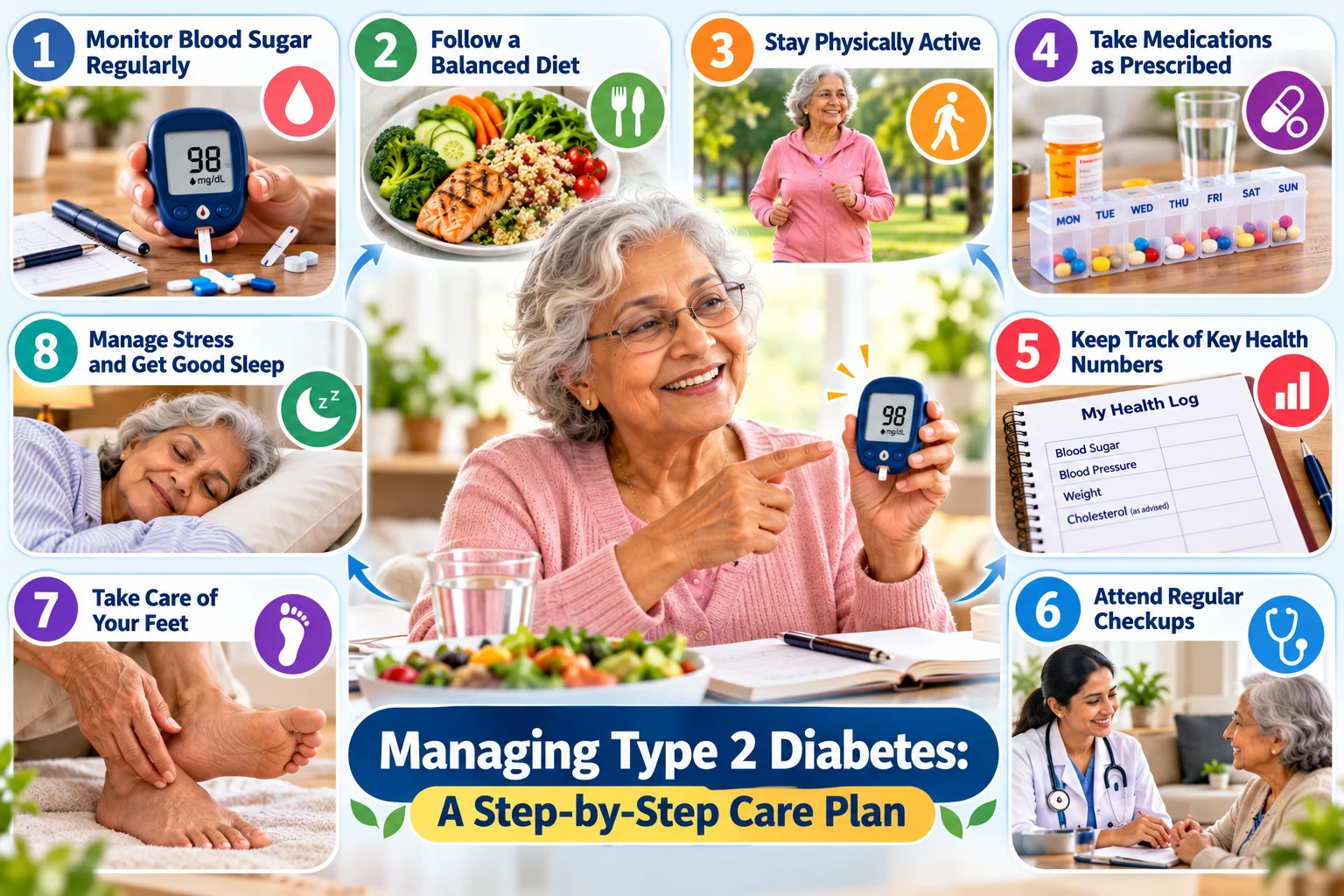
Managing Type 2 Diabetes: A Step-by-Step Care Plan
A type 2 diabetes diagnosis can feel overwhelming at first, but it's also one of the most manageable chronic conditions when you have a clear, structured plan. Rather than reacting to numbers day by.
Medically reviewed by Kel Healthcare Medical Team
Read Article Bloodwork Results
Understanding Your Bloodwork Results: A Patient's Guide
Getting a lab report back full of abbreviations, numbers, and reference ranges can feel more confusing than reassuring. If you've ever stared at a page of results wondering what any of it actually.
Medically reviewed by Kel Healthcare Medical Team
Read Article comprehensive health
5 Health Assessment Signs That Mean You're Overdue for a Full Checkup
Life gets busy, and a checkup is easy to keep pushing to "next month." But your body often sends quiet signals long before anything feels seriously wrong, and recognizing these health assessment.
Medically reviewed by Kel Healthcare Medical Team
Read Article