Women's Health ScreeningBy Kel Healthcare Medical Team
Women's Health Screening by Decade: Your 20s Through 60s
Women's health screening needs shift significantly as the decades pass, yet many women follow the same routine year after year without realizing their risk profile has changed. What matters at 25.

Introduction
Women's health screening needs shift significantly as the decades pass, yet many women follow the same routine year after year without realizing their risk profile has changed. What matters at 25 looks very different from what matters at 55, and staying on top of the right women's health checkups by age can catch issues while they're still easy to treat.
This isn't about doing every test at every age. It's about knowing which screenings actually matter during each stage of life, so appointments feel purposeful rather than routine for the sake of routine.
Below is a decade-by-decade breakdown of women's health screening, what to prioritize in your 20s, what shifts in your 30s and 40s, and what becomes essential from your 50s onward.
Why Women's Health Screening Changes by Decade
Hormonal shifts, reproductive milestones, and rising age-related risks all reshape what matters most at different life stages. A woman's health screening priorities in her 20s center on establishing a baseline, while screenings in her 50s and 60s focus heavily on cancer detection, bone density, and cardiovascular health.
Following a decade-based approach means fewer unnecessary tests and more focus on what's actually relevant to your body right now.
Your 20s: Building a Baseline
This decade is about establishing patterns doctors will compare against for years to come.
Recommended Screenings
- Pap smear: starting at age 21, every 3 years
- STI testing: especially with new or multiple partners
- Blood pressure check: annually
- Skin checks: for mole changes, especially with sun exposure history
- Mental health screening: increasingly standard at this age
Why It Matters
Establishing a baseline now makes it far easier to spot meaningful changes later. Many women in their 20s skip checkups simply because they feel healthy, but that's exactly when a baseline is most valuable.
Your 30s: Fertility and Early Prevention
Recommended Screenings
- Pap smear + HPV co-testing: every 5 years from age 30
- Cholesterol panel: baseline if not done already
- Thyroid function test: especially with fatigue or weight changes
- Fertility evaluation: if trying to conceive without success
- Clinical breast exam: annually
Women's health screening in the 30s often overlaps with major life decisions around family planning, making this a good decade to address fertility questions early rather than waiting.

Your 40s: Perimenopause and Rising Risk
Recommended Screenings
- Mammogram: starting at 40, per most guidelines (discuss timing with your doctor)
- Blood sugar testing: diabetes risk increases in this decade
- Bone density baseline: especially with risk factors
- Perimenopause symptom tracking: irregular cycles, mood changes, sleep disruption
This is often the decade when women's health checkups by age become noticeably more comprehensive, as cardiovascular and cancer risks begin rising.
Your 50s: Menopause and Major Screenings
Recommended Screenings
- Mammogram: annually or biannually, depending on guidelines
- Colonoscopy: starting at 45–50, then every 10 years if normal
- Bone density scan (DEXA): recommended after menopause
- Cardiovascular risk assessment: cholesterol, blood pressure, heart health markers
- Menopause management: hormone levels, symptom management options

This decade often marks the shift from reproductive-focused care to long-term disease prevention.
Your 60s: Long-Term Health Protection
Recommended Screenings
- Continued mammograms and colonoscopy follow-ups
- Bone density monitoring: fracture risk rises significantly
- Cardiovascular monitoring: heart disease risk peaks in this decade
- Vision and hearing screening
- Cognitive health check-ins
Women's health screening in the 60s is largely about maintaining independence and catching age-related conditions before they limit daily life.
Women's Health Checkup by Age: Quick Reference
| Decade | Key Screenings |
|---|---|
| 20s | Pap smear, STI testing, blood pressure |
| 30s | Pap + HPV, cholesterol, thyroid, fertility check |
| 40s | Mammogram, blood sugar, bone density baseline |
| 50s | Mammogram, colonoscopy, DEXA scan, heart health |
| 60s | Bone density, cardiovascular monitoring, vision/hearing |
When to See a Doctor Sooner
Regardless of age or schedule, don't wait for your next routine visit if you notice:
- Unusual or heavy bleeding
- A new lump or change in breast tissue
- Persistent pelvic pain
- Unexplained fatigue or weight change
- Sudden mood or sleep disruption
Conclusion
Women's health screening isn't a one-size-fits-all checklist, it's a moving target that shifts with every decade of life. Knowing which women's health checkup by age applies to you right now means fewer unnecessary tests and more focus on what genuinely protects your health.
If you're unsure which screenings you're due for, a conversation with your doctor about your age, family history, and personal risk factors is the best place to start.
Frequently Asked Questions
More from our blog
 Health Assessment Every Year
Who Should Get a Comprehensive Health Assessment Every Year?
Not everyone needs the same screening schedule, but a surprising number of people fall into the group who need a comprehensive health assessment every year. Age, family history, lifestyle, and.
Medically reviewed by Kel Healthcare Medical Team
Read Article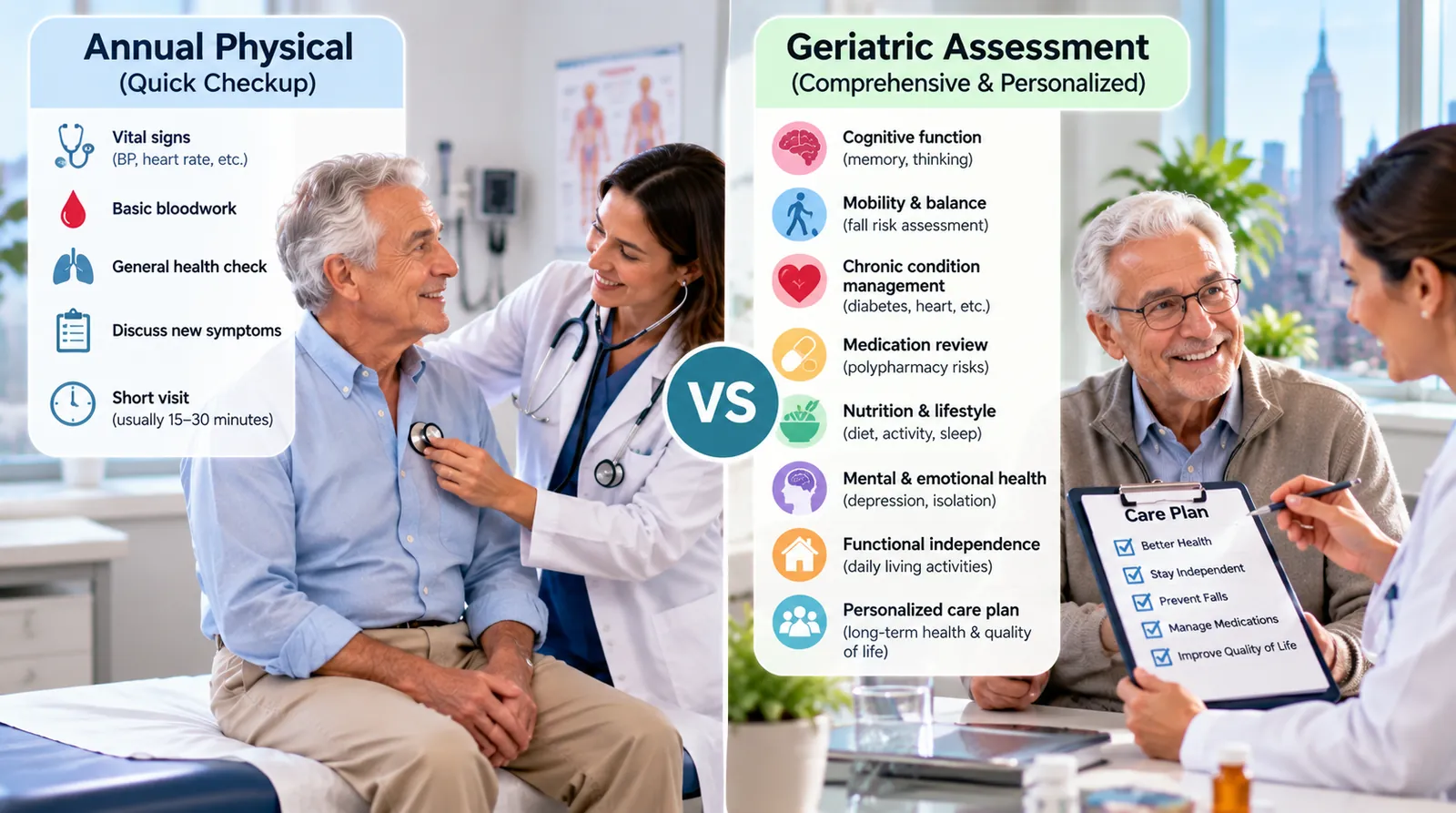 Geriatric Assessment vs. Annual Physical
: Why Seniors Are Choosing the Former
For most of adulthood, an annual physical is enough, a quick check of vitals, bloodwork, and a conversation about anything new. But somewhere past 65, that same 15-minute visit starts leaving real.
Medically reviewed by Kel Healthcare Medical Team
Read Article The Silent Condition on the Rise
Chronic Kidney Disease in Seniors: The Silent Condition on the Rise
Chronic kidney disease in seniors is often called a "silent" condition for a reason, most people lose a significant amount of kidney function before they ever notice a symptom. By the time fatigue.
Medically reviewed by Kel Healthcare Medical Team
Read Article