Allergic Reactions
Allergic Reactions: When Acute Care Is Enough and When to Call 911
Introduction
Allergic reactions range from a mildly itchy rash to a rapidly escalating medical emergency, and telling the difference quickly is genuinely one of the more important judgment calls in everyday health decisions. Knowing the line between appropriate allergic reaction treatment at an acute care center and a situation that requires calling 911 can make a real difference in outcome, especially when symptoms are moving fast.
Understanding the Range of Allergic Reactions
Allergic reactions occur when the immune system responds to a substance - food, medication, insect stings, or environmental triggers - as though it were a threat. The severity of that response varies widely from person to person and even from one exposure to the next in the same person, which is part of why a reaction that was mild last time doesn't guarantee a mild reaction this time.
Mild to Moderate Reactions: When Acute Care Fits
Many allergic reactions stay localized and manageable, involving symptoms such as:
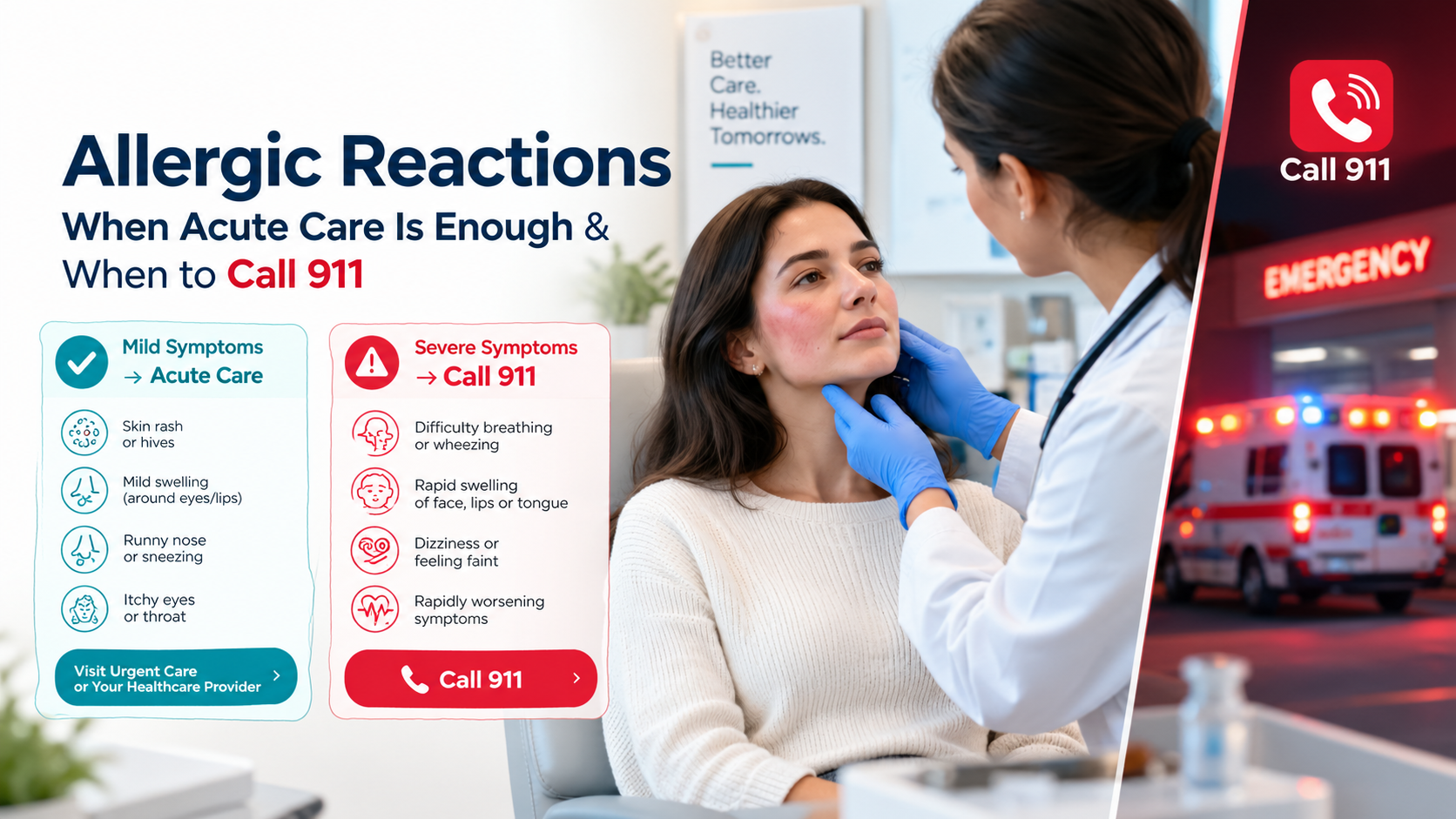
- Localized hives or itching without spreading
- Mild swelling limited to the area of contact or sting
- Sneezing, runny nose, or itchy, watery eyes
- Mild digestive upset following a suspected food trigger
For these presentations, acute care** vs. emergency** decisions typically favor acute care - a same-day visit for evaluation, symptom relief (often antihistamines or, if needed, a short course of steroids), and guidance on identifying the trigger and preventing future reactions. Acute care is also useful for follow-up after a reaction has been stabilized, including discussing whether allergy testing or a referral to an allergist makes sense.
The Warning Signs of a Severe Reaction (Anaphylaxis)
Anaphylaxis is a severe, rapidly progressing allergic reaction that is a true medical emergency. The signs can develop within minutes of exposure and may include:
- Difficulty breathing, wheezing, or a tight feeling in the throat or chest
- Swelling of the lips, tongue, throat, or face
- A sudden drop in blood pressure, causing dizziness, fainting, or a weak, rapid pulse
- Widespread hives combined with any of the above symptoms
- Nausea, vomiting, or severe abdominal cramping occurring alongside other symptoms
- A sense of impending doom or significant distress, which is a real and recognized symptom pattern in anaphylaxis
Call 911 Immediately If You See These Signs
If someone is experiencing any signs of anaphylaxis - particularly difficulty breathing, throat swelling, or a rapid drop in alertness or blood pressure - this is a call-911 situation, not a same-day acute care visit. Anaphylaxis can progress within minutes, and it requires emergency treatment, typically including epinephrine, that acute care centers and urgent cares are generally not equipped to manage at the level a true emergency requires.
If the person has a known allergy and carries an epinephrine auto-injector (such as an EpiPen), it should be used immediately at the first sign of a severe reaction, even before calling 911 - and 911 should still be called right after, since a second reaction phase (biphasic anaphylaxis) can occur even after symptoms initially improve.
Why Speed Matters So Much Here
Anaphylaxis is one of the few allergy-related situations where minutes genuinely matter. Swelling in the airway can progress from mild throat tightness to significant obstruction quickly, and blood pressure can drop precipitously. This is fundamentally different from a mild hive outbreak or localized swelling, which can safely wait for an acute care evaluation without meaningful risk of rapid deterioration.
After a Severe Reaction: Follow-Up Matters
Anyone who has experienced anaphylaxis should follow up with an allergist after the emergency has resolved, ideally to identify the specific trigger, obtain or refill an epinephrine auto-injector prescription, and develop a written action plan for future exposures. This follow-up is a reasonable next step for acute or primary care to help coordinate, even though the acute emergency itself needed the ER.
A Simple Way to Decide in the Moment
If breathing, swallowing, or consciousness is affected in any way, or if symptoms are spreading and intensifying rapidly, treat it as an emergency and call 911. If symptoms are localized, mild, and stable - not worsening as you watch them - acute care is an appropriate and often faster option for getting treated and understanding what triggered the reaction in the first place.
When genuinely uncertain, the safer choice is always to err toward emergency care. A reaction that turns out to be mild but was treated urgently costs you a bit of extra caution; a severe reaction treated too slowly can cost far more.
More from our blog
 Vaccines for Adults
Vaccines for Adults: The Preventive Care Schedule Most People Miss
Vaccines tend to get filed away as a childhood topic - something handled at pediatric visits and then largely forgotten. In reality, the adult vaccine schedule is just as structured and just as.
Medically reviewed by Kel Healthcare Medical Team
Read Article Chronic Condition
Obesity as a Chronic Condition: A Medical Approach to Weight Management
For a long time, obesity was framed almost entirely as a matter of willpower - eat less, move more, problem solved. Major medical organizations, including the American Medical Association, have.
Medically reviewed by Kel Healthcare Medical Team
Read Article Migraine and Nausea Relief IV Drips
Migraine and Nausea Relief IV Drips: What's In Them and How They Help
A migraine hits, and taking a pill suddenly feels like a genuinely bad idea; nausea's already got you avoiding anything near your stomach, and lying still in a dark room isn't cutting the pain the.
Medically reviewed by Kel Healthcare Medical Team
Read Article