Vaccines for Adults
Vaccines for Adults: The Preventive Care Schedule Most People Miss
Introduction
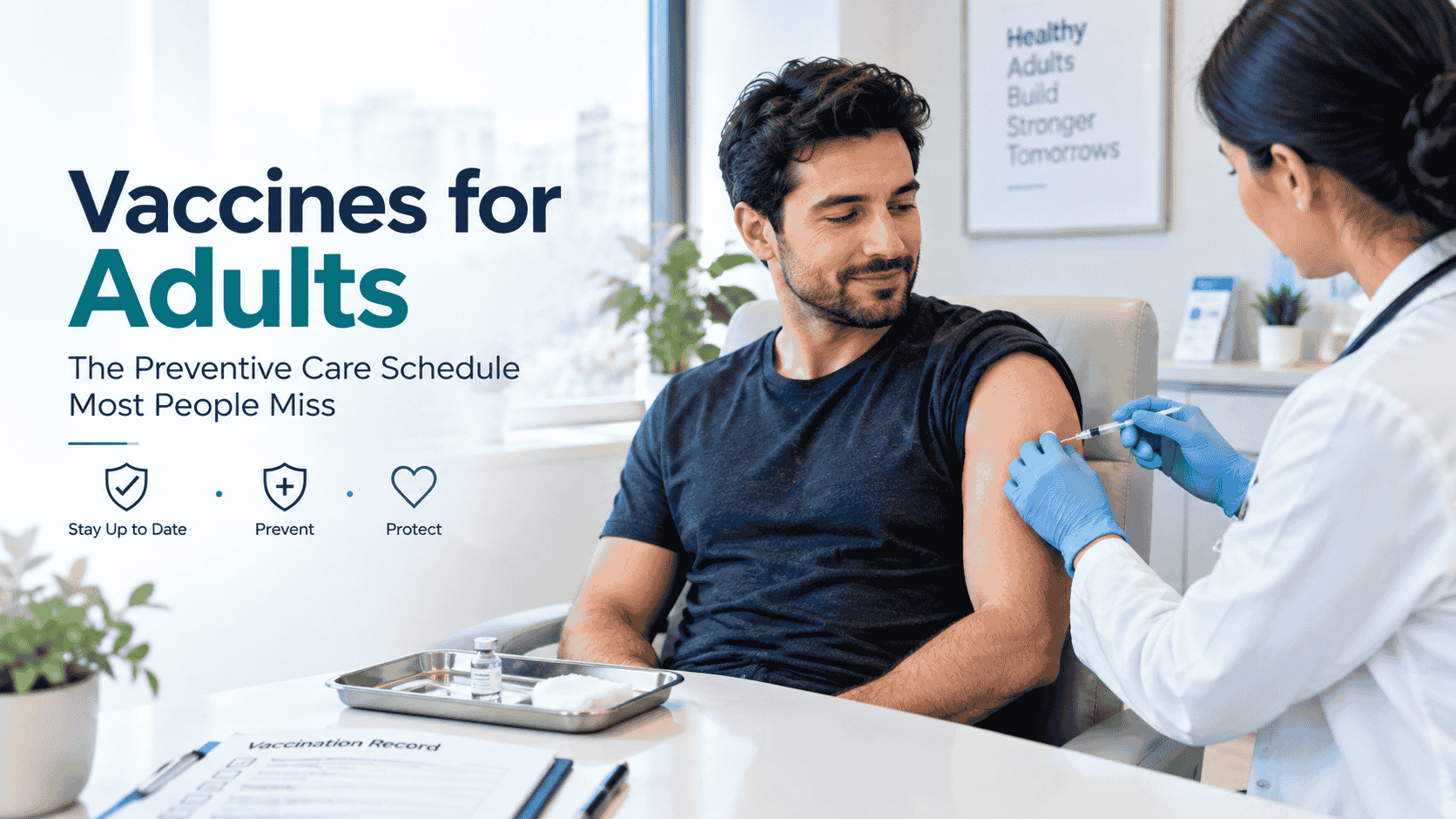
Vaccines tend to get filed away as a childhood topic - something handled at pediatric visits and then largely forgotten. In reality, the adult vaccine schedule is just as structured and just as important, and it's one of the most commonly overlooked parts of routine preventive care** immunizations**. Immunity from childhood vaccines can fade over time, and new vaccine recommendations are added specifically for adult age groups and risk categories.
Why Adult Vaccination Gets Overlooked
Part of the issue is structural. Childhood vaccines are tightly tied to school enrollment requirements and a predictable pediatric visit schedule, which creates a built-in reminder system. Adult vaccination doesn't have that same automatic trigger - it depends on either a provider proactively bringing it up or a patient remembering to ask, and both can slip through the cracks during a routine visit focused on something else.
The result is that many adults are under-vaccinated without realizing it, simply because no single visit was designated as the moment to check.
The Vaccines Most Adults Should Have on Their Radar
While individual recommendations depend on age, health conditions, and prior vaccination history, a few stand out as commonly needed and commonly missed:
- Tdap/Td (tetanus, diphtheria, pertussis) - typically needs a booster every 10 years, and pertussis immunity in particular fades faster than people expect
- Influenza - recommended annually for nearly all adults, since the virus strains in circulation shift year to year
- Shingles (recombinant zoster vaccine) - recommended for older adults, given how significantly shingles risk increases with age
- Pneumococcal vaccines - recommended for older adults and younger adults with certain chronic conditions
- COVID-19 boosters - recommendations have evolved and continue to be updated based on current guidance
- HPV vaccine - recommended for younger adults who weren't vaccinated earlier, up to a certain age cutoff
This isn't an exhaustive list, and it's not one-size-fits-all - pregnancy, chronic illness, occupation, and travel plans can all add or adjust which vaccines make sense for you specifically.
Why Timing and Boosters Matter
A vaccine given once isn't necessarily protective indefinitely. Some vaccines require periodic boosters because immunity naturally wanes over time; others are one-time as an adult but only if the full childhood series was completed. Without a documented vaccination history, it can be genuinely difficult to know which category you fall into for a given vaccine - which is exactly the kind of gap a preventive visit is designed to close.
The Role of Risk Factors
Certain adults need an adjusted vaccine schedule due to underlying health conditions, occupation, or lifestyle factors. Chronic conditions like diabetes, heart disease, or lung disease can increase the recommended priority for certain vaccines, since the risks associated with the illness itself tend to be higher for these groups. Healthcare workers, frequent travelers, and those in close-contact occupations may also have additional recommendations worth discussing.
How to Actually Track Your Status
Given how easy it is to lose track, a few practical steps help:
- Ask your provider for a written vaccination summary at your next preventive visit
- Keep a personal record - a simple note with dates works, even without a formal system
- Bring up vaccines proactively at annual visits rather than waiting to be asked, since it's an easy topic to run out of time for in a packed appointment
- Check state immunization registries, which many providers can access to fill in gaps from vaccines given elsewhere
Why This Belongs in Your Preventive Care Conversation
Vaccination is one of the more cost-effective forms of preventive care available, largely because it prevents illness rather than simply catching it earlier. Unlike screenings, which detect a condition already in progress, vaccines reduce the likelihood of the illness happening in the first place - which is about as upstream as preventive care gets.
Making It Part of Your Routine
If you can't remember the last time your vaccine status was reviewed, that's reason enough to bring it up at your next visit. A quick review against the current adult schedule takes only a few minutes, and closing any gaps is usually just as simple - often handled in the same appointment. Given how easily this particular piece of preventive care gets missed, it's worth treating as a standing item on your checklist rather than an afterthought.
More from our blog
 Chronic Condition
Obesity as a Chronic Condition: A Medical Approach to Weight Management
For a long time, obesity was framed almost entirely as a matter of willpower - eat less, move more, problem solved. Major medical organizations, including the American Medical Association, have.
Medically reviewed by Kel Healthcare Medical Team
Read Article Migraine and Nausea Relief IV Drips
Migraine and Nausea Relief IV Drips: What's In Them and How They Help
A migraine hits, and taking a pill suddenly feels like a genuinely bad idea; nausea's already got you avoiding anything near your stomach, and lying still in a dark room isn't cutting the pain the.
Medically reviewed by Kel Healthcare Medical Team
Read Article Athletic Performance and IV Drip Therapy
Athletic Performance and IV Drip Therapy: Does It Actually Help Recovery?
Scroll through enough fitness content and eventually someone's posting about their post-workout IV drip, tagged like it's just part of the routine now, right up there with protein shakes and foam.
Medically reviewed by Kel Healthcare Medical Team
Read Article