Athletic Performance and IV Drip Therapy
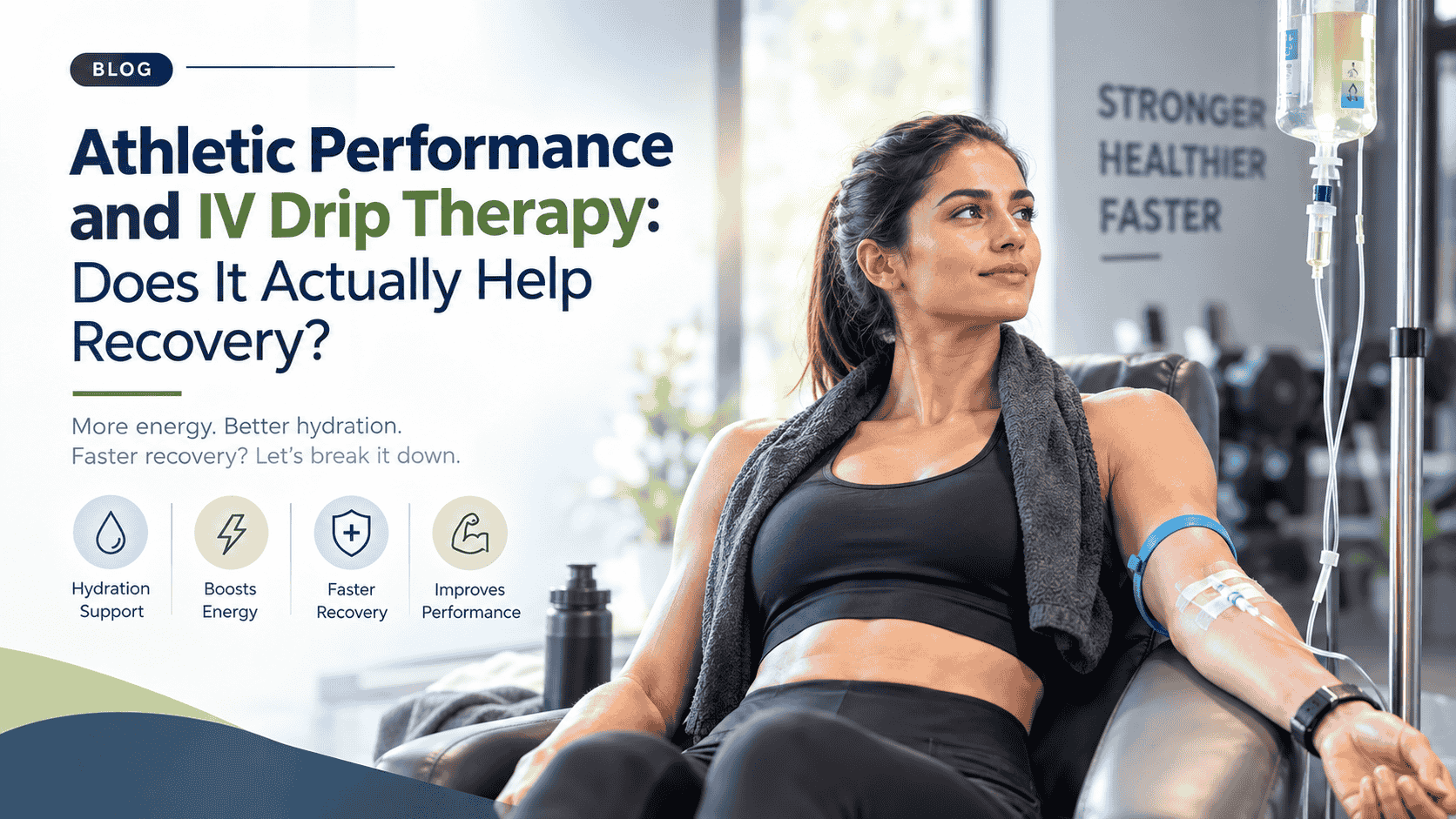
Athletic Performance and IV Drip Therapy: Does It Actually Help Recovery?
Introduction
Scroll through enough fitness content and eventually someone's posting about their post-workout IV drip, tagged like it's just part of the routine now, right up there with protein shakes and foam rolling. Athletes at every level seem to be trying this, from weekend warriors to people who actually compete for a living. Whether it's doing what people think it's doing, or just an expensive placebo with good branding, depends a lot on what's actually going on with that specific athlete's body at the time.
Why Athletes Started Turning to IV Therapy
Intense exercise depletes fluid and electrolytes fast; sweat carries out sodium and potassium along with the water, and dehydration alone can tank performance and slow recovery considerably. That part's legitimate. Add in muscle breakdown from hard training, inflammation that needs managing, and the general demand for faster recovery between events or sessions, and IV therapy starts looking like an obvious shortcut to a lot of athletes hunting for any edge available.
Where the Logic Gets Oversold
The jump from "dehydration hurts performance" to "IV drips make you perform better than baseline" isn't really supported the same way. Fixing a deficit and enhancing something that's already fine aren't the same thing, and a lot of marketing blurs that line pretty conveniently.
What's Actually in a Recovery-Focused IV
Saline or a similar fluid base, replacing what sweat took out during training or competition. Electrolytes, sodium, potassium, magnesium, correcting what's been lost and helping muscles function properly again. Amino acids sometimes get added, marketed toward muscle repair, though oral protein intake covers most of this need for most athletes already eating reasonably. B vitamins for energy metabolism, and occasionally anti-inflammatory additions, though the evidence for some of these specific additions is considerably thinner than the marketing around them suggests.
Does It Actually Speed Up Recovery
For genuine dehydration, yes, rehydrating faster via IV does help, and that's a real, measurable benefit backed by actual physiology. If an athlete's lost significant fluid and electrolytes, replacing them quickly does support recovery meaningfully. Where the evidence gets shakier is the broader claim that IV therapy dramatically outperforms proper oral hydration and nutrition for someone who wasn't significantly dehydrated to begin with. A well-hydrated athlete eating and drinking appropriately probably isn't getting much additional benefit from an IV beyond what their body's already handling on its own just fine.
Who Actually Benefits Most
A few groups where IV therapy for recovery makes more practical sense than others.
- Endurance athletes after long events, marathons, triathlons, where fluid and electrolyte loss is genuinely severe and oral replacement alone struggles to keep pace
- Athletes competing in extreme heat, where sweat loss outpaces what drinking during the event can realistically replace
- Anyone who's had trouble keeping fluids down orally due to exercise-induced nausea, common enough after really intense efforts
- Situations with quick turnaround between events, where faster rehydration genuinely matters for the next performance
Who Probably Doesn't Need It
Recreational athletes doing a normal workout, properly hydrated beforehand and refueling with regular food and water afterward, usually don't need this at all. The body's actually quite good at rehydrating and repairing itself given normal food, water, and rest, and for most training sessions that's genuinely sufficient without needing to bypass digestion entirely.
The Cost-Benefit Question Worth Asking
These infusions aren't cheap, and for an athlete doing this after every single workout regardless of actual need, the cost adds up considerably for a benefit that might be minimal if dehydration wasn't severe to begin with. Reserving it for genuinely demanding events or situations where oral intake clearly wasn't enough tends to make more practical sense than treating it as a routine part of every training session.
Getting a Straight Answer at KEL Healthcare
The provider team at KEL Healthcare Medical Services PC evaluates what's actually needed for recovery rather than pushing IV therapy as a blanket solution for every athlete who walks in. All four locations, Woodside, Staten Island, Wading River, and Brooklyn, offer IV therapy when it genuinely fits the situation, alongside honest guidance about when proper hydration and nutrition are already doing the job.
If IV therapy has become part of a regular training routine without much thought behind whether it's actually needed each time, it's worth a conversation about what's genuinely helping versus what's just habit.
Frequently Asked Questions
More from our blog
 A Geriatric Care Guide
Primary Care Clinic Staten Island NY: A Geriatric Care Guide
There's a moment many families hit - maybe it's after a parent takes a hard fall, or after noticing Mom keeps forgetting whether she took her blood pressure pill. That's usually when the search.
Medically reviewed by Kel Healthcare Medical Services PC
Read Article Hangover IV Therapy
Hangover IV Therapy: Benefits, Ingredients, and How It Works
Saturday morning, head pounding, stomach doing something unpleasant, and somebody in the group casually mentions hangover IV therapy like everyone's already supposed to know this is the move. Kind.
Medically reviewed by Kel Healthcare Medical Services PC.
Read Article EKG, X-Ray, Ultrasound & Diagnostic Test
EKG, X-Ray, or Ultrasound: Which Diagnostic Test Do You Actually Need?
The doctor mentions ordering "some imaging" and doesn't specify which kind, and now you're sitting there wondering if that means an X-ray, an ultrasound, something else entirely, and whether it.
Medically reviewed by Kel Healthcare Medical Services PC.
Read Article