EKG, X-Ray, Ultrasound & Diagnostic TestBy Kel Healthcare Medical Services PC.
EKG, X-Ray, or Ultrasound: Which Diagnostic Test Do You Actually Need?
The doctor mentions ordering "some imaging" and doesn't specify which kind, and now you're sitting there wondering if that means an X-ray, an ultrasound, something else entirely, and whether it.
Introduction
The doctor mentions ordering "some imaging" and doesn't specify which kind, and now you're sitting there wondering if that means an X-ray, an ultrasound, something else entirely, and whether it actually matters which one you end up getting. It does matter, quite a bit actually, since each one's built for a different job and picking wrong just means doing this twice.
Why These Three Get Confused So Often
X-rays, ultrasounds, EKGs, they all fall under "tests that aren't bloodwork" in most people's heads, which is honestly about as far as the mental sorting goes for most patients walking in. But they're not interchangeable at all. One reads bones. One reads soft tissue using sound waves. One reads your heart's electrical rhythm. Totally different jobs, totally different machines, and mixing them up in your head going into an appointment just makes the whole explanation harder to follow.
The Quick Version, If You're Skimming
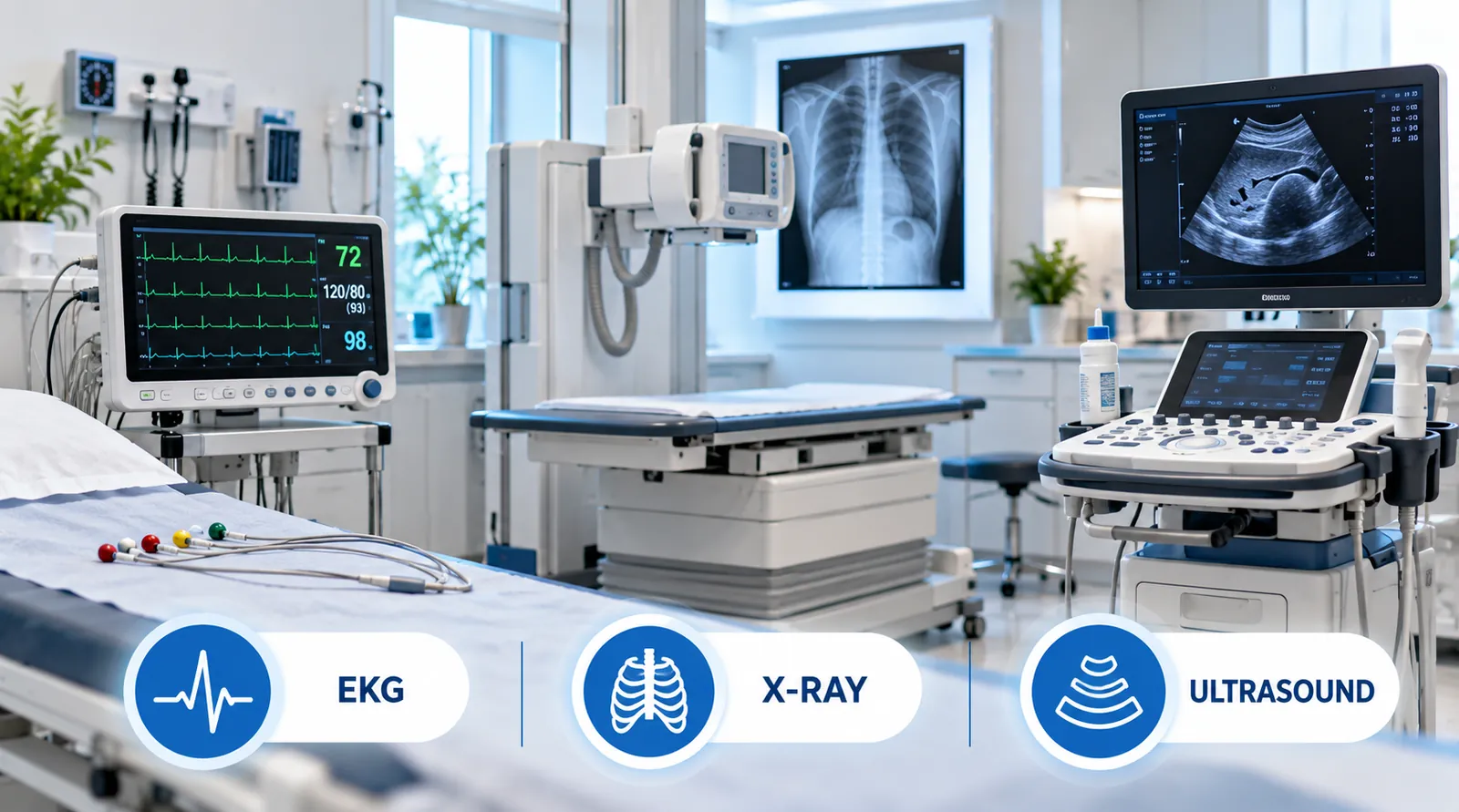
X-ray: bones, mostly, quick and cheap. Ultrasound: soft tissue and organs, no radiation involved. EKG: heart rhythm specifically, not the heart's structure, that's a different test called an echocardiogram.
What X-Rays Actually Catch
Bones are the obvious one, fractures, breaks, alignment issues, that's what X-rays do best and honestly it's hard to beat them for speed here. They're also decent for spotting certain lung issues, pneumonia sometimes shows up clearly, and for catching swallowed objects or things that shouldn't be somewhere in the body. What they're genuinely bad at is soft tissue, muscles, ligaments, organs mostly look like vague shadows on an X-ray, which is exactly why a suspected ligament tear doesn't usually get sent for an X-ray first.
Radiation exposure's low with a standard X-ray, worth mentioning since people worry about that more than the actual risk usually warrants, but it's part of why pregnant patients specifically get asked about pregnancy status before one gets ordered.
What Ultrasounds Are Actually For
No radiation at all here, which is the first thing that makes ultrasounds different, sound waves bouncing around instead. Great for pregnancy monitoring obviously, that's probably what most people associate with ultrasounds first. But also genuinely useful for looking at organs, gallbladder, kidneys, liver, checking blood flow in certain vessels, and looking at soft tissue in ways an X-ray simply can't manage. Downside's that it doesn't see through bone well at all, so anything hiding behind a rib or inside a skull isn't really ultrasound territory.
Why an EKG Is a Completely Different Category
This one trips people up the most honestly. An EKG doesn't take a picture of anything, it's tracking electrical signals, the rhythm your heart's beating in, whether that rhythm looks normal or shows signs of a past issue. Takes a few minutes, stickers placed on your chest and limbs, done. It's not checking whether your heart's structurally fine, whether valves are working right, how well it's actually pumping, that's an echocardiogram's job, which does use ultrasound technology despite being a heart test specifically.
Situations Where Each One Actually Gets Chosen
A few common scenarios and which test usually comes up first for each.
- Chest pain: EKG comes first almost always, ruling out or confirming a cardiac rhythm issue quickly before anything else gets considered
- **Suspected broken bone: **X-ray, fast and cheap, and usually enough on its own unless something more's suspected
- Abdominal pain: ultrasound often, especially if gallbladder or kidney involvement's suspected, since those organs show up well without radiation
- **Pregnancy monitoring: **ultrasound, no radiation concern at all, and it's genuinely the best tool for watching development
When More Than One Test Gets Combined
Sometimes one test alone doesn't answer the whole question. Chest pain that shows a concerning EKG might lead to further cardiac imaging afterward. Abdominal pain sometimes gets bloodwork plus an ultrasound together, covering infection markers and organ appearance simultaneously rather than guessing which one explains the symptom. A suspected fracture that also has soft tissue involvement suspected might mean an X-ray first, then an MRI if something beyond bone needs a closer look.
None of this is really about running every test possible. It's more that some symptoms genuinely need more than one angle to actually get answered properly. Click here for On-Site Diagnostic Testing

**EKG vs. Ultrasound vs. X-Ray: What’s the Difference? **
EKG, ultrasound, and X-ray are commonly used diagnostic tests, but each provides different types of information. Understanding how these tests work and what they are used for can help you know what to expect during your healthcare evaluation.
| Test | What It Checks | How It Works | Uses Radiation? | Common Uses |
| EKG | Heart’s electrical activity | Records electrical signals from the heart using electrodes | No | Irregular heartbeat, chest pain, heart rhythm problems |
| Ultrasound | Organs, tissues, and blood flow | Uses high-frequency sound waves to create images | No | Abdomen, thyroid, blood vessels, reproductive organs |
| X-Ray | Bones, chest, and certain internal structures | Uses a small amount of X-ray radiation to create images | Yes | Fractures, chest conditions, infections, lung problems |
Getting the Right Test Ordered at KEL Healthcare
The provider team at KEL Healthcare Medical Services PC walks through which test actually fits your specific symptoms rather than defaulting to whatever's fastest or most familiar. EKGs happen on-site at all four locations, Woodside, Staten Island, Wading River, and Brooklyn, and coordination for X-rays or ultrasounds gets arranged based on what your actual situation calls for.
If a test's been ordered and the reasoning wasn't fully explained, it's worth asking what specifically it's looking for, since understanding that tends to make waiting for results feel a lot less uncertain.
Not sure which diagnostic test actually fits your symptoms? Call KEL Healthcare Medical Services at (718) 874-3173 874-3173), email care@kelhealthcare.com, or book online to talk it through.
Frequently Asked Questions
More from our blog
 Preventive care
Family History and Preventive Care: Why Your Genetics Should Shape Your Screening Schedule
Learn how your family history and genetics can influence preventive care and health screenings, helping you take proactive steps toward better long-term health.
Medically reviewed by Kel Healthcare Medical Services PC.
Read Article Testosterone and Aging
Testosterone and Aging: What's Normal and When to Get Tested
Low testosterone symptoms are often chalked up to "just getting older," and in some ways, that's not entirely wrong, testosterone naturally declines with age. But the line between normal aging and.
Medically reviewed by Kel Healthcare Medical Team
Read Article Hangover IV Therapy
Hangover IV Therapy: How It Works and What's Actually in the Bag
Hangover IV therapy has become one of the most requested treatments at wellness clinics, promising faster relief than sleeping it off or reaching for water and painkillers. The appeal makes sense.
Medically reviewed by Kel Healthcare Medical Team
Read Article