Hangover IV TherapyBy Kel Healthcare Medical Team
Hangover IV Therapy: How It Works and What's Actually in the Bag
Hangover IV therapy has become one of the most requested treatments at wellness clinics, promising faster relief than sleeping it off or reaching for water and painkillers. The appeal makes sense.
Introduction
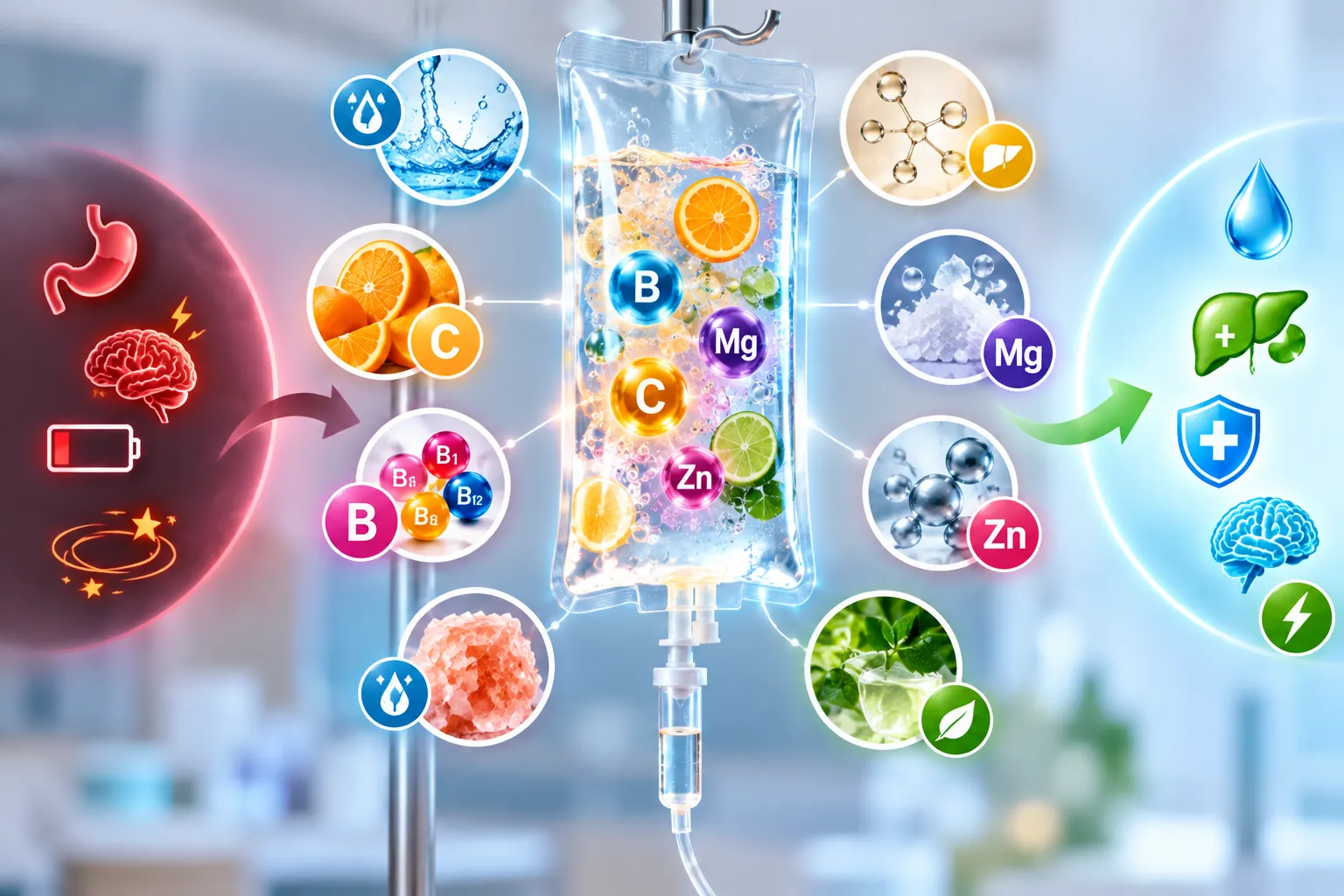
Hangover IV therapy has become one of the most requested treatments at wellness clinics, promising faster relief than sleeping it off or reaching for water and painkillers. The appeal makes sense, nobody wants to spend a day feeling foggy, nauseated, and drained. But how does it actually work, and is it delivering more than a well-timed IV drip for dehydration could achieve on its own?
Understanding what's actually in the bag, and why it targets the specific mechanisms behind a hangover, helps separate genuine physiological relief from marketing built around convenience and novelty.
This guide breaks down exactly how hangover IV therapy works, what ingredients are typically included, and what the evidence says about how effective it really is.

What Causes a Hangover?
A hangover results from several overlapping effects of alcohol on the body:
- Dehydration: alcohol suppresses a hormone that helps the body retain water
- Electrolyte imbalance: frequent urination flushes out sodium and potassium
- Inflammation: alcohol byproducts trigger an inflammatory response
- Low blood sugar: alcohol interferes with normal glucose regulation
- Gastric irritation: leading to nausea and stomach discomfort
- Sleep disruption: alcohol reduces sleep quality even when it helps you fall asleep faster
Hangover IV therapy is designed to address several of these mechanisms simultaneously rather than relying on oral rehydration and rest alone.
How Hangover IV Therapy Works
IV therapy delivers fluids, electrolytes, and other ingredients directly into the bloodstream, bypassing the digestive system entirely. This matters because:
- Nausea often makes oral rehydration difficult or ineffective
- IV fluids are absorbed immediately, rather than depending on gut absorption
- Rehydration happens faster than drinking water alone can achieve
What's Actually in the Bag
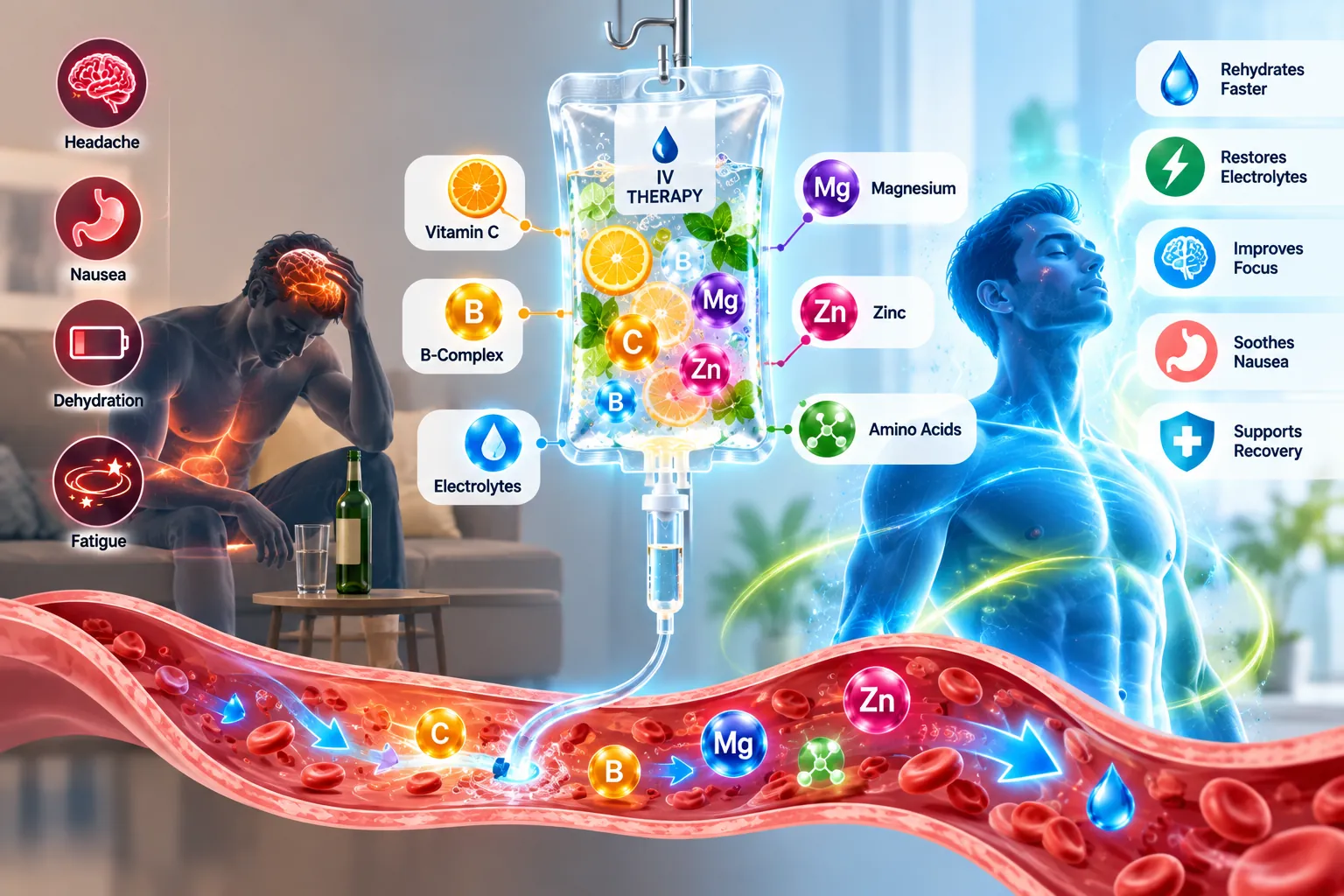
A typical hangover IV therapy bag includes:
- Saline or lactated Ringer's solution: the base fluid for rehydration
- Electrolytes: sodium, potassium, and magnesium to restore balance
- B vitamins: supporting energy metabolism and reducing fatigue
- Vitamin C: an antioxidant that may help counter oxidative stress from alcohol
- Anti-nausea medication (in some formulations): such as ondansetron, when administered by a medical provider
- Pain relief medication (in some formulations): such as ketorolac, for headache relief
Not every clinic includes medication-based additions; some offer fluids and vitamins only, while others include prescription anti-nausea or pain medications administered under medical supervision.
IV Drip for Dehydration: The Core Benefit
The single most well-supported benefit of hangover IV therapy is rehydration. An IV drip for dehydration replaces fluids and electrolytes far more efficiently than drinking water when someone is nauseated or unable to keep fluids down orally.
This is also the most evidence-backed part of the treatment, dehydration is a well-documented contributor to hangover symptoms, and directly replacing lost fluids and electrolytes addresses that mechanism directly rather than indirectly.
What the Research Says
The evidence on hangover IV therapy is mixed depending on which component is being evaluated:
- Rehydration itself has strong physiological support for relieving dehydration-related symptoms like headache and fatigue
- Evidence for vitamin additions (B vitamins, vitamin C) specifically curing hangover symptoms is more limited
- Anti-nausea and pain medications, when included, have well-established effects for their specific symptoms, independent of the IV delivery method
- No treatment, including IV therapy, eliminates all hangover symptoms or reverses the underlying alcohol-related inflammation
In short, the fluid and electrolyte replacement genuinely helps, while some additional ingredients offer more modest, less certain benefits.
Who Should Consider It

Hangover IV therapy may be particularly helpful for:
- People experiencing significant nausea that prevents oral rehydration
- Those with a demanding schedule requiring faster symptom relief
- Individuals who are significantly dehydrated after heavy alcohol consumption
Who Should Avoid Hangover IV Therapy
Certain people should be cautious or avoid IV therapy altogether:
- Those with kidney conditions, since excess fluid and electrolytes can be harder to process
- People with heart conditions, particularly congestive heart failure
- Anyone with a known allergy to specific IV additives
- Pregnant individuals, unless specifically cleared by a doctor
A medical intake process before treatment should screen for these risk factors.
What to Expect During a Session
A typical session takes 30–60 minutes. Most clinics start with a brief health screening, then administer the IV through a small line in the arm while the patient rests comfortably. Many people report feeling noticeably better within an hour, particularly regarding energy and nausea.
Conclusion
Hangover IV therapy works primarily by delivering fast, effective rehydration, the same principle behind any IV drip for dehydration, just packaged specifically for post-drinking recovery. While the fluid and electrolyte component is well-supported, some added ingredients offer more modest benefits than marketing might suggest.
If nausea or significant dehydration is making a hangover particularly difficult to manage, IV therapy can offer meaningful, fast relief, just make sure any underlying health conditions are discussed with a provider beforehand.

Frequently Asked Questions
More from our blog
 Living with Asthma
: A Chronic Disease Management Approach
Living with asthma means more than reaching for an inhaler when symptoms flare. A well-built asthma management plan treats the condition the way chronic disease management approaches treat any.
Medically reviewed by Kel Healthcare Medical Team
Read Article Thyroid Disorders
 101: Symptoms, Testing, and Ongoing Management
Thyroid disorder management often starts long after symptoms first appear, simply because early signs like fatigue, weight changes, and mood shifts are easy to attribute to stress, aging, or a busy.
Medically reviewed by Kel Healthcare Medical Team
Read Article What the Research Shows
The Cost of Skipping Preventive Care: What the Research Shows
The importance of preventive care is well established in medicine, yet recent data show a widening gap between what people know they should do and what they actually do. According to a 2025.
Medically reviewed by Kel Healthcare Medical Team
Read Article