Thyroid DisordersBy Kel Healthcare Medical Team
Thyroid Disorders 101: Symptoms, Testing, and Ongoing Management
Thyroid disorder management often starts long after symptoms first appear, simply because early signs like fatigue, weight changes, and mood shifts are easy to attribute to stress, aging, or a busy.

Introduction
Thyroid disorder management often starts long after symptoms first appear, simply because early signs like fatigue, weight changes, and mood shifts are easy to attribute to stress, aging, or a busy lifestyle. The thyroid, a small gland in the neck, regulates metabolism, energy, and countless other bodily functions, so when it isn't working properly, the effects can touch nearly every system in the body.
Understanding what thyroid disorders look like, how thyroid testing and treatment work, and what ongoing management involves can make a significant difference in how quickly symptoms are identified and how effectively they're controlled long-term.
This guide breaks down the most common thyroid conditions, the symptoms to watch for, how testing works, and what long-term management typically looks like.

What Does the Thyroid Do?
The thyroid is a butterfly-shaped gland located at the base of the neck. It produces hormones, primarily T3 and T4, that regulate:
- Metabolism and energy use
- Heart rate
- Body temperature
- Growth and development
- Mood and cognitive function
When the thyroid produces too little or too much hormone, it disrupts these processes, leading to a wide range of symptoms that can be easy to misattribute to other causes.
Common Thyroid Disorders
The most frequently diagnosed thyroid conditions include:
- Hypothyroidism: an underactive thyroid producing too little hormone
- Hyperthyroidism: an overactive thyroid producing too much hormone
- Hashimoto's thyroiditis: an autoimmune condition that typically leads to hypothyroidism
- Graves' disease: an autoimmune condition that typically causes hyperthyroidism
- Thyroid nodules: growths on the thyroid, usually benign but occasionally requiring further evaluation
- Goiter: an enlarged thyroid gland, which can occur with either over- or underactive thyroid function
Symptoms of an Underactive Thyroid (Hypothyroidism)
- Persistent fatigue
- Unexplained weight gain
- Cold sensitivity
- Dry skin and hair
- Constipation
- Depression or low mood
- Muscle weakness or aches
- Irregular menstrual cycles
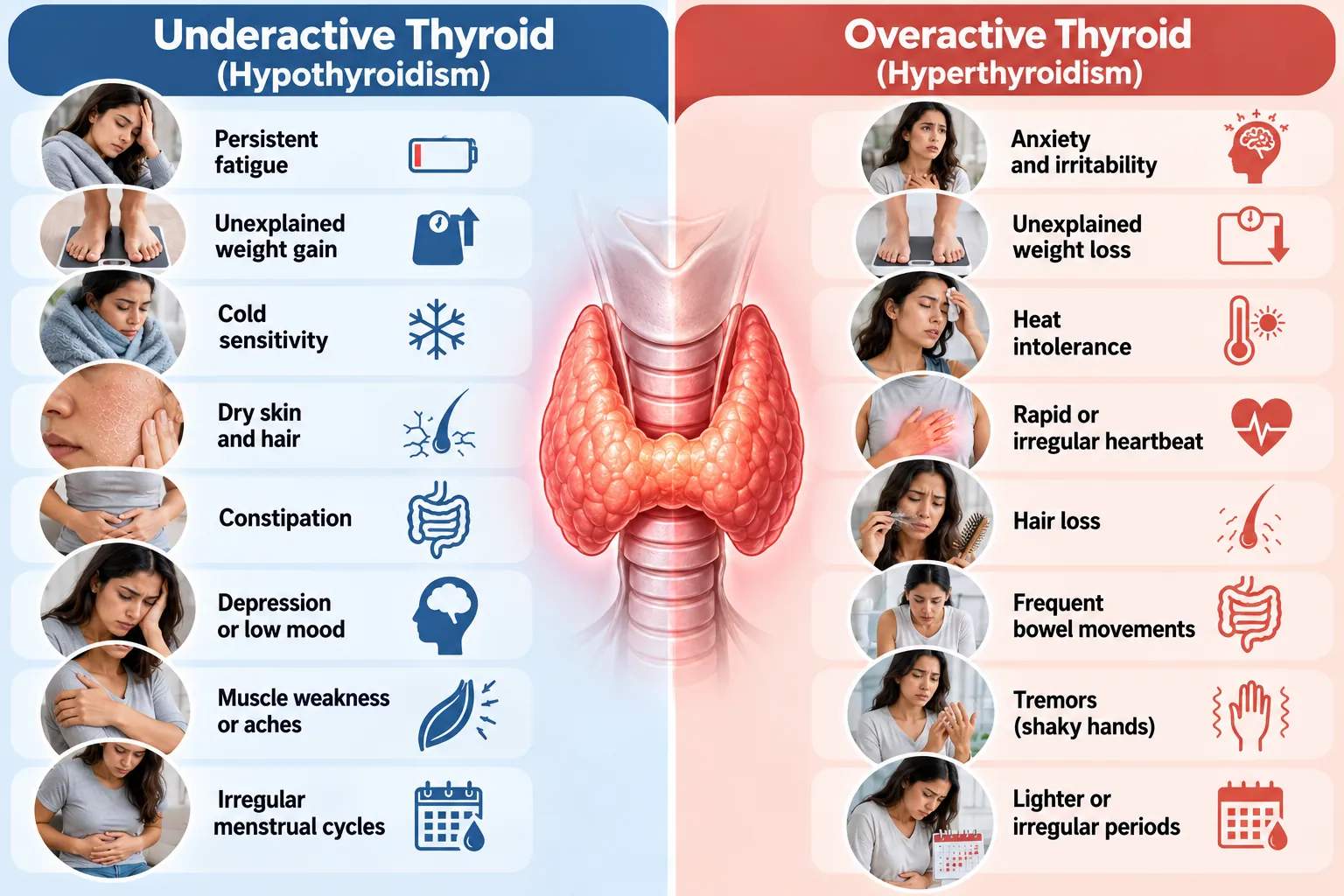
Symptoms of an Overactive Thyroid (Hyperthyroidism)
- Unexplained weight loss
- Rapid or irregular heartbeat
- Anxiety or irritability
- Heat sensitivity and excessive sweating
- Tremors, particularly in the hands
- Difficulty sleeping
- Increased bowel movements
Thyroid Testing and Treatment: How Diagnosis Works
Thyroid testing and treatment typically begin with bloodwork measuring:
- TSH (thyroid-stimulating hormone): usually the first test ordered, since it's highly sensitive to thyroid dysfunction
- Free T4 and Free T3: measuring active thyroid hormone levels
- Thyroid antibodies: helping identify autoimmune conditions like Hashimoto's or Graves' disease
If nodules or structural abnormalities are suspected, additional testing may include:
- Thyroid ultrasound: imaging the gland for nodules or enlargement
- Fine-needle aspiration biopsy: evaluating suspicious nodules for cancer risk
Treatment Options by Condition
| Condition | Common Treatment Approach |
|---|---|
| Hypothyroidism | Daily synthetic thyroid hormone (levothyroxine) |
| Hyperthyroidism | Anti-thyroid medication, radioactive iodine, or surgery |
| Hashimoto's | Hormone replacement, similar to hypothyroidism treatment |
| Graves' disease | Anti-thyroid medication, radioactive iodine, or surgery |
| Thyroid nodules | Monitoring, or biopsy/removal if concerning |

Treatment is highly individualized, and finding the right medication dose, particularly for hypothyroidism, often requires periodic adjustment based on follow-up bloodwork.
What Ongoing Thyroid Disorder Management Looks Like
Because thyroid conditions are typically lifelong, thyroid disorder management focuses on consistent, long-term monitoring rather than a one-time treatment. This usually includes:
- Regular bloodwork: often every 6–12 months once stable, more frequently after a dosage change
- Medication adherence: taking thyroid medication consistently, often on an empty stomach for best absorption
- Symptom tracking: noting energy, weight, mood, and other changes over time
- Periodic imaging: for those with nodules or structural changes, to monitor for growth
- Coordination with an endocrinologist: particularly for complex or difficult-to-manage cases
Living Well With a Thyroid Condition
Most people with a well-managed thyroid condition live full, active lives with minimal disruption. Helpful long-term habits include:
- Taking medication at a consistent time each day
- Avoiding taking thyroid medication with calcium, iron supplements, or certain foods that interfere with absorption
- Keeping regular follow-up appointments even when feeling well
- Communicating any new symptoms promptly, since dosage needs can change over time
- Managing stress, which can influence thyroid symptoms in some individuals
Conclusion
Thyroid disorder management is a long-term process built on accurate testing, personalized treatment, and consistent follow-up rather than a single fix. Understanding how thyroid testing and treatment work, and recognizing symptoms early, can make the difference between prolonged, unexplained symptoms and a condition that's well controlled.
If you've been experiencing unexplained fatigue, weight changes, or other symptoms discussed here, a simple blood test could provide answers and open the door to an effective, personalized management plan.
Frequently Asked Questions
More from our blog
 What the Research Shows
The Cost of Skipping Preventive Care: What the Research Shows
The importance of preventive care is well established in medicine, yet recent data show a widening gap between what people know they should do and what they actually do. According to a 2025.
Medically reviewed by Kel Healthcare Medical Team
Read Article Health Assessment
How Often Should You Get a Comprehensive Health Assessment?
If you've ever typed "how often for health assessment" into a search bar right before booking (or postponing) an appointment, you're not alone. Most people know they should get checked regularly.
Medically reviewed by Kel Healthcare Medical Team
Read Article Vitamin Deficiencies
: How Bloodwork Helps Decide If You Need an Infusion
You're tired in a way that sleep doesn't really fix anymore. Maybe your hair's thinning a bit, or you bruise easier than you used to, or you just feel a little off in a way that's hard to actually.
Medically reviewed by Kel Healthcare Medical Team
Read Article