Vitamin DeficienciesBy Kel Healthcare Medical Team
Vitamin Deficiencies: How Bloodwork Helps Decide If You Need an Infusion
You're tired in a way that sleep doesn't really fix anymore. Maybe your hair's thinning a bit, or you bruise easier than you used to, or you just feel a little off in a way that's hard to actually.
Introduction
You're tired in a way that sleep doesn't really fix anymore. Maybe your hair's thinning a bit, or you bruise easier than you used to, or you just feel a little off in a way that's hard to actually describe to anyone. The instinct these days is to jump straight to an IV infusion because it sounds like the fix, vitamins going straight into your bloodstream, skip the digestion middleman entirely. Except that's actually backwards. Bloodwork's supposed to come first, and skipping that step means you might be paying for something you don't even need, or missing the one thing that's actually wrong.
Why Guessing at Deficiencies Doesn't Really Work
Symptoms of vitamin deficiency testing overlap so much that it's genuinely hard to tell them apart just by how you feel day to day. Low B12, low iron, low vitamin D, they can all show up as fatigue, brain fog, that generally run-down feeling that doesn't have an obvious cause. Someone assumes it's B12 because a friend swore by B12 shots, gets the infusion, and nothing changes because the actual deficiency was iron the whole time.
That's the whole problem with skipping bloodwork. You're throwing a fix at a guess instead of an actual diagnosis.
What a Deficiency Panel Actually Checks
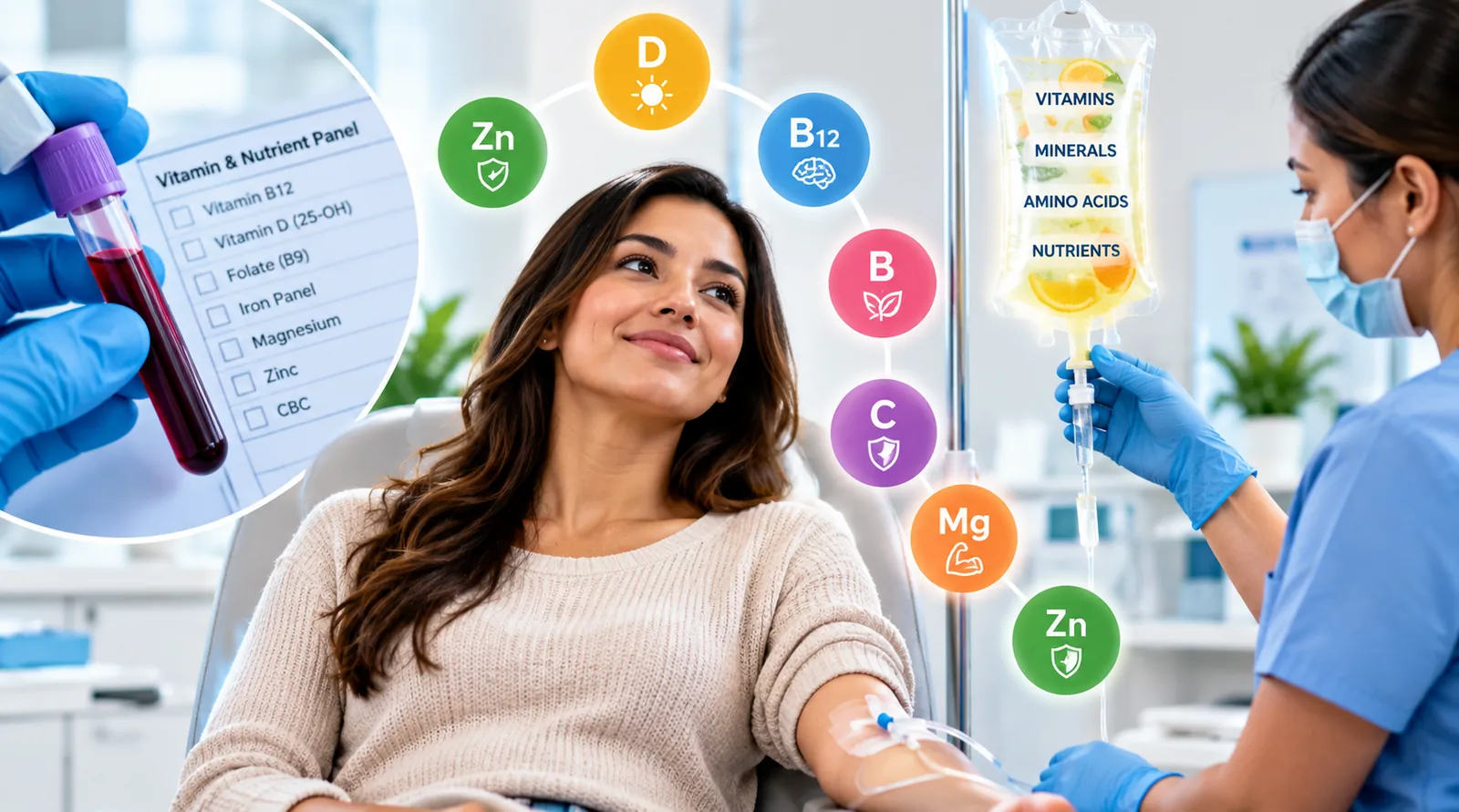
A proper panel usually looks at more than one nutrient at a time, since deficiencies rarely show up in isolation as people assume. Ferritin and iron levels, B12 and folate, vitamin D, and sometimes magnesium and zinc, depending on the symptoms described. All from one blood draw, with results typically back within a few days.
How Bloodwork Actually Decides Whether You Need an Infusion
Here's the part people skip past too fast. A blood test doesn't just say deficient or not deficient, there's a number attached, and that number ends up mattering more than most people expect going in. Say B12's a little low, borderline really, an oral supplement plus a recheck in a few months usually handles that fine on its own. But when it's actually low, the kind where your gut clearly isn't absorbing it no matter what you eat, that's when an infusion stops being the trendy option and starts being the thing that actually makes sense.
Iron works about the same way. Mild deficiency: dietary changes plus oral iron usually does the job over a few weeks. Severe deficiency, especially if oral iron isn't tolerated well or just isn't moving fast enough, an infusion gets levels up considerably faster than pills ever could manage.
Signs Worth Getting Checked Rather Than Guessing About
A handful of symptoms tend to point toward an actual deficiency worth testing for, not just general tiredness everyone deals with once in a while.
- Fatigue that sticks around no matter how much you sleep, or how little stress you're under
- Hair that's thinned out gradually, nails that snap easier than they used to, skin that's just changed somehow
- Headaches or dizziness that show up more when you stand up too fast
- Hands and feet that stay cold even when the room clearly isn't
- Muscle cramps or restless legs happening a lot more than they used to, seemingly for no reason
None of these automatically mean you're deficient in something specific. But they're common enough patterns that testing tends to actually explain what's going on, rather than continuing to guess your way through supplements off a shelf.
Why Skipping the Bloodwork Step Actually Costs More
Infusions aren't free, and they're not risk-free either, even though they're generally very safe. Getting one without knowing what you're actually deficient in means you might be correcting nothing at all while the real issue stays unaddressed. Worse, some vitamins build up in the body if you're not actually deficient, which isn't dangerous in most cases but is a genuinely pointless expense.
Testing first also means the infusion, when it does happen, gets dosed appropriately for what your body actually needs rather than a generic one-size-fits-all approach.
What Happens After the Results Come Back
Once bloodwork comes back, the plan usually gets pretty specific. Mild deficiencies typically start with diet changes or oral supplements first- cheaper, less invasive, and often enough on their own. Moderate to severe deficiencies, or ones where oral options clearly aren't cutting it, are when infusion therapy actually gets recommended, and the dosing gets built around your specific numbers rather than a standard package everyone gets regardless of need.
Follow-up testing matters here too, honestly, more than people expect. A few weeks or months after treatment, checking levels again confirms whether the correction actually worked or whether something else needs adjusting.
Getting Tested at KEL Healthcare
Dr. Karl E. Latortue, MD, Medical Director at KEL Healthcare Medical Services PC, has been practicing family medicine for more than 20 years and is board-certified through the American Board of Family Medicine. He and the team, including nurse practitioner Danielle Nikezic and physician assistant Sumakmur Holiwell, start deficiency workups with actual bloodwork rather than jumping straight to treatment, because an infusion without data behind it is really just a guess with a higher price tag. KEL Healthcare runs four locations across New York, in Woodside, Staten Island, Wading River, and Brooklyn, with walk-ins welcome and same-week appointments generally available.
If fatigue, hair changes, or that general run-down feeling has been sticking around longer than it should, testing first is genuinely the smarter move before booking anything.
Frequently Asked Questions
More from our blog
 How Specialist Referrals Work
: What to Expect After Your Primary Care Visit
"You'll need to see a specialist for this" is a phrase that often leaves patients with more questions than answers. How medical referrals work isn't always explained clearly during a busy primary.
Medically reviewed by Kel Healthcare Medical Team
Read Article Sports Injuries and Minor Fractures
: When Acute Care Can Treat It vs. When You Need the ER
A twisted ankle on the basketball court or a fall off a bike raises an immediate question: is this something acute care for minor injuries can handle, or is it serious enough to warrant an ER visit?.
Medically reviewed by Kel Healthcare Medical Team
Read Article Fasting Before Bloodwork
: What You Can and Can't Do Beforehand
Fasting before bloodwork sounds simple in theory, don't eat, show up, get your blood drawn. But in practice, the rules are more specific than most people realize, and small mistakes can throw off.
Medically reviewed by Kel Healthcare Medical Team
Read Article