Can You Treat a Sprain Without a DoctorBy Kel Health Care Medical
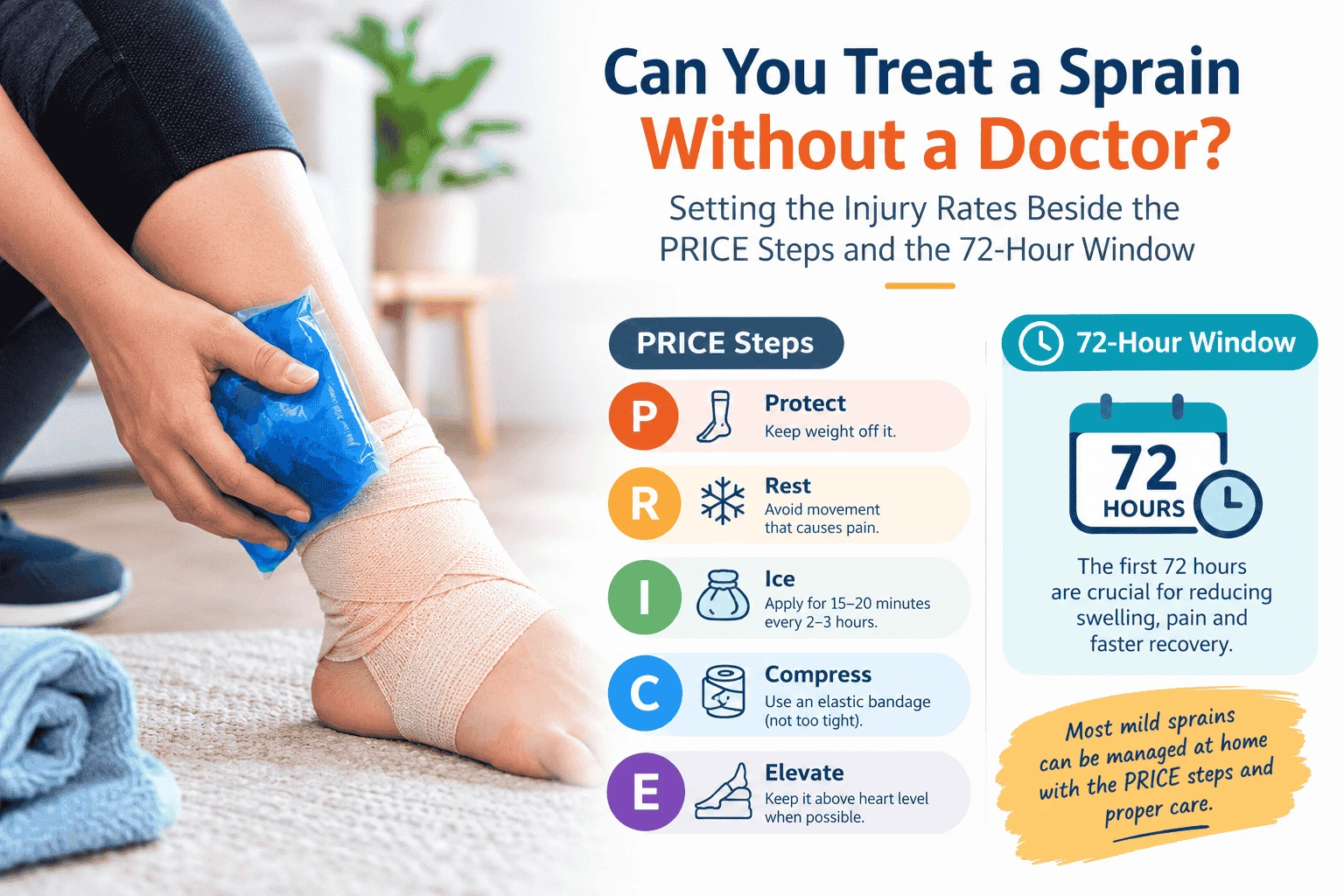
Can You Treat a Sprain Without a Doctor? Setting the Injury Rates Beside the PRICE Steps and the 72-Hour Window
About 2 million acute ankle sprains happen in the U.S. every year, and the first 72 hours shape how well they heal. Here's a first-aid routine that protects the ligament and reduces swelling.
Introduction
About 2 million acute ankle sprains happen in the U.S. every year, and the first 72 hours shape how well they heal. Here's a first-aid routine that protects the ligament and reduces swelling.
Approximately 2 million acute ankle sprains occur in the United States every year, and that figure is probably an underestimate because many people never seek care. A study of national emergency department data counted an estimated 7.4 million ankle sprains in ERs between 2010 and 2024. Most are mild enough to treat at home, but the first 48 to 72 hours decide how smoothly the recovery goes. Here's the sprain first-aid routine doctors use.
**Key Findings**
- ~2 million acute ankle sprains occur each year in the U.S. (PMC overview).
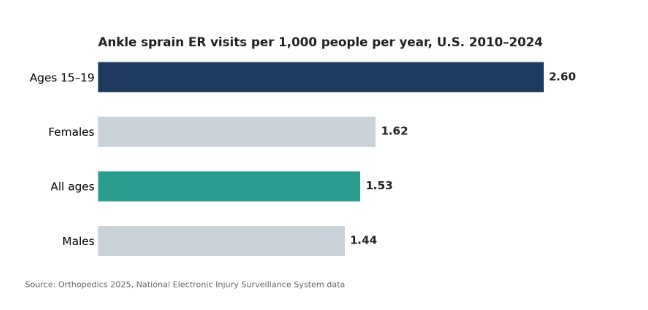
- 7.4 million ankle sprains presented to U.S. emergency departments from 2010 to 2024, peaking among 15- to 19-year-olds (Orthopedics, 2025).
- Half of ankle sprains happen at home, from stairs or stumbles, according to eOrthopod.
- 72 hours is the early window; after that, gradual activity promotes faster healing than complete rest (UCLA Health).
**Why do sprains linger?**
Because people either overdo it or under-treat it. A sprain is a stretched or torn ligament, the tough band that holds a joint together. Someone with a mild sprain may walk on it, skip the ice, and wonder why it swells for weeks. Another person stays off it completely for ten days and ends up stiff and weak. Early, sensible care helps the ligament heal and the joint stay stable.
**What is the first aid for a sprain?**
Use PRICE: protection, rest, ice, compression, elevation. It's the standard approach for mild to moderate sprains, according to UCLA Health.
| Step | How to do it | Why it helps |
| Protection | Stop the activity. Use a brace, splint, or crutches if walking hurts. | Prevents further ligament damage in the first 48 hours |
| Rest | Keep weight off the joint for the first 24 to 72 hours | Lets the torn fibres begin to knit |
| Ice | 10 to 20 minutes, three or more times a day, with a towel between ice and skin | Reduces pain and swelling |
| Compression | Wrap with an elastic bandage, snug but not tight | Limits swelling and stiffness |
| Elevation | Raise the joint to or above heart level on pillows | Helps fluid drain away from the area |
**How do you wrap it safely?**
Snug, never tight. PeaceHealth warns that a bandage wrapped too tightly can cause more swelling below it. Numbness, tingling, increased pain, coolness, or swelling below the wrap all mean it needs loosening. Don't sleep in a compression wrap, and ask a doctor if you need one for longer than 48 to 72 hours, since that may point to a more serious problem.
**When should you move again?**
Sooner than you think, but gently. UCLA Health says studies show a gradual return to activity after 72 hours speeds healing compared with complete rest. Start with gentle range-of-motion movements, such as tracing the alphabet with your toes. Add short, comfortable walks, then balance exercises. Recovery can take anywhere from a few days to several weeks, depending on severity, so don't rush back to sport.
**When should you see a doctor?**
When it might be more than a sprain. Get checked if:
- You heard or felt a pop or tear at the moment of injury
- You can't put weight on the joint, or it looks deformed
- There's numbness or colour change in the foot or toes
- There's no significant improvement within 7 to 10 days
These are signs of a possible fracture or a severe ligament tear. An X-ray or an exam can sort it out quickly.
**Conclusion**
The best sprain first aid is simple: protect the joint, rest it briefly, ice and compress it, keep it raised, and then start moving gently after about 72 hours. Take your time, keep the compression snug but not tight, and see a doctor if the pain or swelling isn't improving within a week or so.
More from our blog
 What Should Go on a Cut
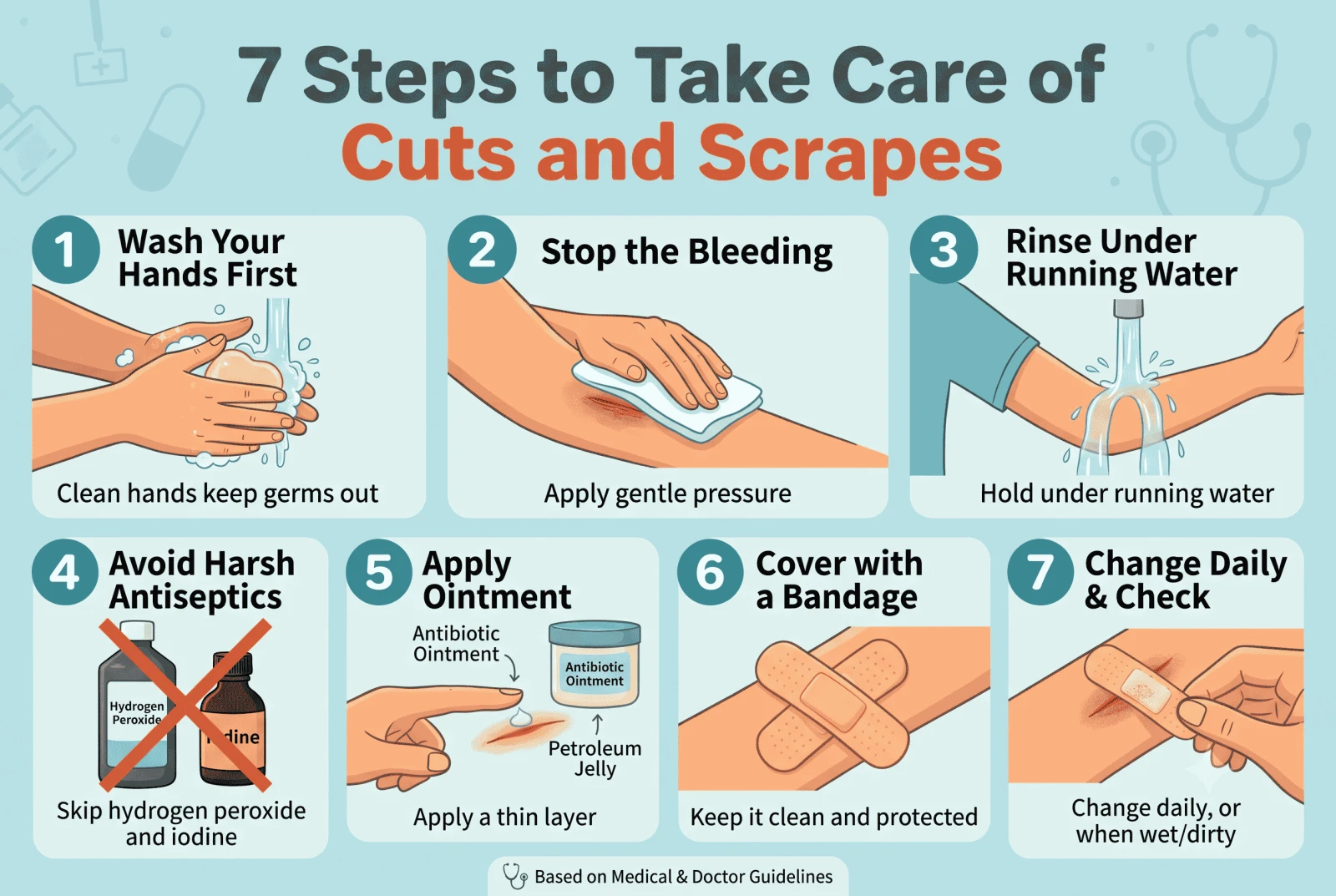
Taking Care of Cuts and Scrapes
Most minor cuts heal well at home, but a rushed rinse or the wrong antiseptic can slow healing and invite infection. Seven simple steps keep the wound clean, covered, and safe.
Medically reviewed by Dr. Karl E. Latortue, MD
Read Article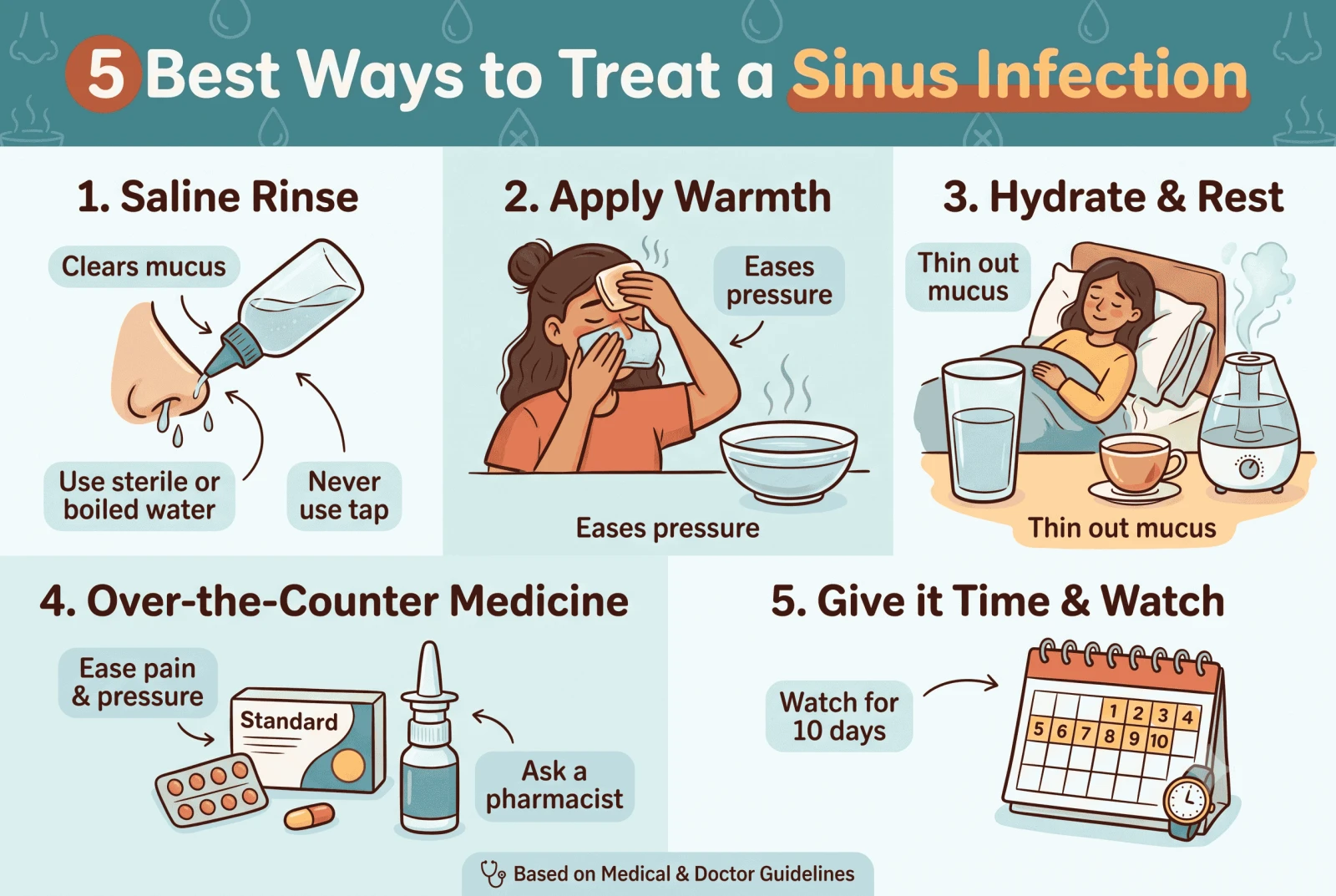 Treat a Sinus Infection
5 Best Ways to Treat a Sinus Infection
More than 90% of acute sinus infections are viral, which is why antibiotics rarely speed recovery. Five simple home treatments ease the pressure while your body does the healing.
Medically reviewed by Dr. Karl E. Latortue, MD
Read Article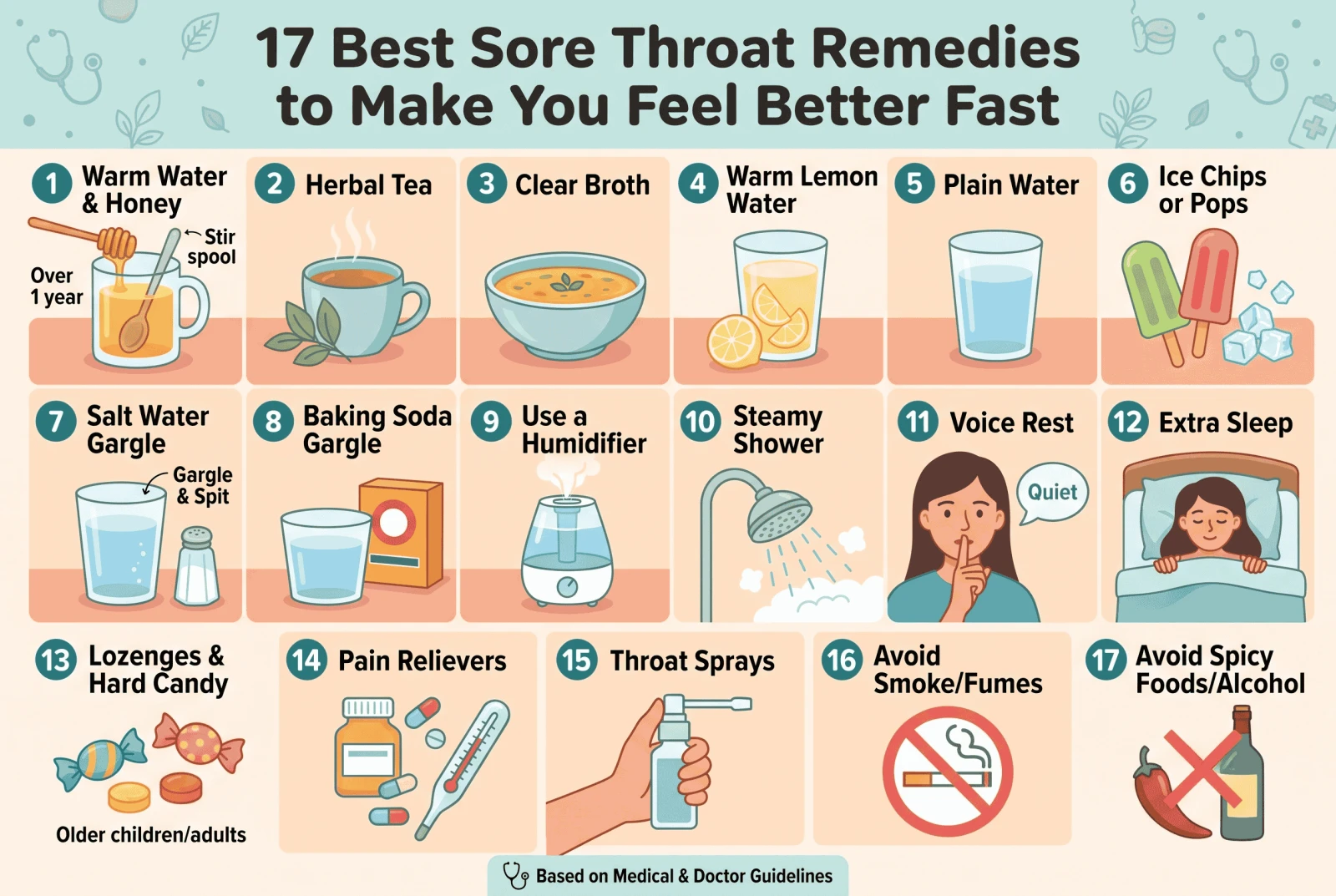 17 Best Sore Throat Remedies
17 Best Sore Throat Remedies to Make You Feel Better Fast, According to Doctors
Viruses cause 85% to 95% of throat infections in adults and children under 5, according to Northwestern Medicine, citing the NIH. That means the antibiotics many people ask for won't help most of.
Medically reviewed by Dr. Karl E. Latortue, MD
Read Article