Treat a Sinus InfectionBy Kel Health Care Medical
5 Best Ways to Treat a Sinus Infection
More than 90% of acute sinus infections are viral, which is why antibiotics rarely speed recovery. Five simple home treatments ease the pressure while your body does the healing.
Introduction
More than 90% of acute sinus infections are viral, which is why antibiotics rarely speed recovery. Five simple home treatments ease the pressure while your body does the healing.
Nearly 30 million Americans are diagnosed with a sinus infection every year, according to Mount Sinai. Yet most of them don't need what they often ask for. The CDC says most sinus infections are caused by viruses and rarely by bacteria, which means antibiotics usually won't make you better any sooner. The real fix is relieving congestion and pressure while your body clears the infection. Here are five ways to do it well.
Key Findings
- Nearly 30 million Americans receive a sinus infection diagnosis each year (Mount Sinai).
- Over 90% of acute rhinosinusitis cases are viral, per CDC estimates cited by ThedaCare; Mount Sinai puts the bacterial share at about 2%.
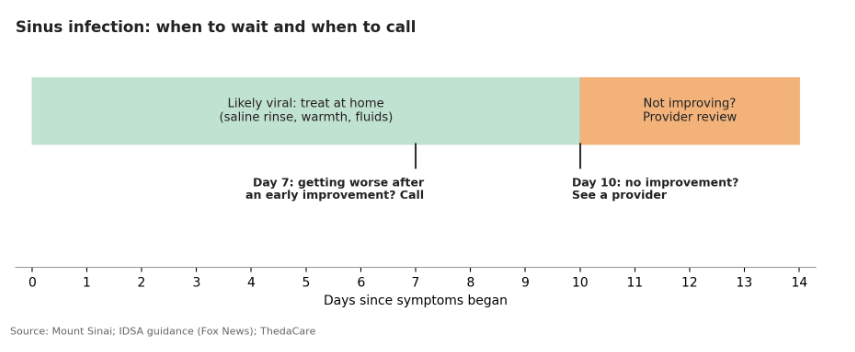
- 10 days is the usual tipping point: symptoms that last that long without improving, or get worse after a brief improvement, may signal a bacterial infection (IDSA guidance reported by Fox News).
- 3 to 10 days is how long symptoms typically last when the cause is viral (Mount Sinai).
Why does a sinus infection get mistreated so often?
Because it feels awful, and thick coloured mucus looks like proof of bacteria. It isn't. One physician quoted by UTMB notes that mucus colour doesn't reliably indicate a bacterial infection, and that allergies are often mistaken for a sinus infection. When the sinuses swell and trap mucus, you get pressure, a blocked nose, and a headache. Antibiotics don't treat that swelling. Overusing them, though, feeds resistance and can cause allergic reactions or diarrhea, as ChristianaCare points out.
The 5 best ways to treat a sinus infection
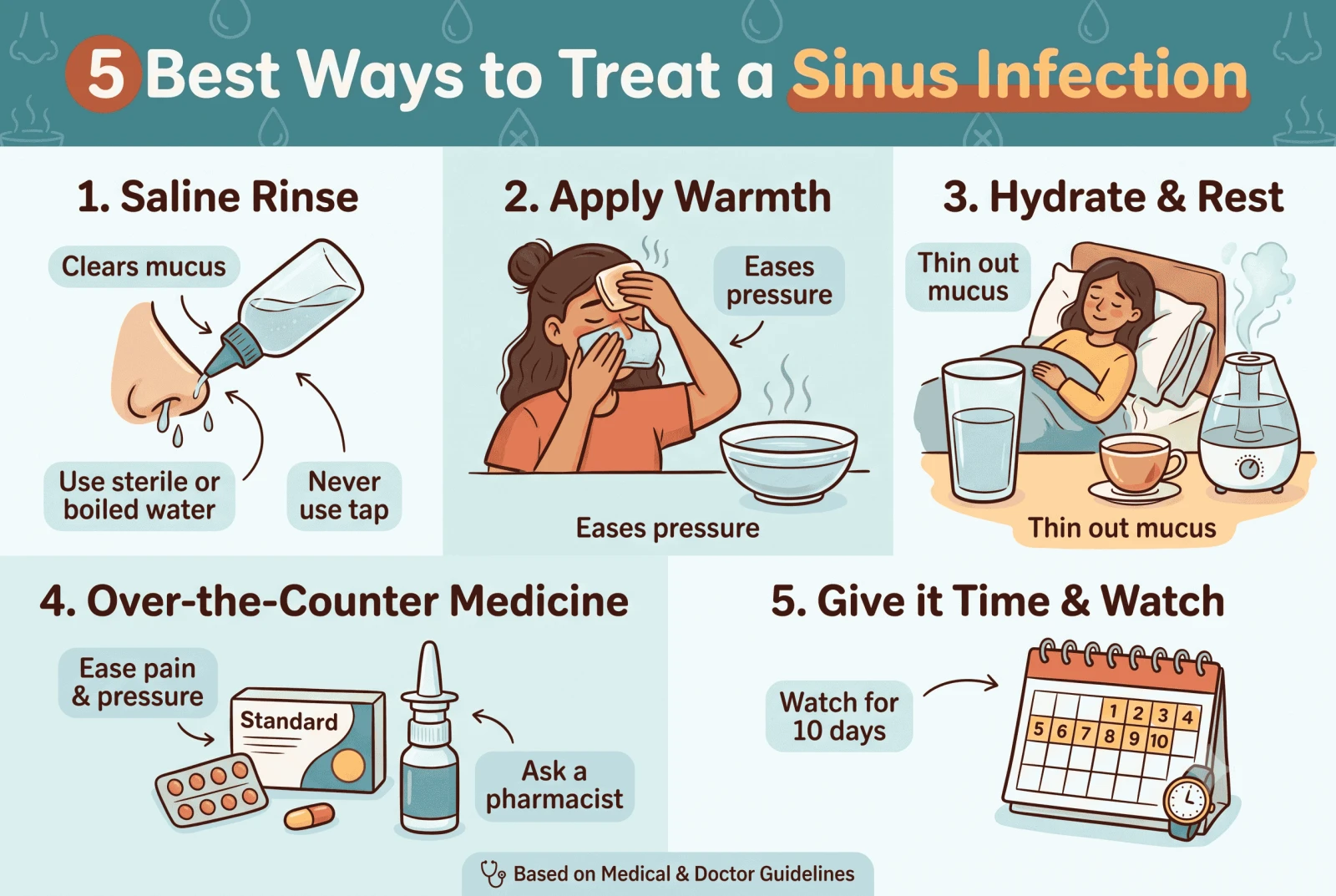
1. Rinse with saline, twice a day. Mount Sinai recommends a saline rinse or spray to wash mucus out of the sinus cavities, and a doctor quoted by ThedaCare calls nasal rinsing an effective treatment for acute sinusitis. Use distilled, sterile, or previously boiled-and-cooled water in a squeeze bottle or neti pot. Never use water straight from the tap.
2. Apply warmth. Warm compresses over the nose and forehead ease sinus pressure, according to ChristianaCare. A hot shower or a bowl of steam (carefully) also loosens thick mucus.
3. Hydrate, rest, and add moisture. Fluids keep mucus thin enough to drain. Sleep with your head slightly raised, and run a clean humidifier at night. Doctors often say sinus symptoms can worsen in the first two days before improving, so don't panic early.
4. Use over-the-counter relief wisely. A pain reliever can take the edge off sinus pressure and headaches. Experts differ on decongestants: Mount Sinai suggests trying one, while IDSA-based guidance says decongestants and antihistamines aren't helpful and may worsen symptoms. Ask a pharmacist, especially if you have high blood pressure.
5. Give it time, then check back. Current guidance supports watchful waiting. A doctor quoted by ThedaCare says patients should try over-the-counter options for 10 to 14 days unless there's a fever or sudden worsening.
| Day | What's normal | What to do |
| 1–3 | Congestion, pressure, mild headache | Saline rinse, warm compress, fluids |
| 4–7 | Peaks, then slowly eases | Keep rinsing, rest, sensible pain relief |
| 7–10 | Should be improving | Reassess; call a provider if it's worsening |
| 10+ | Not improving or worsening | Book an appointment; antibiotics may be considered |
When should you see a doctor?
When the infection stops behaving like a virus. The CDC advises seeing a provider if symptoms last more than 10 days, keep getting worse, or aren't relieved by over-the-counter medicines. UTMB's summary of CDC guidance adds a fever of 100.4°F or higher and repeated infections. Also seek help quickly for severe facial swelling, vision changes, a stiff neck, or confusion, which are rare but serious.
**Conclusion**
Most sinus infections are viral, short-lived, and self-limiting. The best treatment is a mix of saline rinses, warmth, fluids and patience, with antibiotics saved for the cases that truly need them. If you're past day 10 with no improvement, or you're getting worse, call your provider.
Frequently Asked Questions
More from our blog
 17 Best Sore Throat Remedies
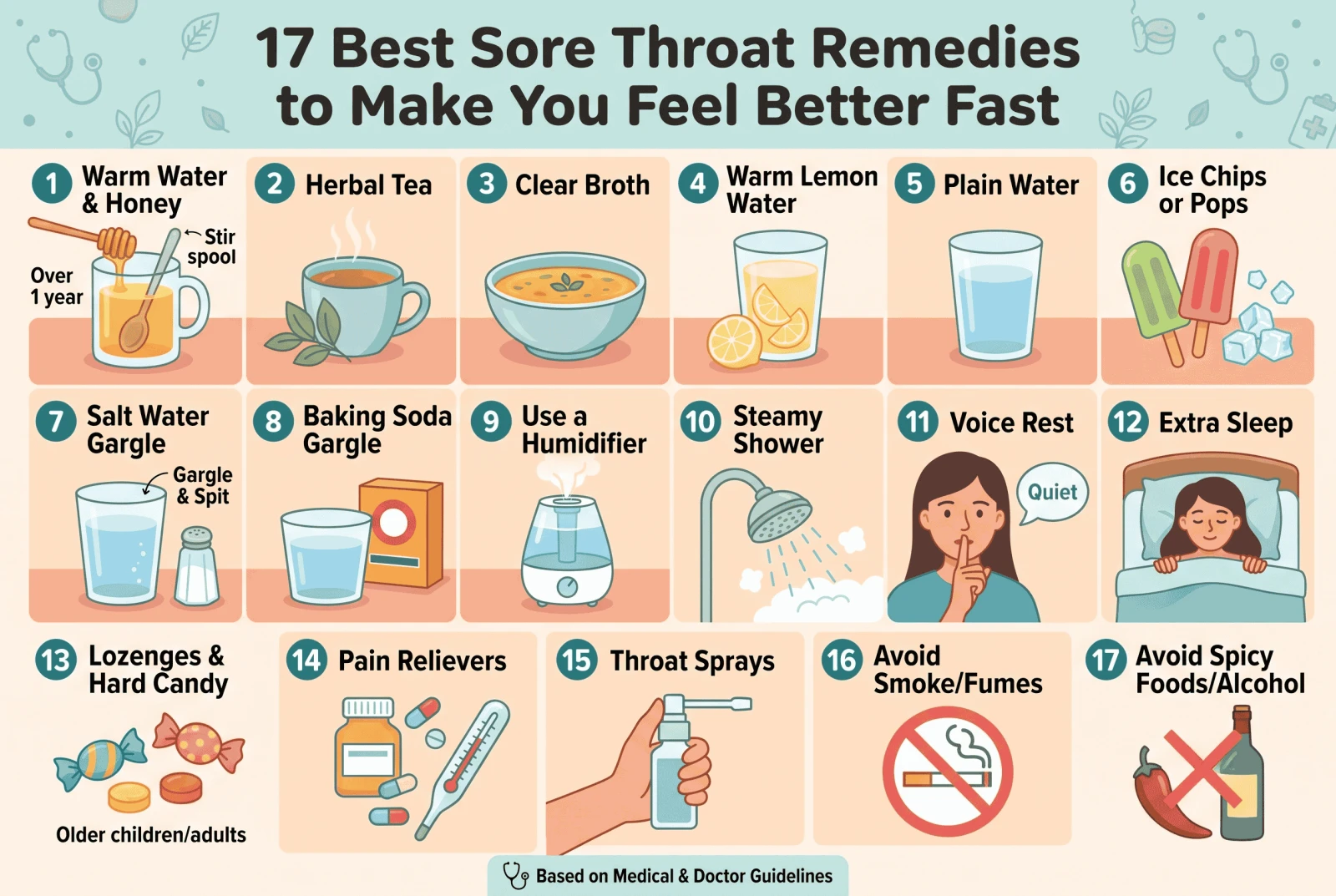
17 Best Sore Throat Remedies to Make You Feel Better Fast, According to Doctors
Viruses cause 85% to 95% of throat infections in adults and children under 5, according to Northwestern Medicine, citing the NIH. That means the antibiotics many people ask for won't help most of.
Medically reviewed by Dr. Karl E. Latortue, MD
Read Article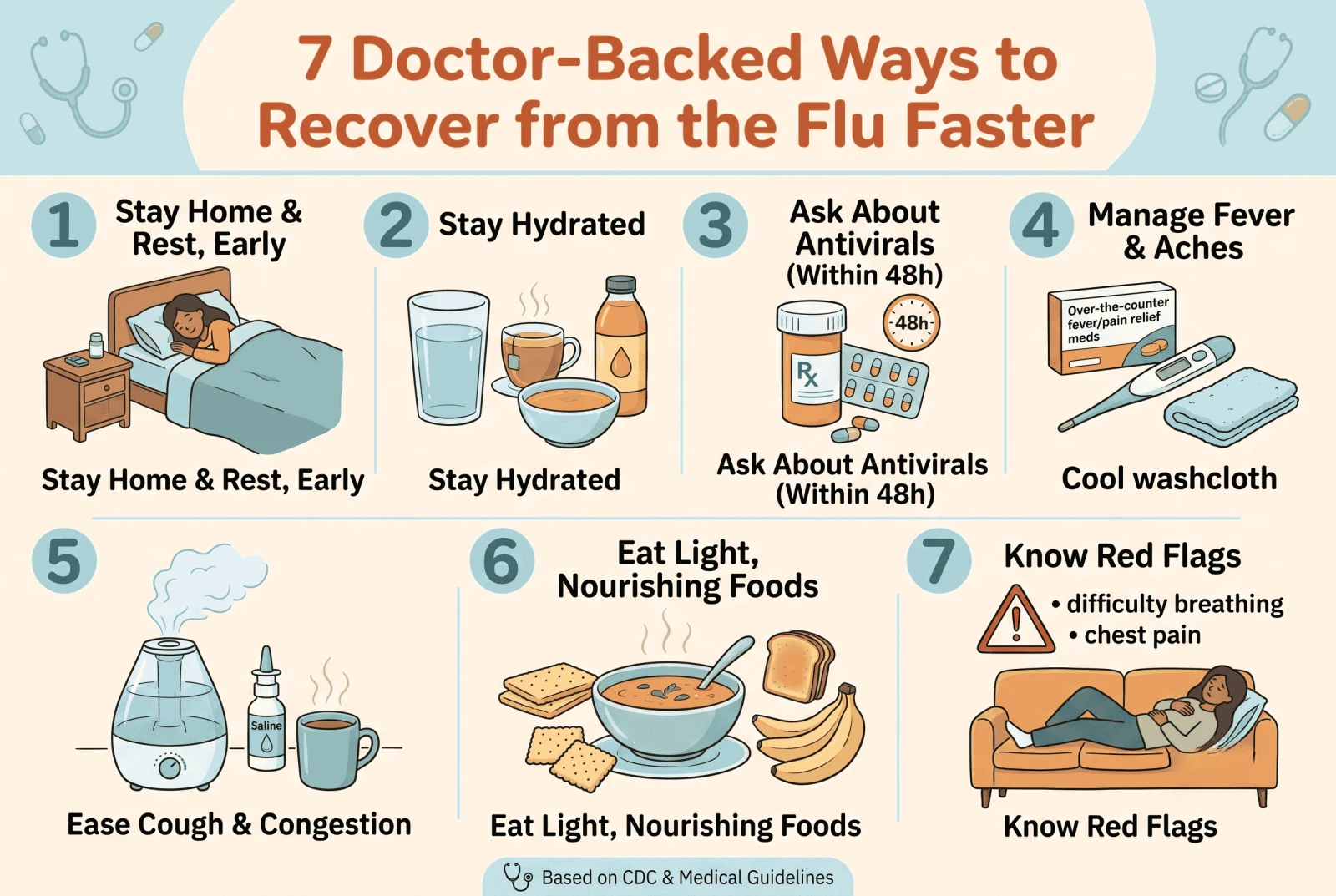 Ways to Recover
7 Ways to Recover From the Flu Faster, According to Doctors
The flu is not a "bad cold." The CDC estimates the 2024–2025 season caused 51 million illnesses, 23 million medical visits, 710,000 hospitalizations and 45,000 deaths in the United States alone.
Medically reviewed by Dr. Karl E. Latortue, MD
Read Article The Do's and Don'ts
The Do's and Don'ts of Easing Cold Symptoms
Adults catch 2 to 3 colds a year, yet fewer than half of Americans know antibiotics can't treat one. Here's what actually eases cold symptoms, and what only makes them drag on.
Medically reviewed by Dr. Karl E. Latortue, MD
Read Article