Ways to RecoverBy Kel Health care Medical
7 Ways to Recover From the Flu Faster, According to Doctors
The flu is not a "bad cold." The CDC estimates the 2024–2025 season caused 51 million illnesses, 23 million medical visits, 710,000 hospitalizations and 45,000 deaths in the United States alone.
Introduction
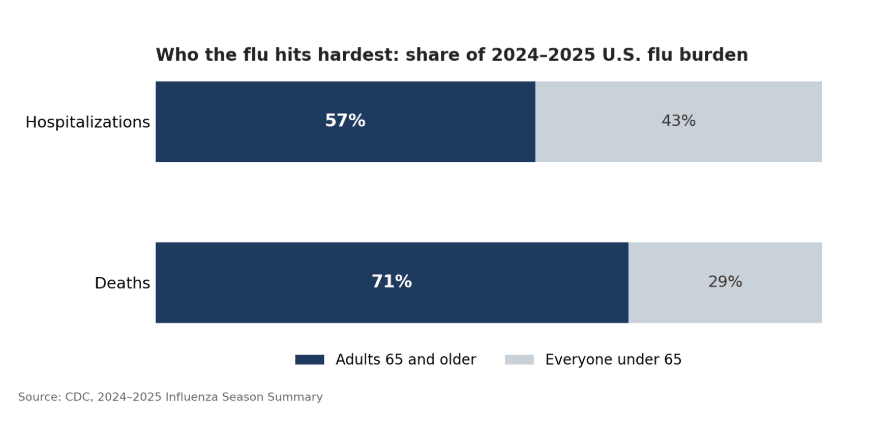
The flu is not a "bad cold." The CDC estimates the 2024–2025 season caused 51 million illnesses, 23 million medical visits, 710,000 hospitalizations and 45,000 deaths in the United States alone. Adults 65 and older made up 57% of those hospitalizations and 71% of the deaths. Most healthy people still recover at home, and how you handle the first two days matters more than most of us realise. Here are seven doctor-backed ways to speed up your flu recovery.
Key Findings
- 51 million flu illnesses and 710,000 hospitalizations in the 2024–2025 U.S. season (CDC).
- 57% of hospitalizations and 71% of deaths were in people 65 and older (CDC).
- 790 pediatric deaths were estimated for the same season (CDC).
- 48 hours is the window in which antivirals work best, though they can still help very sick patients later (CDC guidance as reported by KSL).
Why does the flu hit so hard?
Because it's a different virus from a cold, and it can turn serious fast. Influenza typically arrives suddenly with fever, body aches, cough and exhaustion, whereas a cold creeps in. That overlap in flu symptoms is exactly why people underestimate it and keep working through it. Resting early gives your immune system the energy it needs, and it also keeps you from passing the virus to everyone else.
The 7 ways to recover faster
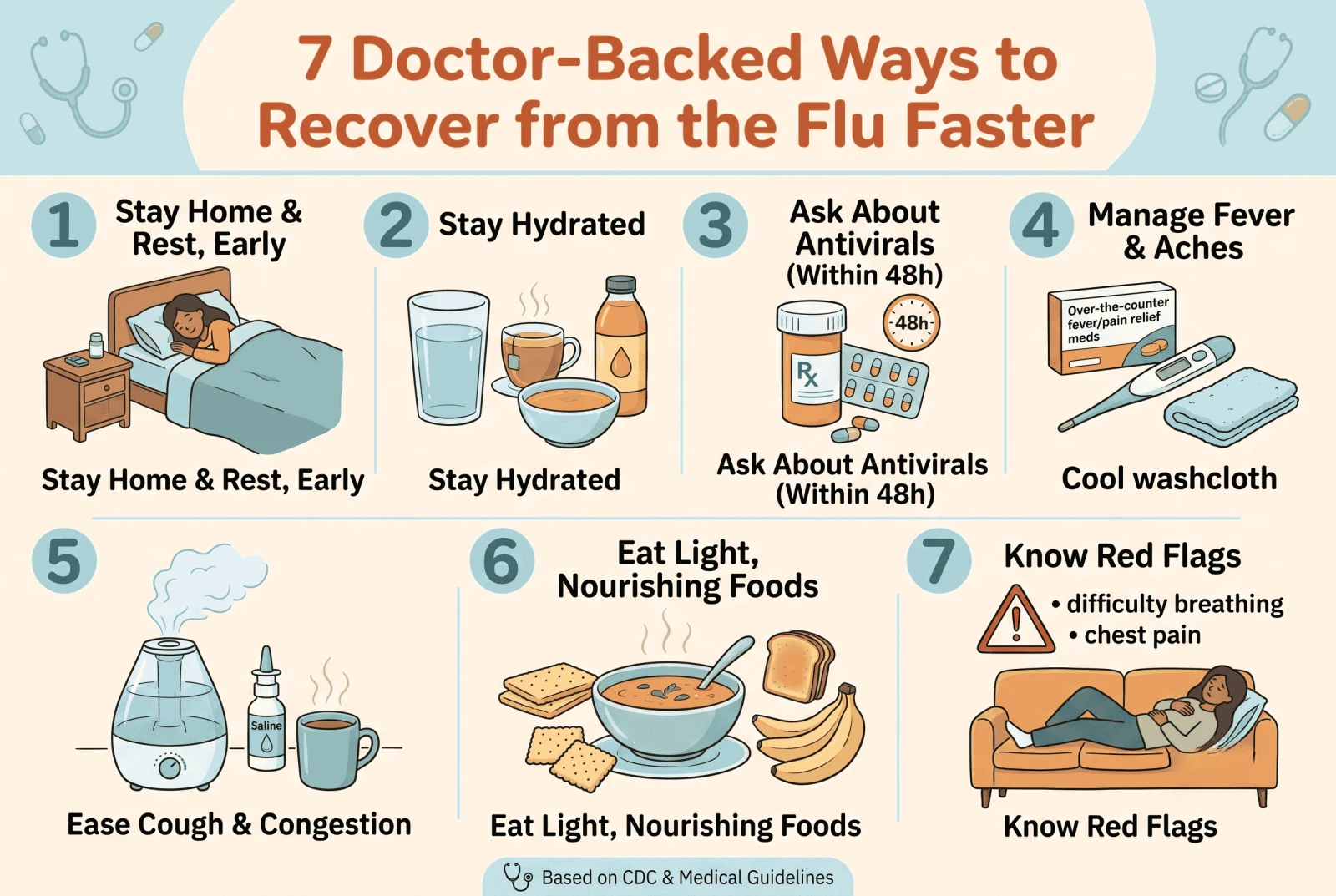
1. Stay home and rest early. The CDC advises people with flu to stay home and keep warm. Cancel what you can for the first few days. Pushing through often means a longer, rougher flu recovery.
2. Stay hydrated all day. Fever and sweating drain fluid quickly. Sip water, broth, diluted juice, or electrolyte drinks regularly. Pale-yellow urine is a simple sign that you are on track.
3. Ask about an antiviral medication within 48 hours. Antivirals work best when started within two days of getting sick. The CDC recommends treating people at higher risk as soon as possible, and a positive test isn't required for a provider to prescribe one. Antivirals are not antibiotics, which only act on bacteria.
4. Manage fever and aches sensibly. Over-the-counter pain relievers can make you more comfortable. Check labels, avoid doubling up on combination products, and never give aspirin to a child with a fever. A fever itself is part of the body's defence, so the goal is comfort, not forcing the number down.
5. Ease the cough and congestion. A humidifier, warm drinks, and extra pillows to prop up your head help you sleep. Saline rinses can loosen a stuffy nose.
6. Eat light, eat often. Appetite usually drops. Small portions of soup, toast, rice, bananas or yoghurt are easier on the stomach than a big meal. Don't force food, but don't skip fluids.
7. Know the red flags, and return slowly. Even a smooth recovery can leave you tired for a week or two. Ease back into work and exercise rather than rushing.
| When | What to do |
| Day 1–2, symptoms just started | Rest, hydrate, phone your provider about an antiviral medication if you're high-risk |
| Day 3–5, fever and aches peak | Keep fluids up, use sensible pain relief, avoid contact with others |
| Day 5–7, improving | Light meals, short walks, extra sleep |
| Any time: trouble breathing, chest pain, confusion, or symptoms that improve then return worse | Seek urgent medical care |
Who should be extra careful?
High-risk groups should call early. The 2024–2025 figures show how heavily the flu falls on older adults and young children, and the same CDC advisory names them, along with people with chronic conditions, as the ones to treat promptly. If you're pregnant, have asthma, diabetes or heart disease, or are caring for a baby or an older relative, don't wait to see how things go. Call your doctor on day one.
How do you stop it spreading to the family?
Isolate gently and clean often. Give the sick person a separate room if you can, wash hands often, and wipe shared surfaces. Open a window for a few minutes a day. Everyone else should consider a flu shot, because the CDC estimates vaccination prevented a meaningful share of the burden that season.
Conclusion
Speeding up flu recovery rarely involves anything exotic. It means resting early, keeping your fluids up, asking about an antiviral medication in the first 48 hours if you're at risk, and watching for warning signs. Treat the flu with respect, and it will usually pass in a week or two.
Frequently Asked Questions
More from our blog
 The Do's and Don'ts
The Do's and Don'ts of Easing Cold Symptoms
Adults catch 2 to 3 colds a year, yet fewer than half of Americans know antibiotics can't treat one. Here's what actually eases cold symptoms, and what only makes them drag on.
Medically reviewed by Dr. Karl E. Latortue, MD
Read Article Every Stage of Life
How to Treat a Viral Fever at Home
Fever is part of the body's defence, and most viral fevers settle within 3 to 4 days. Here's how to ease one at home, and the exact signs that mean it's time to call a doctor.
Medically reviewed by Primary Care Locations Across New York
Read Article Lifestyle Counseling in Primary Care
Lifestyle Counseling in Primary Care: Effectiveness Strategies and Clinical Implications
Primary care is where most people would hear about food, movement and smoking, and it's where that conversation is shortest. An observational study of 116 older patients' visits found that the.
Medically reviewed by Dr. Karl E. Latortue, MD
Read Article