Every Stage of LifeBy KEL Healthcare Medical
How to Treat a Viral Fever at Home
Fever is part of the body's defence, and most viral fevers settle within 3 to 4 days. Here's how to ease one at home, and the exact signs that mean it's time to call a doctor.

Introduction
Fever is part of the body's defence, and most viral fevers settle within 3 to 4 days. Here's how to ease one at home, and the exact signs that mean it's time to call a doctor.
A fever frightens people more than almost any other symptom, yet Cornell Health says it's an important way for your body to fight infection and usually not a cause for alarm. Fevers almost always go away without treatment from a doctor. The danger is rarely the viral fever itself. It's the two mistakes around it: treating a warning sign as routine, or panicking over a number that doesn't need a hospital. Here's how to manage a viral fever at home, and how to tell the difference.
Key Findings
- 100.4°F (38°C) is the usual cut-off for calling a fever in adults (Cornell Health; Tylenol Canada).
- 3 to 4 days is how long a mild viral fever typically lasts (BLK-Max Hospital).
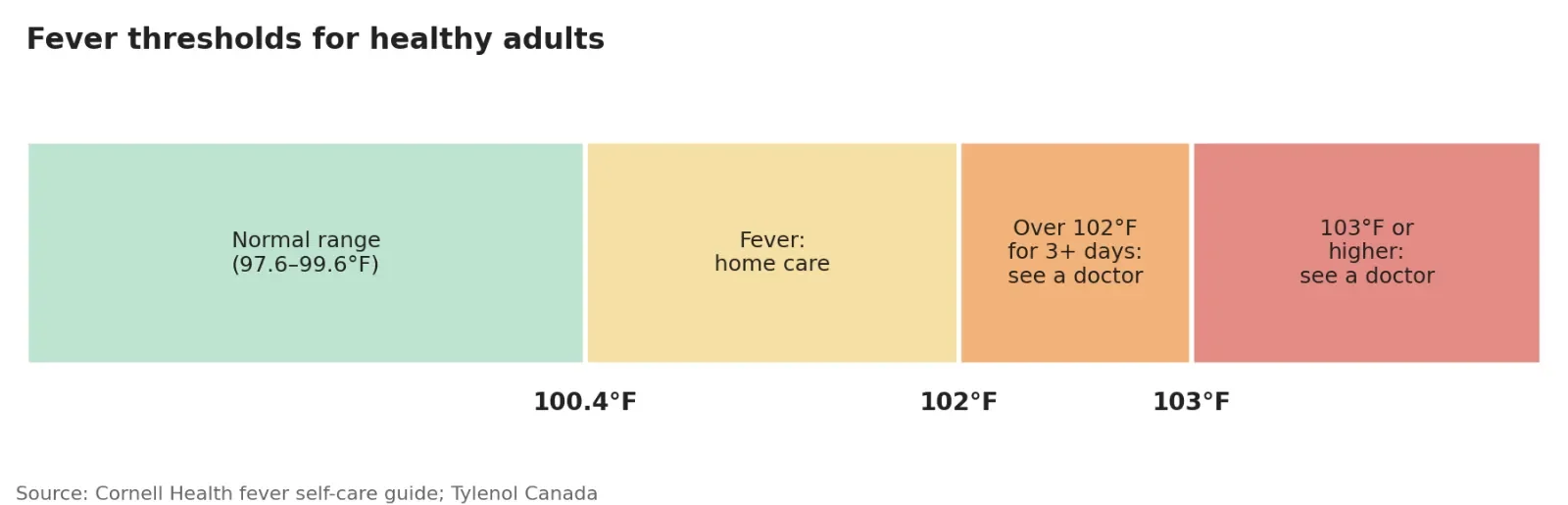
- 103°F or higher, or over 102°F for more than 3 days, means see a provider (Cornell Health).
- 24 hours fever-free (under 100°F without medication) before resuming normal activity, to avoid spreading the virus (Cornell Health).
Why does viral fever worry people so much?
Because the body temperature rises fast, and it comes with chills, aches and exhaustion. A viral fever is simply a fever caused by a viral infection, and it usually clears by itself. But the same symptoms can mark more serious illnesses. BLK-Max Hospital, for instance, links fever symptoms with the need to watch for conditions like dengue. That's why the timeline matters: a fever that drags past three days stops being "just a virus" until a doctor says otherwise.
What should you do at home?
- Rest properly. Cancel plans. Physical activity can push your temperature higher, and your immune system needs your energy. Stay in light, breathable layers and keep the room comfortably cool.
- Focus on hydration. A fever makes you sweat, and sweat means lost fluid. Cornell Health advises drinking plenty of non-alcoholic fluids and avoiding caffeine. Water, clear soups, diluted juice, coconut water and oral rehydration solution all count. Aim for pale-yellow urine.
- Use paracetamol or ibuprofen only if you're uncomfortable. Acetaminophen (paracetamol) or ibuprofen can ease discomfort, headache and body aches. Follow the package instructions, never double up on combination cold products that contain the same ingredient, and don't give aspirin to children. If your fever comes with a scratchy throat, these sore throat remedies recommended by doctors can add extra comfort.
- Try tepid sponging if the fever is high. PharmEasy's doctors suggest it can add comfort alongside rest and fluids. Use lukewarm, not cold, water. Cold water can cause shivering, which raises body heat.
- Eat light. Khichdi, soup, toast, fruit or yoghurt are easier than heavy meals. Don't force food if your appetite is low, but keep drinking.
- Don't take antibiotics. They don't treat viruses. Taking them without a clear bacterial diagnosis adds risk and no benefit. The same logic applies to other common viral illnesses, as explained in this guide to treating a sinus infection, where more than 90% of acute cases are viral.
How do you know it's safe to stay home?
| Situation | Action |
| Fever up to 102°F, improving, you're drinking well | Home care: rest, fluids, light meals |
| Fever over 102°F for more than 3 days | See a doctor |
| Fever of 103°F or higher | See a doctor promptly |
| Confusion, stiff neck, severe headache, rash, repeated vomiting, seizure | Seek urgent care |
| Fever-free under 100°F for 24 hours without medicines | Safe to return to normal routine gradually |
If your fever crosses these lines, same-day acute care can evaluate infections and sudden illness without the emergency-room wait.
What about children, older adults and pregnancy?
Lower the threshold for calling a doctor. The thresholds above are for healthy adults. Babies, young children, older adults, pregnant women and people with chronic illness can deteriorate faster. In those groups, call a doctor early rather than waiting three days, and never give a child medicine without checking the label for age and weight. For seniors in particular, dedicated geriatric care includes medication review, which matters when fever reducers are involved.
How do you stop it from spreading?
Isolate until you're fever-free. Stay home, wash hands often, use your own towels and cutlery, and cover coughs. Cornell Health recommends waiting until your temperature has stayed under 100°F for more than 24 hours without fever-reducing medicine.
Conclusion
Treating a viral fever at home is mostly about patience: rest, steady hydration, sensible use of paracetamol, and a clear plan for when to call a doctor. Most fevers settle in three to four days. If yours climbs above 103°F, lasts beyond three days or arrives with confusion, a stiff neck or a rash, don't wait it out.
Frequently Asked Questions
More from our blog
 Lifestyle Counseling in Primary Care
Lifestyle Counseling in Primary Care: Effectiveness Strategies and Clinical Implications
Primary care is where most people would hear about food, movement and smoking, and it's where that conversation is shortest. An observational study of 116 older patients' visits found that the.
Medically reviewed by Dr. Karl E. Latortue, MD
Read Article Women Health
How Lifestyle Counseling Transforms Lives
Women who kept five healthy habits lived 14 years longer, and men 12, in a Harvard study of more than 120,000 adults. Adherence is very low, which is where lifestyle counseling comes in.
Medically reviewed by Dr. Karl E. Latortue, MD
Read Article Lifestyle Therapy
What Is Lifestyle Therapy. and Why Is It the New Blockbuster Medicine?
A lifestyle program beat metformin for preventing type 2 diabetes in a landmark trial, but the results depend on intensive coaching and long-term effort.
Medically reviewed by Dr. Karl E. Latortue, MD
Read Article