Lifestyle TherapyBy KEL Healthcare Medical Services
What Is Lifestyle Therapy. and Why Is It the New Blockbuster Medicine?
A lifestyle program beat metformin for preventing type 2 diabetes in a landmark trial, but the results depend on intensive coaching and long-term effort.

Introduction
In a landmark trial, a lifestyle program cut new type 2 diabetes cases by 58%, nearly double metformin's 31%. Here's what lifestyle therapy is, and where the "blockbuster" label overreaches.
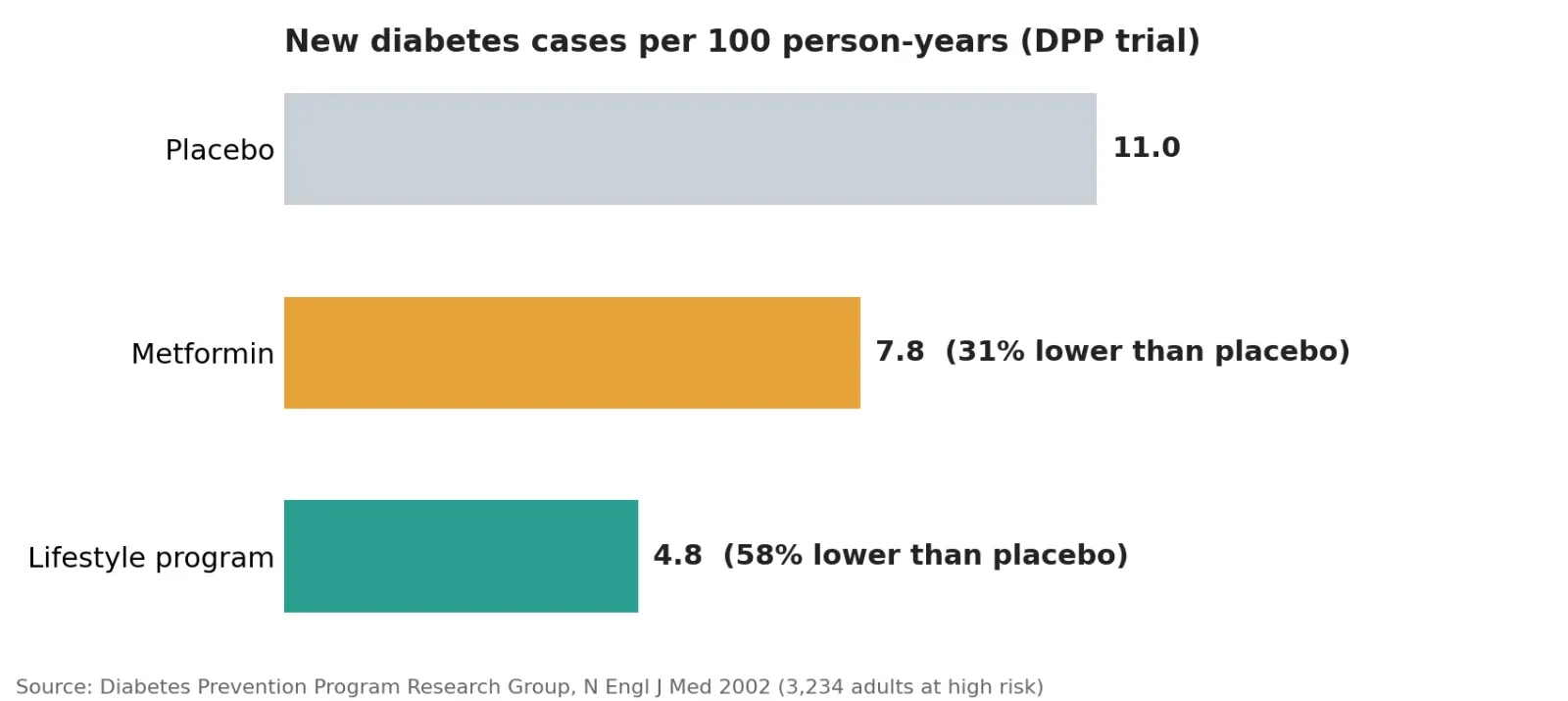
Blockbuster" is a drug-industry word, and no company sells lifestyle therapy. Yet one trial gave the idea real weight. The Diabetes Prevention Program randomly assigned 3,234 adults at high risk of type 2 diabetes to a placebo, metformin or an intensive lifestyle program. Over about three years, the lifestyle group cut new diabetes cases by 58%, compared with 31% for metformin. The result was published in the New England Journal of Medicine in 2002, and the paper concluded that the lifestyle intervention was significantly more effective than the drug. So what is lifestyle therapy, and does the blockbuster label hold up?
Key Findings
- 58% fewer new diabetes cases with the lifestyle program versus placebo, against 31% for metformin (Diabetes Prevention Program Research Group, 2002).
- 11.0, 7.8 and 4.8 new cases per 100 person-years in the placebo, metformin and lifestyle groups.
- 6.9 vs 13.9 people had to be treated for three years to prevent one case of diabetes with lifestyle versus metformin.
- 6 pillars define lifestyle medicine: nutrition, physical activity, sleep, stress management, connectedness and avoiding risky substances (American College of Lifestyle Medicine).
What is lifestyle therapy?
It's the treatment of disease with structured, evidence-based habit change. The American College of Lifestyle Medicine defines lifestyle medicine as a specialty that uses therapeutic lifestyle interventions as a primary modality to treat chronic conditions such as cardiovascular disease, type 2 diabetes and obesity. Trained clinicians prescribe changes across six pillars, and when the changes are intensive they can sometimes reverse the conditions. Lifestyle therapy is not a wellness trend, and it isn't alternative medicine. It uses the same measured approach as any treatment: assess, prescribe, follow up. This is also why primary care physicians play a central role in lifestyle-based chronic disease management.
How did lifestyle compare with metformin in the trial?
Clearly better for prevention, at least over three years. The table shows the numbers.
| Group | Intervention | New cases per 100 person-years | Reduction vs placebo | People treated 3 years to prevent 1 case |
|---|---|---|---|---|
| Placebo | Standard advice plus placebo pills | 11.0 | - | - |
| Metformin | 850 mg twice daily | 7.8 | 31% | 13.9 |
| Lifestyle | Goals of 7%+ weight loss and 150+ minutes of activity a week | 4.8 | 58% | 6.9 |
Why did lifestyle work so well?
Because it was intensive, personal and sustained. The lifestyle group received intensive training in diet, exercise and behavior modification, not a leaflet. Participants aimed for at least 7% weight loss, a target that fits a medical approach to weight management, and at least 150 minutes of physical activity per week. The advantage over metformin was greater in older people and in those with a lower body mass index, according to the study's published analysis. In other words, the program worked because it drove behavior change through coaching and measurable targets, rather than relying on willpower alone.
Is it really a "blockbuster"?
It's a fair headline for the effect size, but not for the real-world picture. A few honest caveats:
- The program was intensive. The trial's results come from structured coaching, which isn't what most people get in a short checkup.
- Habits are hard to sustain. The benefit depends on keeping the changes going.
- It's not either/or. Metformin also cut new cases overall, though its effect was smaller in people with a lower body mass index, and lifestyle medicine can be used alongside medication. If you already have a diagnosis, this step-by-step type 2 diabetes care plan shows how habits and treatment fit together.
- Results apply to a specific group. The trial enrolled adults with elevated glucose, so it speaks most directly to people with prediabetes.
Who might consider lifestyle therapy?
Anyone with prediabetes or a chronic condition who's ready for long-term change. The American College of Lifestyle Medicine says lifestyle medicine is for people motivated to engage in long-term behavior change to prevent, treat and manage chronic illness. If you have a diagnosed condition, coverage may be possible, so it's worth asking your insurer. Start with a conversation with your doctor about your blood sugar, blood pressure and cholesterol numbers, and ask about referrals to a lifestyle medicine clinician, dietitian or structured program such as lifestyle counseling. Ask which of the six pillars the program covers and how it follows up, since sustained support is what the trial's lifestyle group received.
Conclusion
Lifestyle therapy earned its reputation: in a randomized trial it beat a widely used drug for preventing diabetes. The label "blockbuster" works as a metaphor for effect size, as long as it's paired with realism about effort, coaching and time. For people at risk, the most useful takeaway is simple: ask what structured lifestyle support is available, and treat it as a real prescription.
Frequently Asked Questions
More from our blog
 Lifestyle Counseling
How Lifestyle Counseling Can Help You Live Your Healthiest Life
Lifestyle counseling helps you improve your health through six key pillars: healthy nutrition, physical activity, restorative sleep, stress management, social connections, and avoiding risky substances. Start with small, realistic changes and seek professional guidance to build sustainable habits, prevent health problems, and manage chronic conditions with support from KEL Healthcare.
Medically reviewed by Dr. Karl E. Latortue, MD
Read Article Osteoarthritis and Chronic Joint Pain
Osteoarthritis and Chronic Joint Pain: Staying Active With a Long-Term Plan
Osteoarthritis is a leading cause of chronic joint pain, but a long-term plan built around movement, weight management, and safe pain relief can help you stay active and independent.
Medically reviewed by Dr. Karl E. Latortue, MD
Read Article Chronic Disease
Chronic Disease Flare-Ups: When to Call Your Doctor, Visit Acute Care, or Go to the ER
Not every flare-up is an emergency, but some are. Learn how to recognize early warning signs and decide between calling your doctor, visiting urgent care, or dialing 911.
Medically reviewed by Dr. Karl E. Latortue, MD
Read Article