Health Assessment vs. Annual PhysicalBy Kel Healthcare Medical
Comprehensive Health Assessment vs. Annual Physical: What's the Difference?
If you've ever booked a checkup and wondered whether you actually needed a quick physical or something more thorough, you're not alone. The health assessment vs annual physical question comes up.
Introduction
If you've ever booked a checkup and wondered whether you actually needed a quick physical or something more thorough, you're not alone. The health assessment vs annual physical question comes up constantly, and the honest answer is: it depends on your age, your risk factors, and how long it's been since your last full evaluation.
Both visits matter, but they aren't interchangeable. An annual physical exam is designed to be a quick, general check-in, while a comprehensive health assessment digs much deeper into your lab work, risk factors, and long-term health trends. Choosing the wrong one or skipping both is often how early warning signs get missed.
In this guide, we'll break down exactly what each visit includes, how preventive care NY providers typically recommend choosing between them, and how to decide which one is right for you this year.
What Is an Annual Physical Exam?
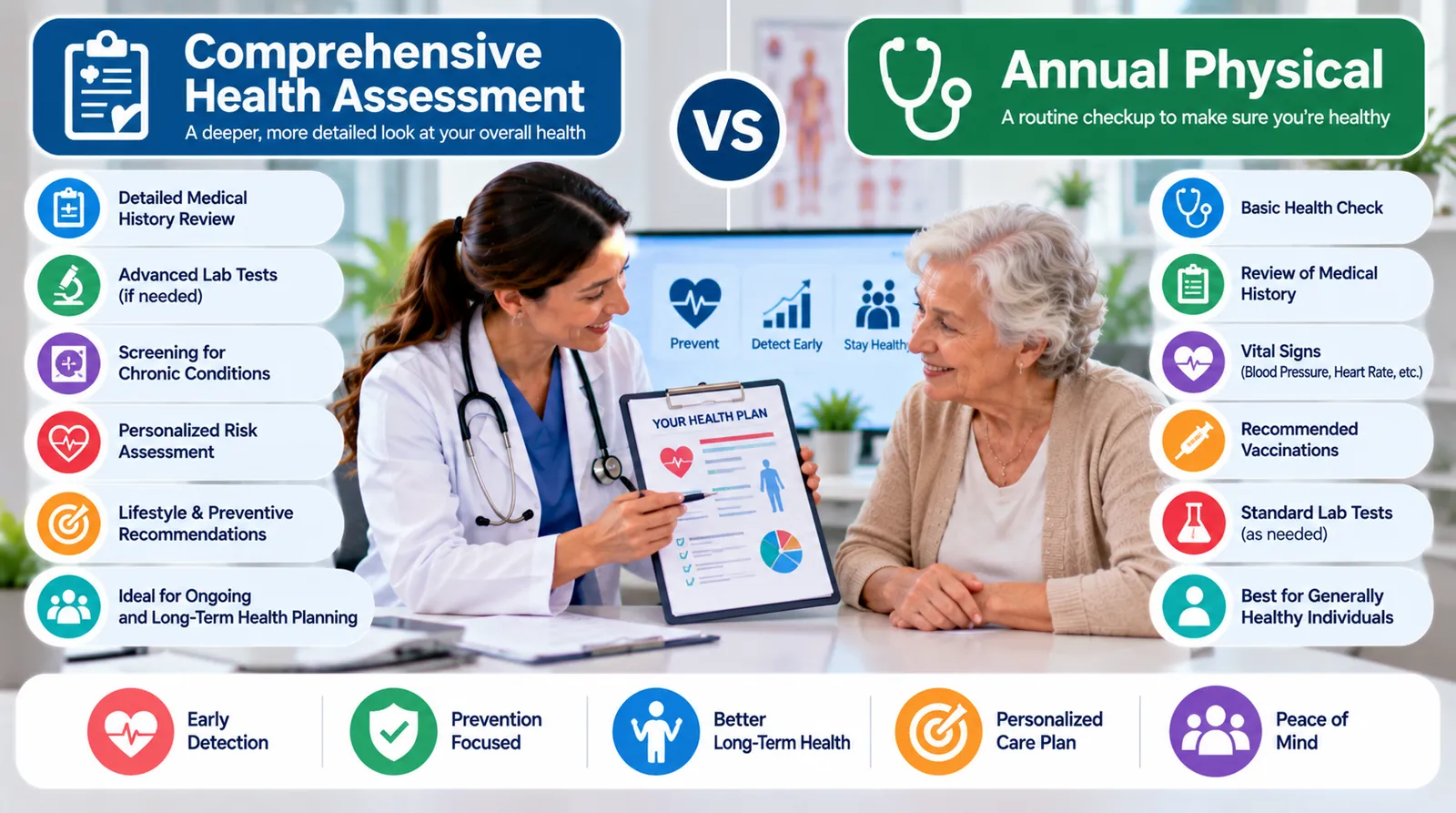
An annual physical exam is a routine, general checkup most adults are familiar with. It typically includes:
- Basic vital signs (blood pressure, heart rate, temperature)
- A general physical examination
- Height, weight, and BMI check
- A brief conversation about any current symptoms or concerns
It's quick, usually straightforward, and a good baseline check for otherwise healthy adults without major risk factors.
What Is a Comprehensive Health Assessment?
A comprehensive health assessment goes several steps further. It's built to evaluate your whole health picture, not just confirm you're not currently sick. A typical assessment includes:
- A detailed personal and family medical history review
- Expanded lab panels covering multiple organ systems
- Risk-based screenings tailored to your age and history
- A personalized consultation to walk through your full results
This is the option most providers recommend if it's been over a year since your last full evaluation or if you have any known risk factors.
Health Assessment vs Annual Physical: Key Differences
Here's the health assessment vs annual physical comparison at a glance:
- Time: An annual physical usually takes 15–20 minutes; a comprehensive assessment takes 60–90 minutes.
- Lab work: Physicals may include minimal or no bloodwork; assessments include expanded panels.
- Personalization: Assessments factor in family history and risk profile far more deeply.
- Purpose: Physicals confirm general wellness; assessments actively screen for hidden risk.
- Follow-up: Assessments typically include a dedicated results consultation, not just a quick summary.
Preventive Care NY: Which Option Fits Your Needs
Preventive care NY providers generally recommend a simple rule of thumb:
- If you're young, healthy, and have no major risk factors, an annual physical exam may be sufficient
- If you have a family history of chronic disease, unexplained symptoms, or haven't had bloodwork in over a year, a comprehensive assessment is the better fit
- If you're unsure, ask your provider directly; many preventive care NY clinics will help you decide based on your history during your booking call
Step-by-Step Comparison: What Happens During Each Visit
During an Annual Physical Exam
- Check-in and basic vitals
- Brief physical exam
- Quick conversation about symptoms or concerns
- Recommendations for any needed follow-up
During a Comprehensive Health Assessment
- Detailed history and risk review
- Full physical examination
- Blood draw and diagnostic panel
- Results consultation with a personalized action plan
Who Should Choose Which Option
Consider an annual physical exam if:
- You're generally healthy with no major risk factors
- You had a comprehensive assessment recently and just need a check-in
Consider a comprehensive health assessment if:
- It's been over a year since your last full lab panel
- You have a family history of chronic conditions
- You've noticed fatigue, weight changes, or other unexplained symptoms
- You want a proactive, detailed view of your long-term health risk
How to Decide: Questions to Ask Your Provider
If you're still unsure, these questions can help clarify which visit makes sense:
- When was my last full lab panel, and what did it show?
- Do I have any family history that increases my risk for certain conditions?
- Have I noticed any symptoms, even minor ones, worth investigating further?
- Is it time for age-specific screenings I haven't had yet?
Conclusion
Choosing between a health assessment vs. an annual physical doesn't have to be complicated. If you're generally healthy with no major risk factors, an annual physical exam may be all you need this year. But if it's been a while since your last full lab panel, or you have risk factors worth investigating, a comprehensive health assessment offers a deeper, more complete picture of your health.Not sure which one is right for you? Talk to your preventive care NY provider about your history, and let them help you choose the option that fits your needs today.
Frequently Asked Questions
More from our blog
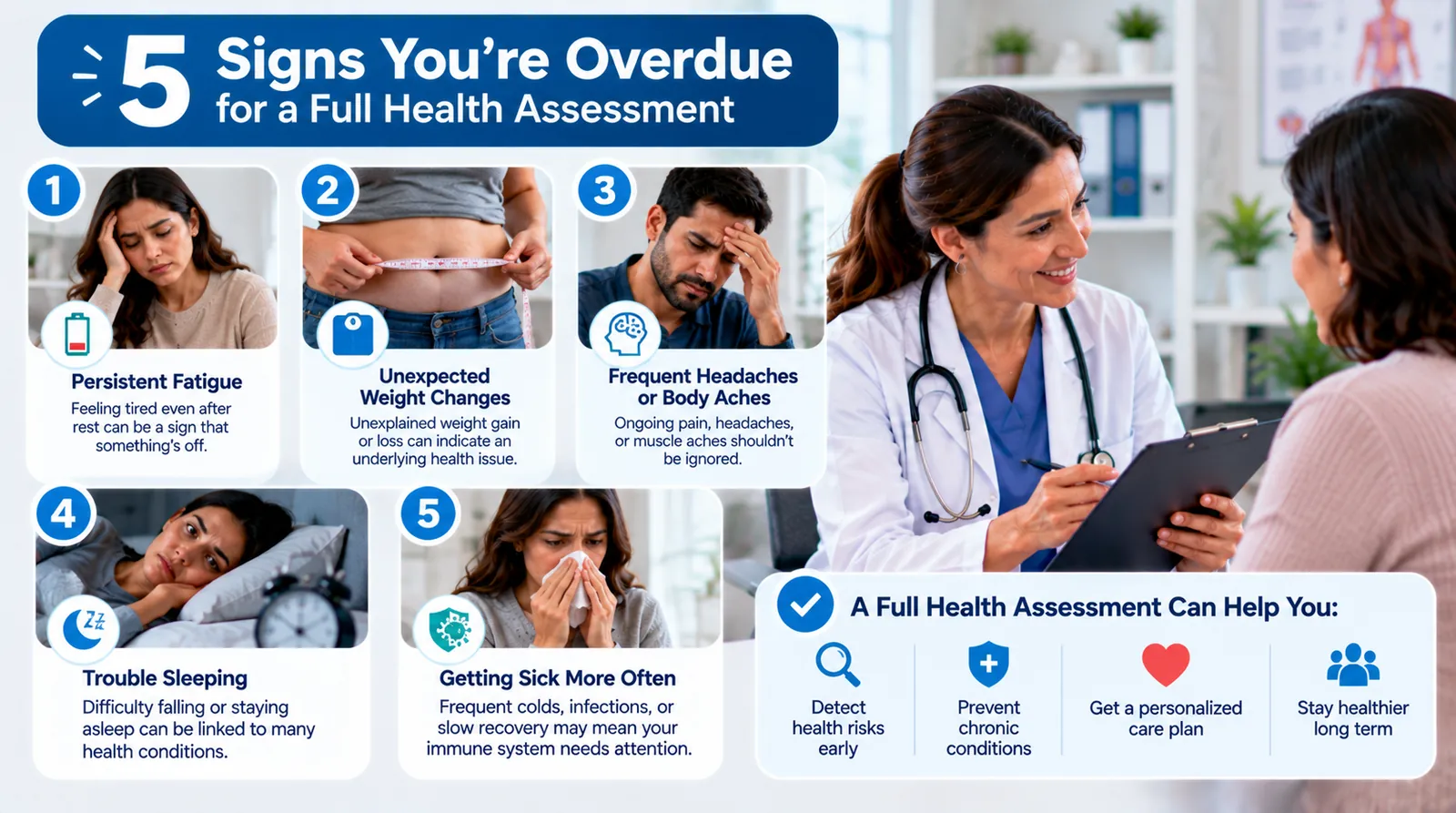 5 Health Assessment
5 Signs You're Overdue for a Full Health Assessment
Life gets busy, and a checkup is easy to keep pushing to "next month." But your body often sends quiet signals long before anything feels seriously wrong, and recognizing these health assessment.
Medically reviewed by Kel Healthcare Medical Team
Read Article Comprehensive Health Assessment
What Really Happens During a Comprehensive Health Assessment
Most people put off their yearly checkup simply because they don't know what to expect. If the words "physical exam" or "screening panel" make you picture a rushed ten-minute visit and a blood.
Medically reviewed by Kel Healthcare Medical Team
Read Article Walk-Ins Welcome
: How to Get Same-Day Care at Any of Our 2 Locations
Getting sick or injured rarely happens on a convenient schedule, and waiting days for an appointment isn't always an option. That's exactly why KEL Healthcare runs as a true walk-in clinic with no.
Medically reviewed by Kel Healthcare Medical Team
Read Article