IV TherapyBy Kel Healthcare Medical Team
IV Drip Therapy Benefits: A Complete Guide to Vitamin Infusions
What intravenous nutrient therapy actually does, why absorption is the whole argument for it, who tends to benefit most, and the safety considerations worth knowing before your first session.
Introduction
If you’ve been feeling drained, dehydrated, or just not quite like yourself, you may have heard people talking about IV drip therapy. It’s become one of the most talked-about wellness treatments in recent years, and for good reason. Delivering fluids, vitamins, and minerals directly into your bloodstream allows your body to absorb them far more efficiently than swallowing a pill or drinking a glass of water.
In this guide, we’ll break down the real, evidence-informed IV drip therapy benefits, explain how vitamin infusion therapy for fatigue works, and help you understand whether hydration drip benefits are worth exploring for your own health goals. Whether you’re an athlete recovering from a tough workout, someone battling chronic tiredness, or simply curious about intravenous nutrient therapy, this article covers everything you need to know.
We’ll also walk through the science, the safety considerations, and what a typical session looks like so you can make an informed decision with your healthcare provider.
What Is IV Drip Therapy?
IV drip therapy is a treatment that delivers fluids, vitamins, minerals, and antioxidants directly into your bloodstream through a small intravenous line. Because the nutrients bypass the digestive system, they can reach your cells faster and in higher concentrations than oral supplements allow.
Clinics typically offer a menu of IV blends tailored to specific goals, such as:
- Boosting energy and focus
- Supporting immune function
- Speeding up recovery after illness or exercise
- Replenishing fluids after dehydration
If you’d like a personalized recommendation, our IV therapy consultation service can help match a blend to your specific needs.
Common Ingredients in a Vitamin Infusion
Most drips include a combination of:
- Vitamin C: supports immune health and collagen production
- B-complex vitamins: support energy metabolism
- Magnesium: supports muscle and nerve function
- Electrolytes: sodium, potassium, and chloride for fluid balance
- Glutathione: an antioxidant sometimes added for cellular support
Top IV Drip Therapy Benefits
The primary appeal of IV drip therapy benefits comes down to speed and absorption. Because nutrients enter the bloodstream directly, your body doesn’t need to break them down through digestion first.
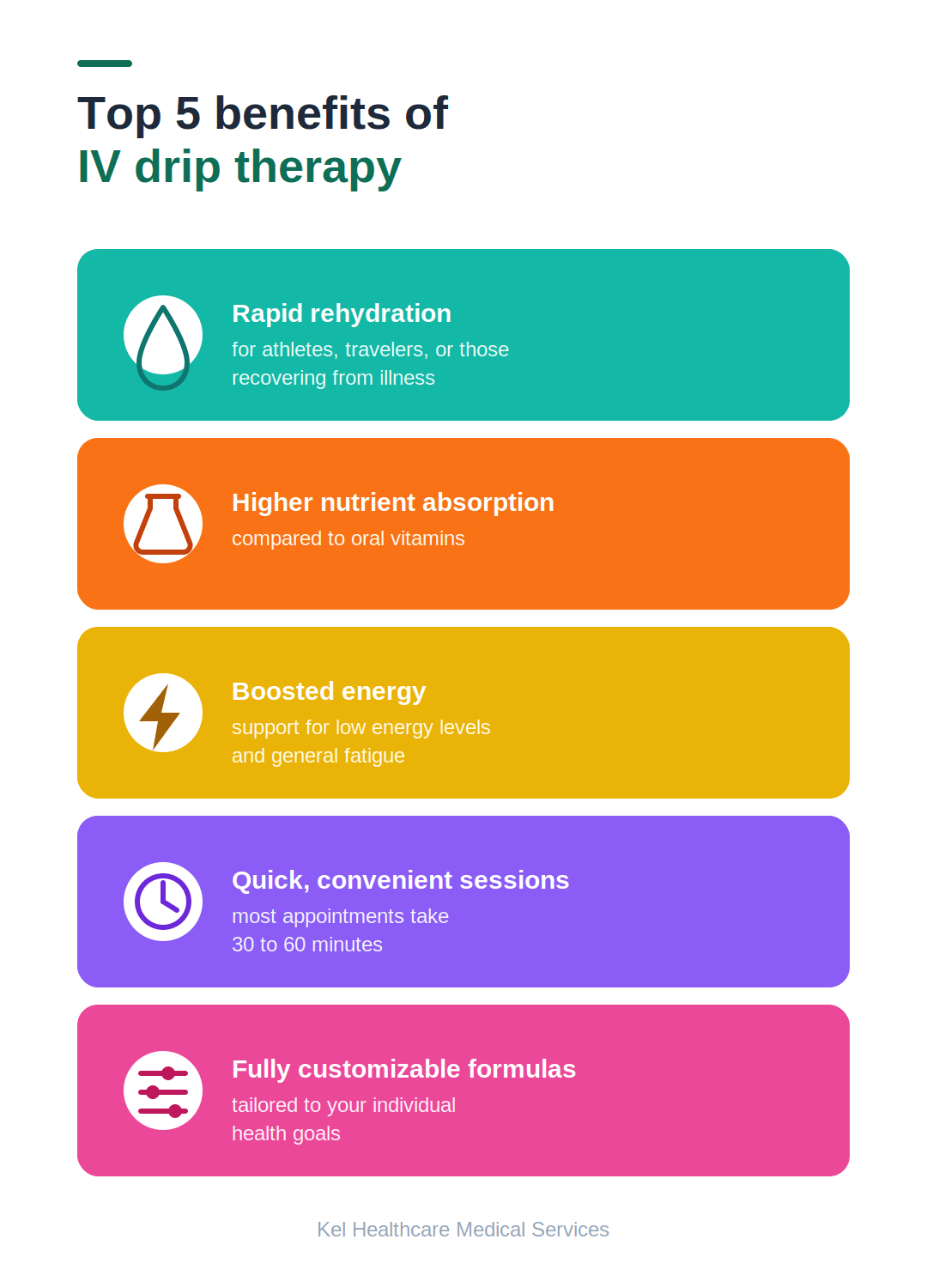
Here’s a quick look at the most commonly reported benefits:
- Rapid rehydration for athletes, travelers, or those recovering from illness
- Higher nutrient absorption compared to oral vitamins
- Support for low energy levels and general fatigue
- Convenient, quick sessions: most appointments take 30–60 minutes
- Customizable formulas based on individual health goals
Why Absorption Matters
Oral supplements pass through the stomach and liver before reaching your bloodstream, and a portion of the nutrients is lost along the way. Intravenous nutrient therapy skips that process, so the full dose is made available to your cells almost immediately. This is one reason people who don’t respond well to oral vitamins are drawn to infusion therapy.
The National Institutes of Health Office of Dietary Supplements has more on how nutrient absorption is affected by digestion.
Vitamin Infusion Therapy for Fatigue
Fatigue is one of the most common reasons people seek out vitamin infusion therapy for fatigue. Chronic tiredness can stem from many causes, poor sleep, stress, nutrient deficiencies, or dehydration, and a targeted IV blend is often used to address the nutritional piece of that puzzle.
Popular fatigue-focused drips typically combine:
- B12 and B-complex vitamins to support energy metabolism
- Amino acids for cellular repair
- Magnesium to ease muscle tension and support restful sleep
- Fluids and electrolytes to correct mild dehydration, which is itself a common cause of tiredness
What the Research Says
While IV vitamin therapy is popular, it’s worth noting that most of the supporting evidence relates to correcting specific, diagnosed deficiencies rather than general wellness in people with normal vitamin levels. The Mayo Clinic notes that IV vitamin therapy can be beneficial for people who are deficient, but healthy individuals may see more modest effects. A conversation with a licensed provider can help determine if you have an underlying deficiency worth addressing.
Hydration Drip Benefits Explained
Dehydration affects far more than just thirst. It can impact energy, mood, skin, digestion, and even cognitive function. This is where hydration drip benefits come into play, especially for people who struggle to stay hydrated through drinking water alone.
Who Benefits Most from Hydration Drips
- Athletes after intense training or competition
- People recovering from a stomach bug or food poisoning
- Frequent travelers dealing with jet lag
- Individuals recovering from a night of heavy alcohol consumption
- Anyone working in hot climates or physically demanding jobs
A hydration drip typically includes a balanced electrolyte solution designed to restore fluid balance faster than oral rehydration in cases of significant fluid loss. The CDC’s guidance on water and healthier drinks is a helpful resource for general hydration science.
How Intravenous Nutrient Therapy Works
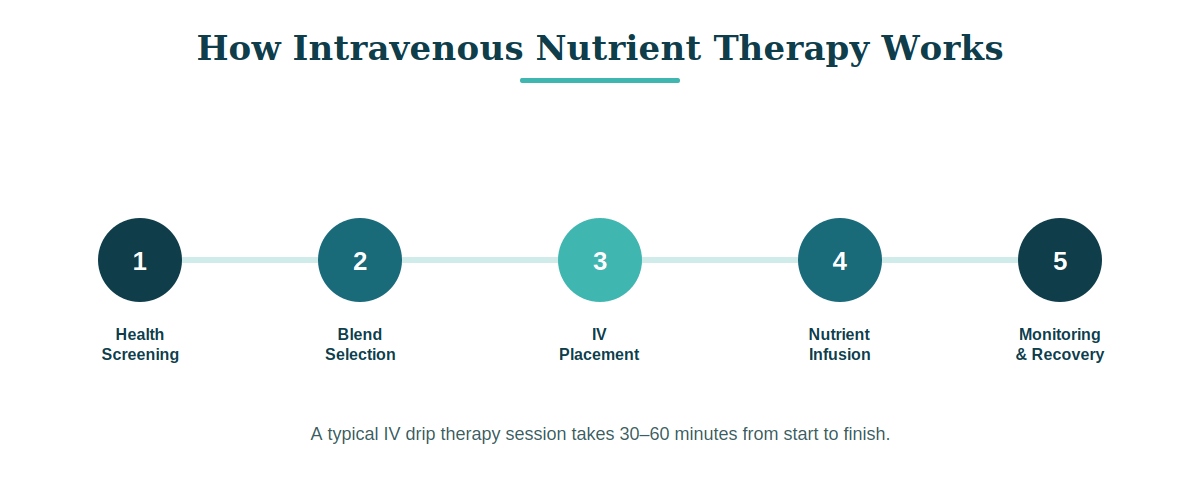
Intravenous nutrient therapy follows a straightforward process, but it should always be performed by a trained medical professional in a clinical setting.
Step-by-Step: What Happens During a Session
- Health screening: a provider reviews your medical history and goals.
- Blend selection: you choose (or are recommended) a formula based on your needs.
- IV placement: a small needle is inserted into a vein, usually in the arm.
- Infusion: fluids drip slowly into your bloodstream over 30–60 minutes.
- Monitoring: staff check in throughout to ensure comfort and safety.
Most people describe the experience as relaxing, often reading, working, or resting during the session.
Who Should Consider IV Drip Therapy?
IV drip therapy isn’t a one-size-fits-all solution, but many people find it useful in specific situations:
- Athletes and active individuals needing faster recovery
- People with diagnosed vitamin or mineral deficiencies
- Individuals recovering from illness, travel, or dehydration
- Those seeking convenient, professionally supervised wellness support
Who Should Be Cautious
People with kidney disease, heart conditions, or certain electrolyte imbalances should consult a physician before starting IV therapy. Pregnant or breastfeeding individuals should also seek medical guidance first. Always disclose your full medical history during your consultation appointment.
Safety, Risks, and What to Expect
IV drip therapy is generally considered safe when administered by qualified medical professionals in a sterile, controlled environment. That said, like any medical procedure, it carries some risk.
Potential Side Effects
- Minor bruising or discomfort at the injection site
- Rare allergic reactions to specific ingredients
- Vein irritation with repeated use
- Electrolyte imbalance if overused without medical supervision
Reputable clinics follow strict protocols for sterility, dosing, and staff qualifications. The American Medical Association and Mayo Clinic both recommend confirming that any IV therapy provider is staffed by licensed medical professionals before booking a session.
Conclusion
IV drip therapy has grown in popularity because it offers a fast, direct way to support hydration and nutrient levels, especially for people dealing with fatigue, dehydration, or specific deficiencies. From vitamin infusion therapy for fatigue to simple hydration drip benefits after a long trip or workout, these treatments can be a helpful part of a broader wellness routine when used responsibly and under professional supervision.
That said, IV drip therapy isn’t a substitute for a balanced diet, proper hydration habits, or regular medical care. The best results come from combining intravenous nutrient therapy with healthy lifestyle habits and guidance from a licensed provider who understands your individual health history.
If you’re curious whether IV drip therapy is right for you, we recommend starting with a consultation so a medical professional can assess your needs and recommend the most appropriate treatment plan.
Frequently Asked Questions
More from our blog
 Geriatric Care in Queens
Geriatric Care in Queens: Healthcare Services for Older Adults
There's a shift that tends to sneak up on families as parents or grandparents get older. Suddenly there are more pill bottles on the counter, more appointments to keep track of, and the kind of care.
Medically reviewed by Dr. Karl E. Latortue, MD
Read Article Premier Physicians
How Woodside Premier Physicians Doctors Help You Stay Healthy Year-Round
Staying healthy is more than scheduling a visit when you are sick. It means having a trusted primary care team that gets to know you, helps you prevent health concerns, and supports you through.
Medically reviewed by Urgent Care Specialist in New York
Read Article Primary Care
How to Choose the Right Primary Care Doctor in Staten Island, New York
Choosing the right primary care doctor in Staten Island, NY, is an important step toward maintaining your overall health. Learn what to consider, including experience, available services, location, appointment options, and personalized patient care, to find a healthcare provider who meets your needs.
Medically reviewed by Primary Care Locations Across New York
Read Article