Comprehensive Health AssessmentBy Kel Healthcare Team
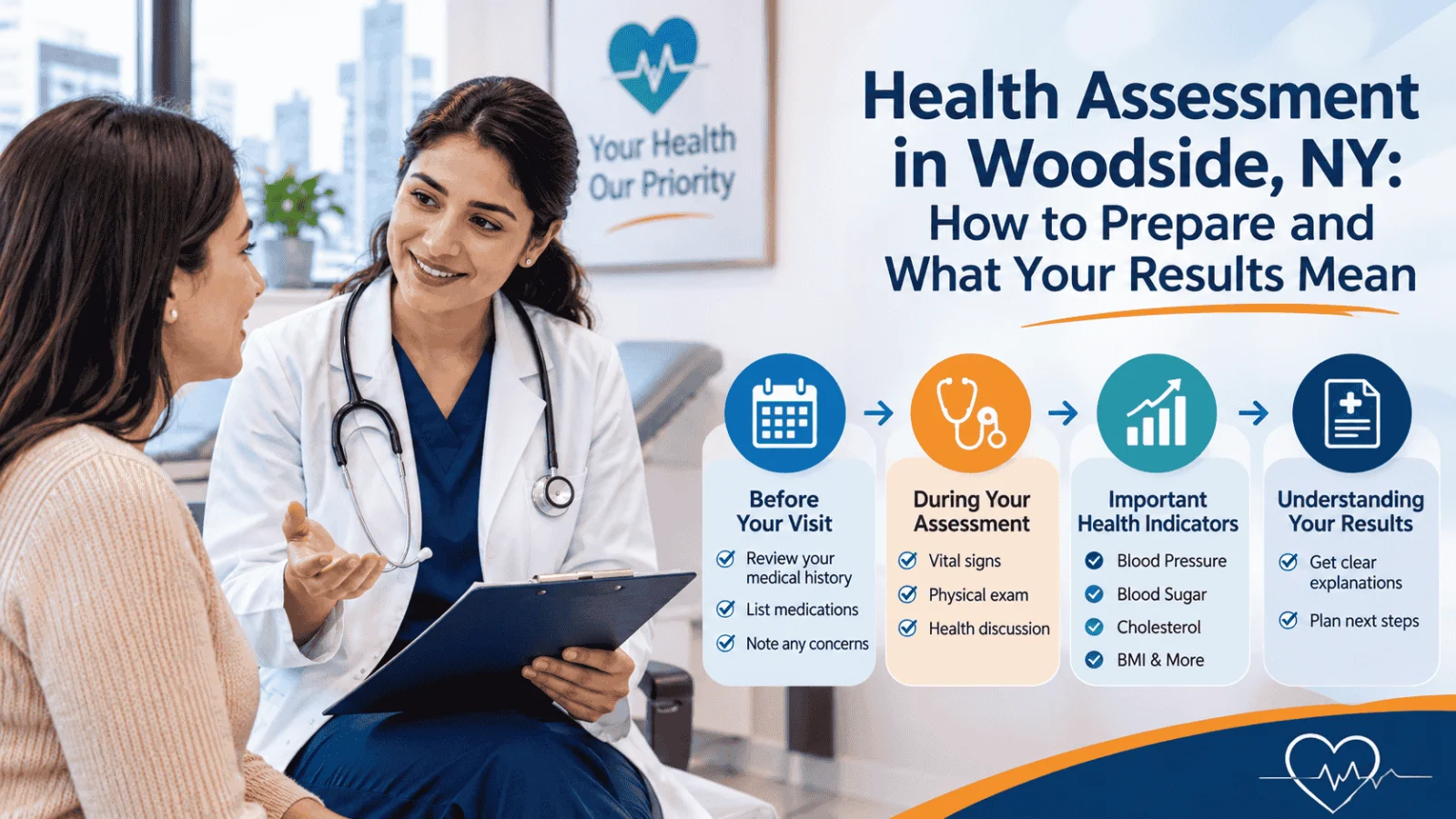
Health Assessment in Woodside, NY: How to Prepare and What Your Results Mean
Planning a health assessment in Woodside, NY? Learn how to prepare, what is usually reviewed and how to turn your results into a plan you can act on.
Introduction
Most of us only see a doctor when something feels wrong. A health assessment in Woodside, NY flips that around: it is a planned, whole-person review that looks at where your health stands today, so small problems can be caught early and healthy habits can be built on purpose.
If you are wondering what actually happens, how to prepare and what to do with the results, this guide walks you through it. For the basics of what is included, you can also read our article on booking a comprehensive health assessment in Woodside.
What a Health Assessment Looks Like
KEL Healthcare's comprehensive health assessments take a broader view than a quick checkup. Depending on your age, history and needs, a visit commonly covers:
- Health history: past conditions, surgeries, family history, medicines and allergies
- Vital signs and physical exam: blood pressure, heart rate, weight and a clinician's exam
- Risk review: heart health, blood sugar, cholesterol, weight and lifestyle factors
- Screenings and vaccines: what you are due for based on age and risk
- Lab work and basic testing: ordered when your clinician feels it is appropriate, through diagnostic testing
- Goal setting: a plan for sleep, activity, nutrition, stress and follow-up
To see how a visit unfolds in more detail, read What Really Happens During a Comprehensive Health Assessment.
Health Assessment vs. Annual Physical
The two overlap, and many people use the terms interchangeably. In general, an annual health checkup is a routine yearly visit, while a comprehensive assessment goes deeper into risk factors, lifestyle and long-term planning. If you are unsure which fits you, our guide on comprehensive health assessment vs. annual physical explains the difference.
How to Prepare for Your Visit
A little preparation makes the visit far more useful:
- Gather your records. Bring recent lab results, imaging, hospital notes and vaccination records if you have them.
- List your medicines. Include doses, vitamins and supplements, and note any allergies.
- Write down your family history. Heart disease, diabetes, cancer and high blood pressure in close relatives all matter.
- Track what you have noticed. Fatigue, sleep changes, pain, weight shifts or mood changes are worth mentioning.
- Ask about fasting. If lab work is planned, ask in advance whether you should fast, and bring water.
- Prepare your questions. Write your top three concerns so they are covered even if time is short.
The Agency for Healthcare Research and Quality's 10 questions to ask your doctor is a handy checklist to bring along.
Understanding Your Results
Numbers and reports can feel overwhelming. A few principles help:
- One reading is a snapshot. A single blood pressure or glucose value is considered alongside your history and repeat measurements.
- Normal ranges are guides. Your clinician interprets results in the context of your age, health conditions and risk factors.
- Trends matter. Comparing this year's results with last year's often reveals more than any one number.
- Ask what changes next. For every result, ask what it means and whether any action is needed.
If a result points to a condition that needs ongoing care, your clinician may recommend follow-up visits, additional testing or a specialist. Our team can help through referral services and ongoing chronic disease management.
How Often Should You Have a Health Assessment?
For many adults, once a year is a sensible rhythm, though the right timing depends on your age, family history and existing conditions. The U.S. Preventive Services Task Force publishes evidence-based screening recommendations, and the government's MyHealthfinder tool gives personalized prevention suggestions. See our articles on how often you should get a comprehensive health assessment and who should get one every year.
Not sure whether it is time? Check 5 Signs You're Overdue for a Full Health Assessment.
Visiting Our Woodside Clinic
Our Woodside location is at 6315 Roosevelt Avenue, Woodside, NY 11377. Listed hours are Tuesday, Thursday and Friday from 11 AM to 7 PM, which can suit patients who work during the day. Please call (718) 874-3173 to confirm the current schedule and to ask about insurance before you book. Many patients also pair their assessment with a primary care relationship so results are followed up.
Conclusion
A health assessment is one of the simplest ways to take charge of your health before a problem forces the issue. With some preparation and a clinician who explains your results clearly, you leave with a plan, not just a printout.
Ready to schedule? Book an appointment at our Woodside clinic or call (718) 874-3173. This article is for general information and is not medical advice. In an emergency, call 911.
Frequently Asked Questions
More from our blog
 Medical Referral
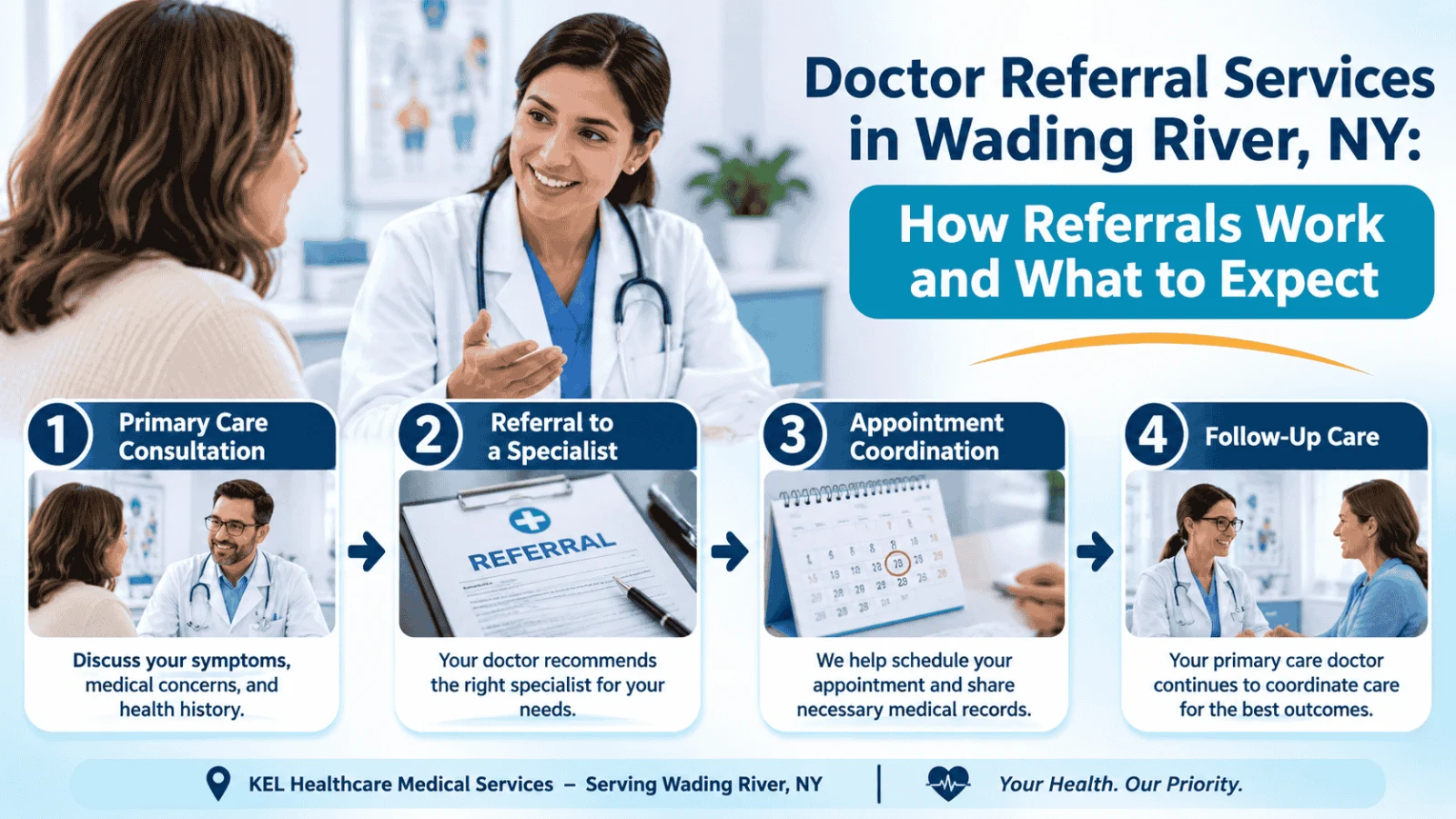
Doctor Referral Services in Wading River, NY: How Referrals Work and What to Expect
Not sure how a specialist referral works? Here is how doctor referral services in Wading River, NY connect you with the right specialist, what to bring and how to follow through.
Medically reviewed by Dr. Karl E. Latortue, MD
Read Article Primary Care
Medical Health Care Services in Staten Island, NY: Match What You Need to the Right Service
Not sure which medical service you need in Staten Island, NY? Match your symptoms and health goals to primary, acute, diagnostic, chronic and preventive care in one place.
Medically reviewed by Dr. Karl E. Latortue, MD
Read Article Primary Care
Top 10 Best Primary Care Clinics in Woodside, NY: What the Best Ones Have in Common (2026 Checklist)
Choosing among primary care clinics in Woodside, NY? Use this top 10 checklist to compare access, doctors, on-site testing, languages, insurance and follow-up before you book.
Medically reviewed by Dr. Karl E. Latortue, MD
Read Article