Preventive careBy Kel Healthcare Team
What Blood Tests Should You Get at Your Annual Physical? A Doctor's Guide
Not sure which blood tests belong in a yearly checkup? See the common panels, what each one looks for, and how your age and history change the list.
Introduction
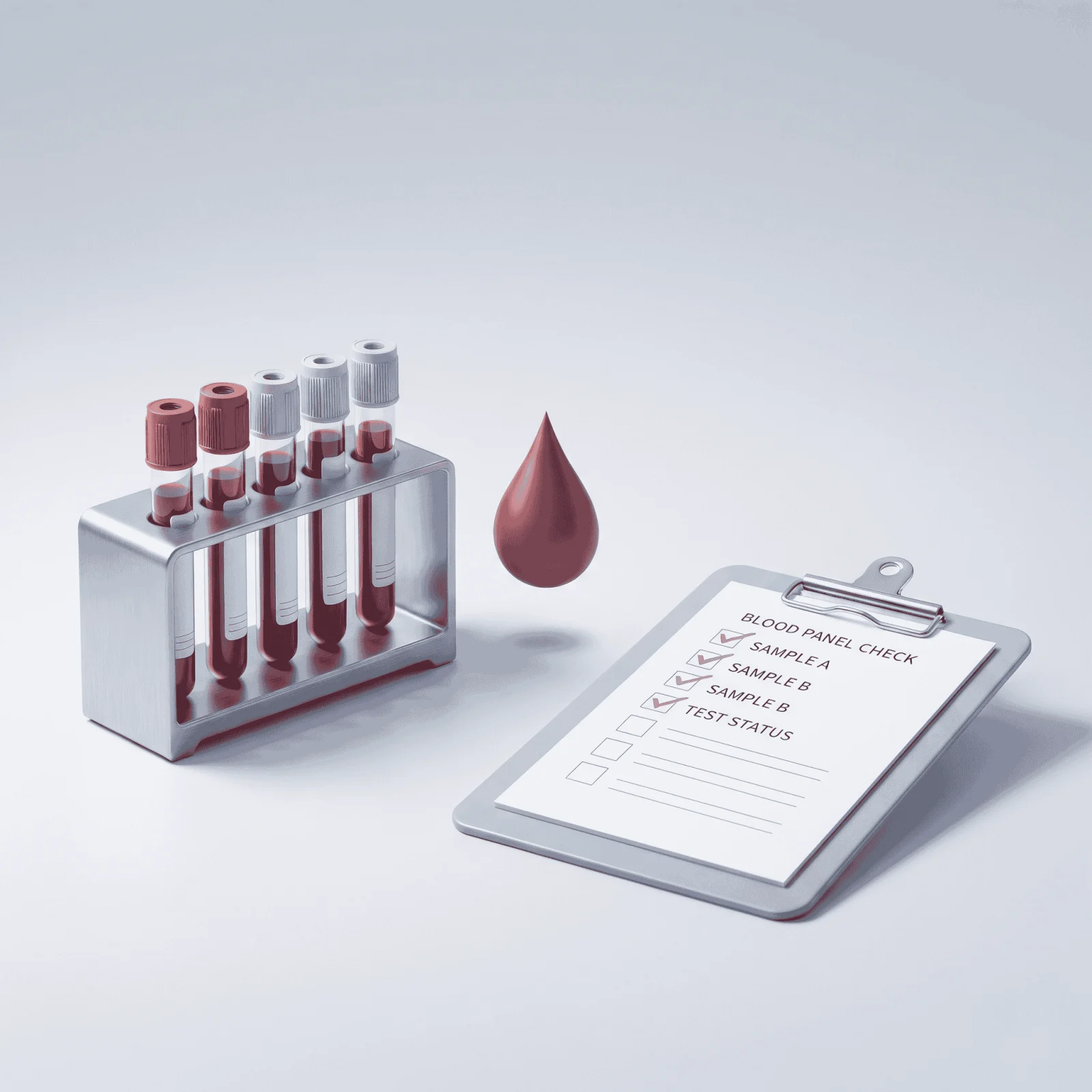
Many people assume a yearly physical automatically includes a full set of blood tests. In reality, the right list depends on your age, symptoms, family history, medications and past results. There is no single menu that fits everyone.
This guide covers the blood tests most commonly discussed at an annual physical, what each one looks for, and the questions to ask your clinician so you leave with a plan that fits you. For help reading your numbers afterward, see our patient's guide to understanding bloodwork results.
The Tests Most Often Discussed
| Test | What it looks at | Why it matters |
|---|---|---|
| Complete blood count (CBC) | Red cells, white cells, hemoglobin, platelets | Can point to anemia, infection or other blood conditions |
| Basic or comprehensive metabolic panel | Blood sugar, kidney function, electrolytes, and (comprehensive) liver enzymes | Gives a broad snapshot of organ function and hydration |
| Lipid panel | Total cholesterol, LDL, HDL, triglycerides | Helps estimate heart and blood vessel risk |
| Hemoglobin A1c or fasting glucose | Average or current blood sugar | Screens for prediabetes and diabetes |
| Thyroid test (TSH) | Thyroid hormone signal | Usually ordered when symptoms or risk factors suggest a thyroid problem |
Some tests are routine for many adults; others are ordered only when there is a reason. Ask which ones your clinician recommends for you and why.
Tests That Depend on Your Situation
- Vitamin D, B12 or iron studies, when symptoms, diet or health conditions suggest a deficiency
- Kidney or liver follow-up tests if a screening result was abnormal or you take medicines that affect those organs
- One-time screening for hepatitis C and HIV, which many adults are advised to have at least once
- PSA discussion for men, which is a shared decision rather than an automatic test
- Pregnancy-related or hormone tests when relevant to your symptoms or plans
Screening guidance changes over time. You can see what applies to you on MyHealthfinder's screening tests page and the U.S. Preventive Services Task Force recommendations.
Do You Need to Fast?
Some tests, such as a fasting glucose, may need a fast of several hours. Many lipid panels can now be done without fasting, but practices differ. Ask when you book. Our guide to fasting before bloodwork explains what is usually allowed, and our post on blood work and lab tests in Brooklyn covers practical preparation.
How to Get the Most From the Visit
- Bring a list of your medications, vitamins, and supplements.
- Share your family history of diabetes, heart disease, cancer, and thyroid problems.
- Mention symptoms such as fatigue, weight change, thirst, or poor sleep, even if they seem minor.
- Ask which tests are being ordered and what each is meant to find.
- Ask how and when you will receive results, and what happens if a number is outside the usual range.
KEL Healthcare lists preventive care and diagnostic testing among its services. Not every test is performed at every location, so ask your clinic which ones are available. If it has been a while since a full evaluation, a comprehensive health assessment is another option to discuss.
What Happens After the Results
A result outside the reference range is not automatically a diagnosis. It may be repeated, explained by a recent illness or medication, or followed by another test. The reverse is also true: a normal result does not replace a conversation about symptoms. Ongoing conditions can be followed through chronic disease management.
Conclusion
The best set of blood tests is the one matched to your age, history and goals. Go in prepared, ask questions and make sure you know what happens next.
To book a checkup, schedule an appointment. This article is for general information only and is not medical advice.
Frequently Asked Questions
More from our blog
 Why Annual Well-Woman Visits Matter
Woodside Queens Women's Health: Annual Exam, Screenings and Questions to Ask
Preparing for a women's health visit in Woodside, Queens? Learn what an annual exam involves, which screenings to ask about, what to bring, and how to follow up.
Medically reviewed by Dr. Karl E. Latortue, MD
Read Article Women's Health Screening
Women's Health in Woodside, Queens: A Guide to Care at Every Age
Looking for women's health care in Woodside, Queens? See what care includes at each stage of life, what to look for in a provider, and how KEL Healthcare's Woodside clinic can help.
Medically reviewed by Dr. Karl E. Latortue, MD
Read Article Preventive care
Boerum Hill Primary Care: Annual Physical, Chronic Care and Referrals
What does primary care cover near Boerum Hill? Learn what an annual physical includes, how chronic conditions are managed, and how referrals and follow-up work at KEL Healthcare.
Medically reviewed by Dr. Karl E. Latortue, MD
Read Article