Geriatric Screening CatchesBy Kel Healthcare Medical Team
Arthritis After 65: Why Geriatric Screening Catches What Regular Checkups Miss
Nearly half of adults 65 and older have been diagnosed with arthritis, and among people specifically living with osteoarthritis, close to half are 65 or older. Despite how common arthritis in older.
Introduction
Nearly half of adults 65 and older have been diagnosed with arthritis, and among people specifically living with osteoarthritis, close to half are 65 or older. Despite how common arthritis in older adults is, a standard 15-minute annual checkup often isn't structured to catch the full picture the subtle changes in gait, balance, and daily function that arthritis quietly causes long before a patient describes it as a problem.
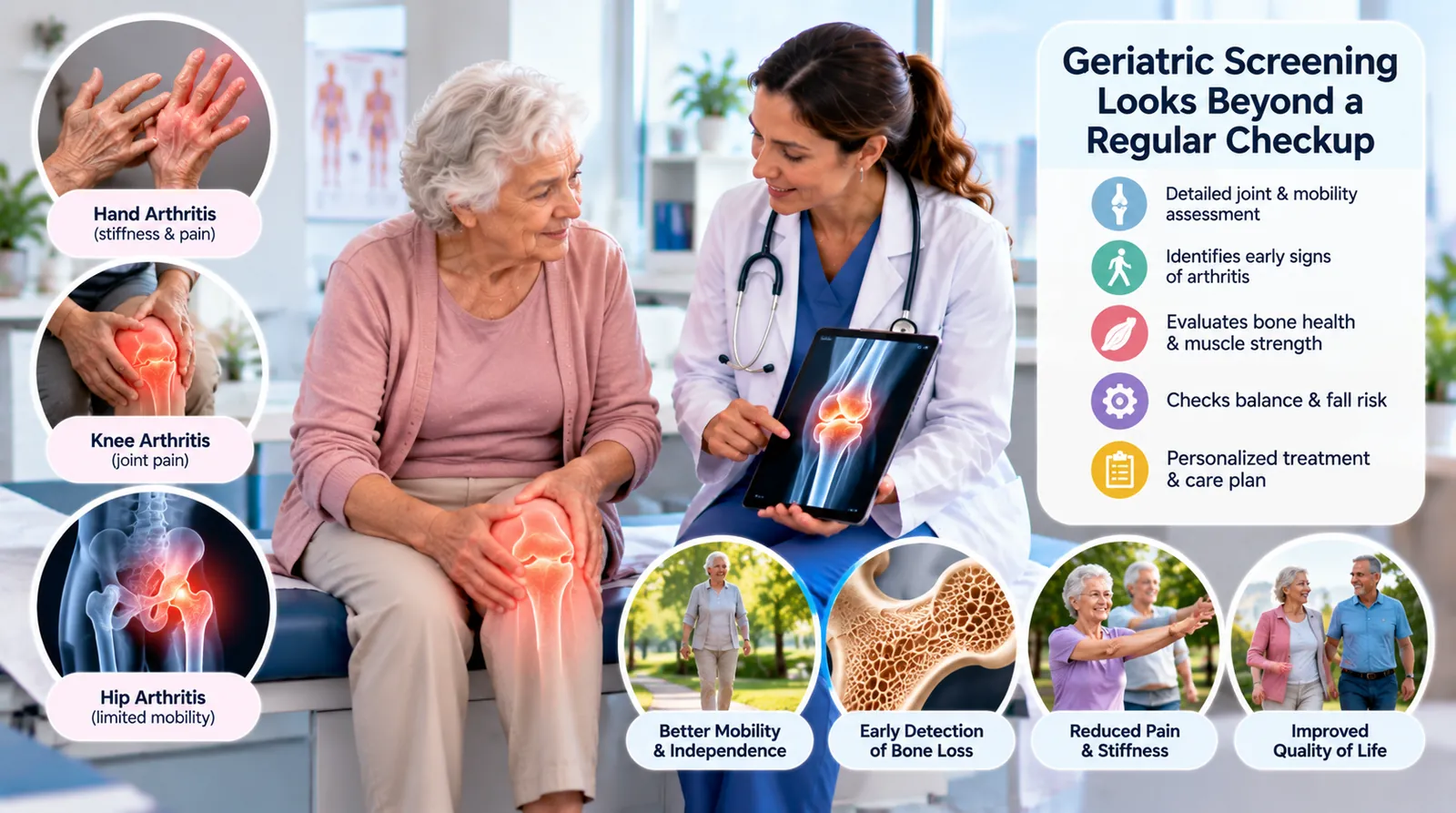
That gap is exactly why geriatric screening exists as its own discipline, separate from a routine physical. A regular checkup is built to check vital signs, review medications, and flag obvious symptoms. A geriatric assessment is built to catch the slower, easier-to-miss changes: a shortened stride, a longer time getting up from a chair, a subtle loss of grip strength that often trace back to arthritis and predicts future falls, hospitalizations, and loss of independence.
This article walks through what the current osteoarthritis statistics seniors face actually look like, why standard checkups tend to miss early warning signs, what a geriatric screening specifically evaluates, and what questions to bring to your next appointment if joint pain has become part of daily life.
How Common Is Arthritis in Older Adults?
National Prevalence Numbers
CDC survey data show that arthritis affects close to half of adults 65 and older, making it one of the most common chronic conditions in this age group, alongside hypertension and high cholesterol. Nationally, an estimated 58.5 million U.S. adults have some form of arthritis, and that number is projected to climb to roughly 78 million by 2040 as the population ages.
Osteoarthritis Specifically
Osteoarthritis, the most common form of arthritis, currently affects an estimated 32.5 million U.S. adults. Research on the burden of osteoarthritis in older adults has found that roughly 1 in 3 people over age 65 live with the condition, with a noticeably higher prevalence among women than men.
Osteoarthritis Statistics Seniors Should Know
Age Distribution and Growth
Osteoarthritis statistics for seniors are most likely to encounter show a clear age pattern: about 43% of people with osteoarthritis are 65 or older, and 88% are 45 or older. Interestingly, the annual rate of new knee osteoarthritis diagnoses is actually highest between ages 55 and 64, meaning many seniors are living with a condition that started well before retirement age and simply worsened gradually over time.
The Functional Toll
Osteoarthritis is a leading cause of disability among older adults, and its effects go beyond joint pain alone. More than half of people with knee osteoarthritis will eventually need a total knee replacement in their lifetime, and 99% of hip and knee replacements are performed specifically to address the pain and functional limitations that arthritis causes. These numbers point to a condition that, left unaddressed, steadily erodes mobility rather than staying contained to a single joint.
Why a Standard Checkup Often Isn't Enough
Checkups Are Built for Symptoms, Not Function
A typical annual physical focuses on measurable vitals blood pressure, weight, cholesterol, and blood sugar and addresses symptoms the patient specifically raises. Arthritis, however, tends to progress quietly. Many seniors adapt their movements gradually to avoid pain without realizing how much their gait, balance, or daily function has changed, which means it rarely comes up unprompted unless a doctor is specifically screening for it.
Function Changes Get Normalized
It's common for seniors to describe reduced mobility as simply "getting older" rather than a symptom worth mentioning. A slower walking pace, more caution on stairs, or avoiding certain activities can all be early signs of arthritis-related functional decline, but without a structured assessment built to catch these patterns, they're easy to miss in a standard visit focused on other health markers.
What Geriatric Screening Actually Evaluates
Gait, Balance, and Functional Testing
Geriatric screening typically includes standardized tests that a regular checkup doesn't, such as the Timed Up and Go test, which measures how long it takes a patient to rise from a chair, walk a short distance, and return, and the Tinetti Balance and Gait assessment, which scores stability during specific movements. These tools are sensitive enough to flag early mobility changes tied to arthritis well before a patient reports pain severe enough to bring up on their own, recognizing signs like this is one of the core skills covered in a solid geriatric care overview.
Activities of Daily Living
A comprehensive geriatric assessment also evaluates a patient's ability to perform both basic activities of daily living, like dressing and bathing, and instrumental activities, like managing medications and preparing meals. Arthritis frequently affects these tasks gradually, and tracking them over time gives a clearer picture of functional decline than a single checkup snapshot ever could.
Whole-Person Evaluation
Beyond physical function, geriatric screening looks at cognition, mood, social support, and environmental factors, recognizing that a shift in one area, like reduced mobility from arthritis, often ripples into others, including a higher risk of isolation, depression, or missed medication doses.
The Hidden Risks Arthritis Creates Beyond Joint Pain
Increased Fall Risk
Research consistently shows that arthritis, particularly in the hip and knee, raises fall risk independent of other factors. Reduced range of motion, muscle weakness around an affected joint, and pain that alters normal gait all contribute. This is one of the clearest links between joint health and broader outcomes like fractures, which is why arthritis and bone density are often evaluated together rather than as separate concerns.
Compounding With Other Conditions
Arthritis rarely exists in isolation in older adults. It frequently coexists with obesity, diabetes, and cardiovascular disease, and each of these conditions can make the others harder to manage. A senior managing both arthritis and cardiovascular disease, for example, may face limits on the type of exercise safely recommended for either condition, making coordinated care especially important.
What to Ask For at Your Next Appointment
Requesting a Functional Assessment
If joint pain, stiffness, or a change in mobility has become part of daily life, it's worth directly asking your doctor for a functional or geriatric assessment rather than waiting for it to be offered. Mentioning specific changes slower walking, difficulty with stairs, needing to use furniture for balance gives a doctor concrete details to act on, rather than a general complaint about "getting older."
Connecting Arthritis to Broader Screening
Because arthritis raises fall risk and often coexists with bone density loss, it's reasonable to ask whether a bone density screening should be added alongside an arthritis evaluation, particularly for women over 65 or anyone with additional fracture risk factors. Addressing both together tends to produce a more complete picture than treating joint pain and bone health as separate conversations.
Conclusion
Arthritis in older adults isn't rare it affects roughly half of seniors, and osteoarthritis alone touches about 1 in 3 adults over 65. What makes it dangerous isn't the condition itself so much as how easily it hides in plain sight during a standard checkup focused on vitals and specific complaints. Geriatric screening is built differently, specifically designed to catch the gait changes, functional decline, and fall risk that arthritis quietly creates long before a patient thinks to mention it. If joint pain or a change in mobility has crept into daily life, asking directly for a functional assessment is one of the most useful steps toward catching problems early rather than after a fall.
Frequently Asked Questions
More from our blog
 Hypertension in Seniors
: The Most Common Condition After 65
Ask most doctors what the single most common health condition is after age 65, and the answer is almost always the same: hypertension. Depending on how it's measured, somewhere between 58% and.
Medically reviewed by Kel Healthcare Medical Team
Read Article chronic conditions
Chronic Conditions in Seniors: Why Nearly 90% Have at Least One
If you're over 65, the odds are that you're already managing a chronic condition, and if you're not, you almost certainly know someone who is. According to the National Council on Aging, about 93%.
Medically reviewed by Kel Healthcare Medical Team
Read Article Bone Density Screening
 for Seniors: Why Osteoarthritis Raises Fall Risk
Every year, more than 14 million older adults in the United States, roughly 1 in 4 people age 65 and older, experience a fall, according to the CDC. Falls remain the leading cause of both fatal.
Medically reviewed by Kel Healthcare Medical Team
Read Article