Geriatric Fall Risk & Bone HealthBy Kel Healthcare Medical Team
Book a Geriatric Fall Risk & Bone Health Screening at KEL
Falls send more than 3 million older adults to the emergency room every year in the US, and weak bones combined with joint pain are two of the biggest reasons why. A single appointment at KEL can.
Introduction
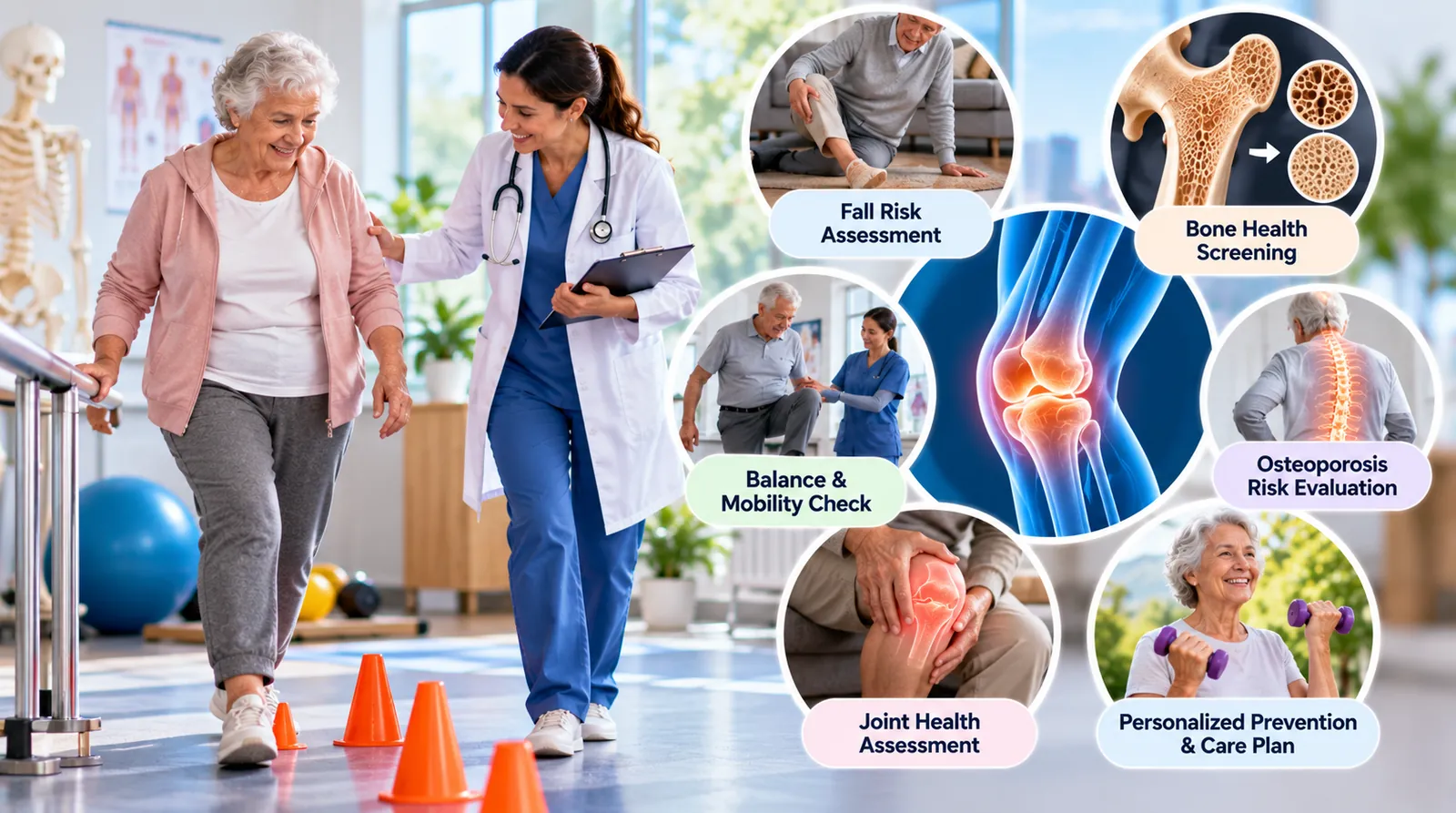
Falls send more than 3 million older adults to the emergency room every year in the US, and weak bones combined with joint pain are two of the biggest reasons why. A single appointment at KEL can catch both issues before they lead to a fracture, a hospital stay, or a loss of independence.
What's Included in Your Screening
- Bone density testing (DEXA scan): a quick, painless scan that measures bone strength and flags early signs of osteoporosis or osteopenia
- Fall risk assessment: a short, structured evaluation of gait, balance, and strength using standard geriatric screening tools
- Joint and mobility check: a review of pain, stiffness, and range of motion in commonly affected joints
- Personalized results review: a plain-language walkthrough of your results with clear next steps, whether that's lifestyle changes, a referral, or a follow-up plan
Why a Combined Screening Makes Sense
Bone health and fall risk aren't separate problems, they're closely connected. Low bone density makes a fall more likely to result in a fracture, and joint pain or balance issues raise the odds of falling in the first place. Testing for both in one visit gives you and your care team a complete picture, rather than piecing it together across multiple appointments over months.
Who Should Book This Screening
This screening is a good fit if you:
- Are 65 or older, or a postmenopausal woman with risk factors for bone loss
- Have experienced a fall or near-fall in the past year
- Have noticed new joint pain, stiffness, or changes in balance
- Have a family history of osteoporosis or hip fracture
- Simply want a proactive baseline before problems start
How Booking Works
- Schedule your appointment: choose a time that works for you using the booking button below
- Complete a short intake form: a few quick questions about your health history and any current symptoms
- Attend your screening: plan for about 30–45 minutes on-site for both the DEXA scan and fall risk assessment
- Review your results; walk away with a clear summary and a plan tailored to what we find
Frequently Asked Questions
More from our blog
 Geriatric Screening Catches
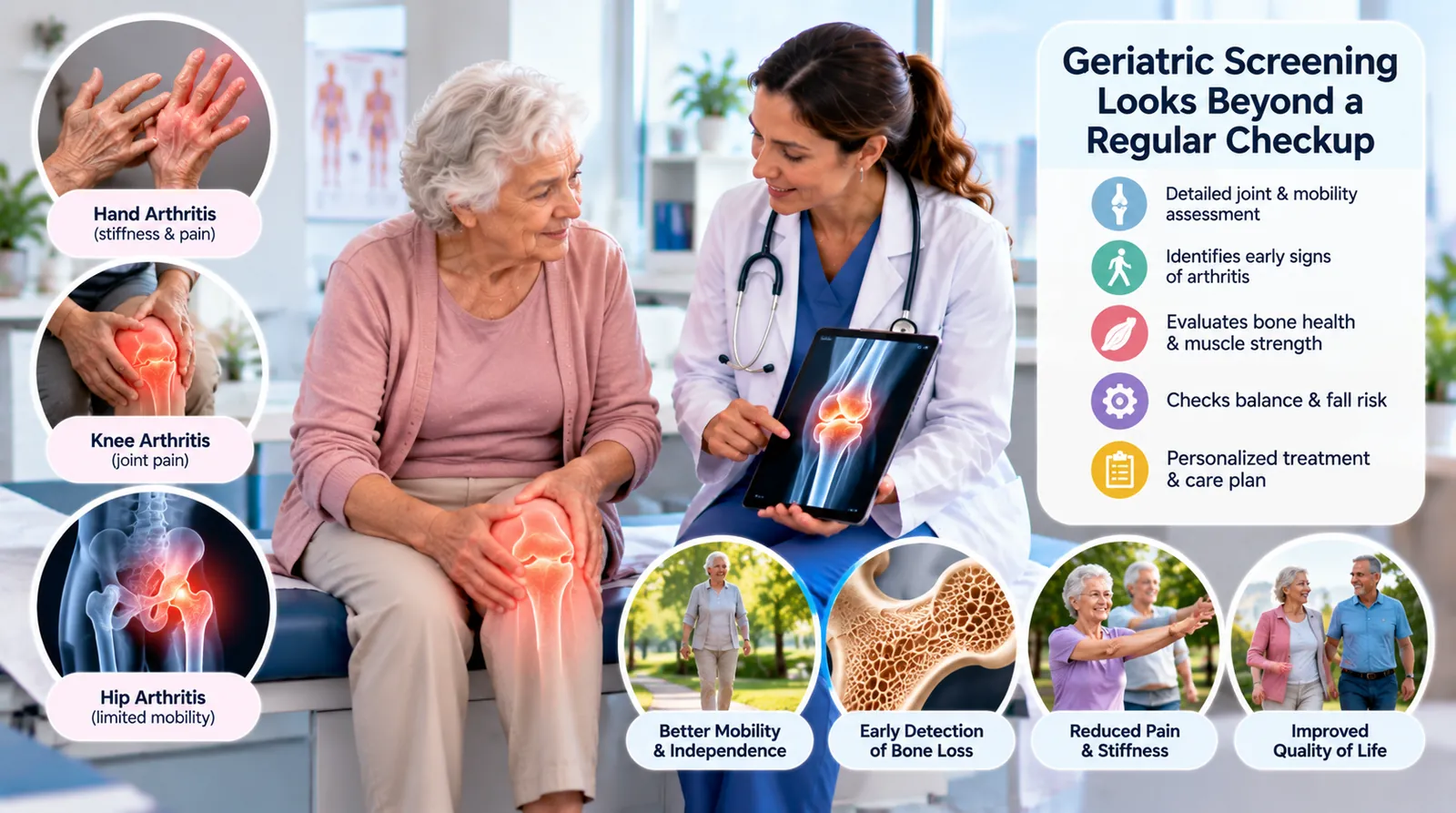
Arthritis After 65: Why Geriatric Screening Catches What Regular Checkups Miss
Nearly half of adults 65 and older have been diagnosed with arthritis, and among people specifically living with osteoarthritis, close to half are 65 or older. Despite how common arthritis in older.
Medically reviewed by Kel Healthcare Medical Team
Read Article Hypertension in Seniors
: The Most Common Condition After 65
Ask most doctors what the single most common health condition is after age 65, and the answer is almost always the same: hypertension. Depending on how it's measured, somewhere between 58% and.
Medically reviewed by Kel Healthcare Medical Team
Read Article chronic conditions
Chronic Conditions in Seniors: Why Nearly 90% Have at Least One
If you're over 65, the odds are that you're already managing a chronic condition, and if you're not, you almost certainly know someone who is. According to the National Council on Aging, about 93%.
Medically reviewed by Kel Healthcare Medical Team
Read Article