ER vs Urgent CareBy Kel Healthcare Medical Team
ER vs Urgent Care: Where Should You Go for Same-Day Acute Care?
When something feels wrong, and you need care fast, the last thing you want is to waste time deciding where to go. The ER vs urgent care decision trips up a lot of people, and choosing wrong can.
Introduction
When something feels wrong, and you need care fast, the last thing you want is to waste time deciding where to go. The ER vs urgent care decision trips up a lot of people, and choosing wrong can mean unnecessary hours in a waiting room or worse, delaying care for something that truly needs emergency attention.
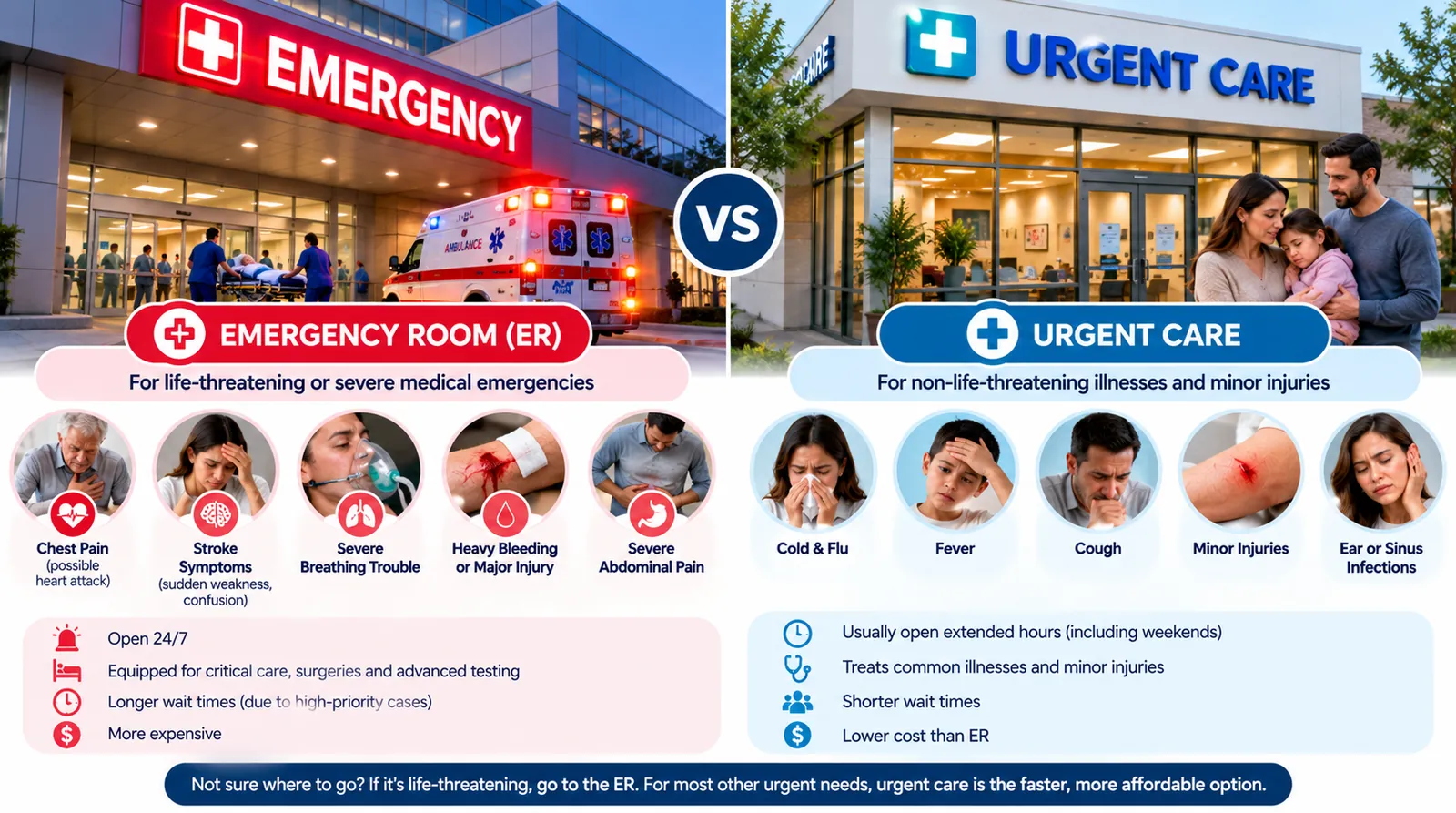
The good news is that the distinction is more straightforward than it feels in the moment. Emergency rooms are built for life-threatening or rapidly worsening conditions, while urgent care and other same-day acute care options are designed for issues that need prompt attention but aren't immediately dangerous.
In this guide, we'll break down exactly when to go to the ER, when same-day acute care is the smarter choice, and how to make that call quickly when it actually matters.
Understanding the Difference: ER vs Urgent Care
The core ER vs urgent care difference comes down to severity and speed:
- Emergency rooms are equipped for life-threatening conditions, major trauma, and situations that could worsen rapidly without immediate treatment
- Urgent care and acute care clinics are designed for non-life-threatening issues that still need same-day attention
Both play an important role; the key is matching the situation to the right level of care.
What Counts as Same-Day Acute Care
Same-day acute care covers a wide range of common issues that need prompt but not emergency-level treatment, such as:
- Minor cuts requiring stitches
- Sprains, strains, and minor fractures
- Colds, flu, and mild respiratory infections
- Minor burns
- Ear infections, sore throats, and sinus infections
- Mild allergic reactions without breathing difficulty
These clinics are built for exactly this kind of care: fast, focused, and typically with much shorter wait times than an ER.
When to Go to the ER
Knowing when to go to the ER can be genuinely life-saving. Seek emergency care immediately for:
- Chest pain or pressure, especially with shortness of breath or sweating
- Sudden numbness, weakness, or difficulty speaking (possible signs of stroke)
- Severe difficulty breathing
- Uncontrolled or severe bleeding
- Loss of consciousness or severe head injury
- Signs of a severe allergic reaction, such as swelling of the face or throat
- Major trauma from an accident or fall
- Sudden, severe abdominal pain
If you're ever unsure whether a symptom is a true emergency, it's always safer to call 911 or go to the ER rather than wait it out.
When Urgent Care or Acute Care Is the Right Choice
Urgent care or acute care is usually the better option when:
- Symptoms are uncomfortable but not rapidly worsening
- You need quick treatment for a minor injury or illness
- Your primary care provider isn't available the same day
- You want faster service than a typical ER wait for non-emergency issues
Cost and Wait Time Differences
Cost and time are often deciding factors, and the differences can be significant:
- ER visits typically cost more, even for minor issues, and can involve longer wait times for non-critical cases
- Urgent care visits are generally more affordable and faster for non-emergency needs
- Insurance coverage varies by plan, so it's worth understanding your specific costs before you need care
What to Bring to Either Visit
Whether you're heading to the ER or an acute care clinic, bring:
- A photo ID and insurance card
- A list of current medications and allergies
- Emergency contact information
- Any relevant medical history, especially for chronic conditions
Common Mistakes People Make Choosing Where to Go
- Going to the ER for minor issues that could be treated faster and more affordably at urgent care
- Waiting too long to go to the ER for symptoms that were actually emergencies
- Assuming urgent care can handle everything, even conditions that need immediate emergency treatment
- Not knowing local acute care hours, leading to unnecessary ER visits after hours
Conclusion
The ER vs urgent care decision doesn't have to be stressful once you know what each is actually built for. Same-day acute care is the right call for non-life-threatening issues that still need prompt attention, while knowing when to go to the ER and acting quickly when it matters can make a real difference in outcomes.
When symptoms feel serious or are rapidly worsening, don't hesitate: call 911 or head to the nearest emergency room. For everything else, same-day acute care is often the faster, more practical choice.
Frequently Asked Questions
More from our blog
 Health Assessment vs. Annual Physical
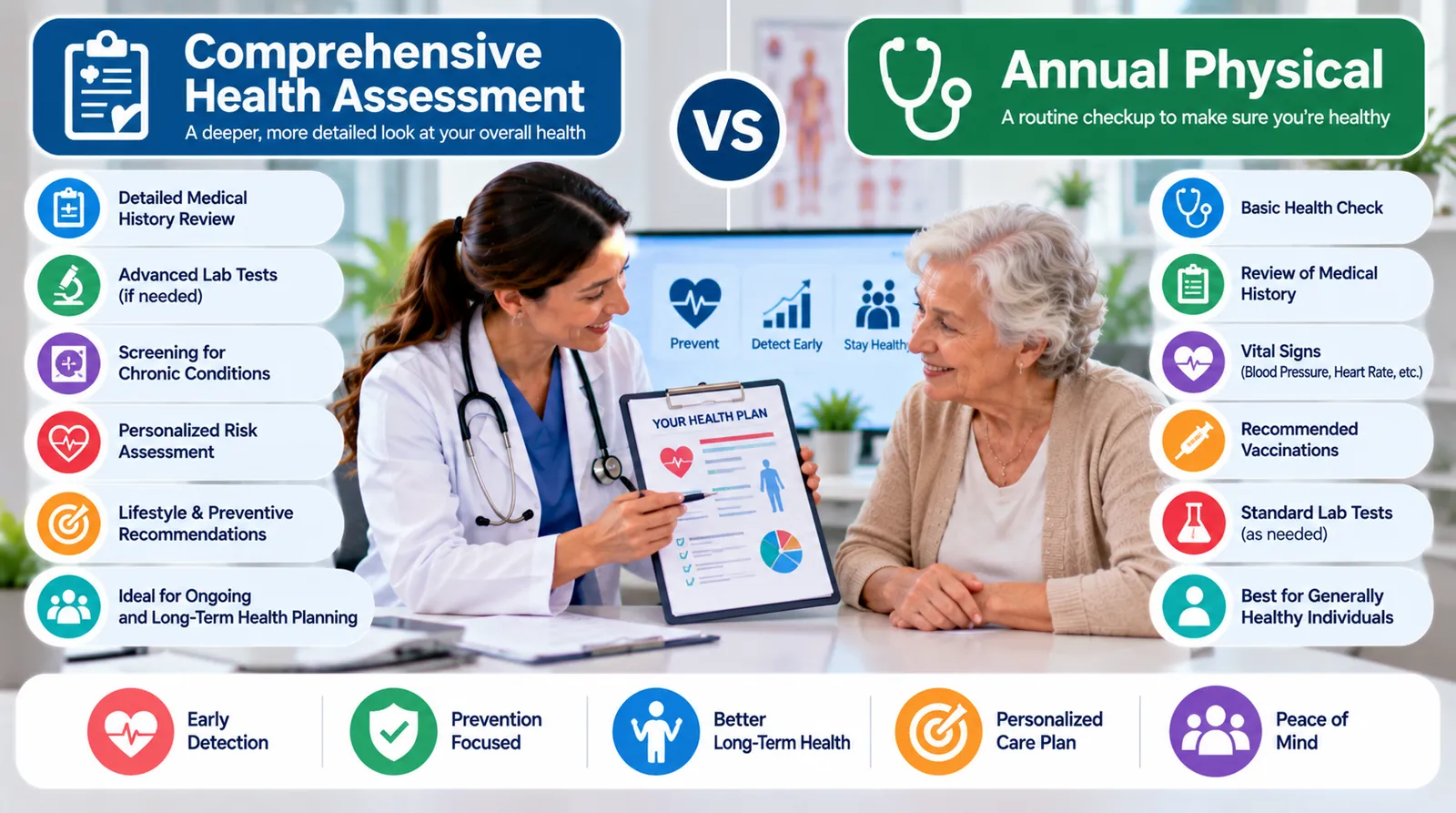
Comprehensive Health Assessment vs. Annual Physical: What's the Difference?
If you've ever booked a checkup and wondered whether you actually needed a quick physical or something more thorough, you're not alone. The health assessment vs annual physical question comes up.
Medically reviewed by Kel Healthcare Medical
Read Article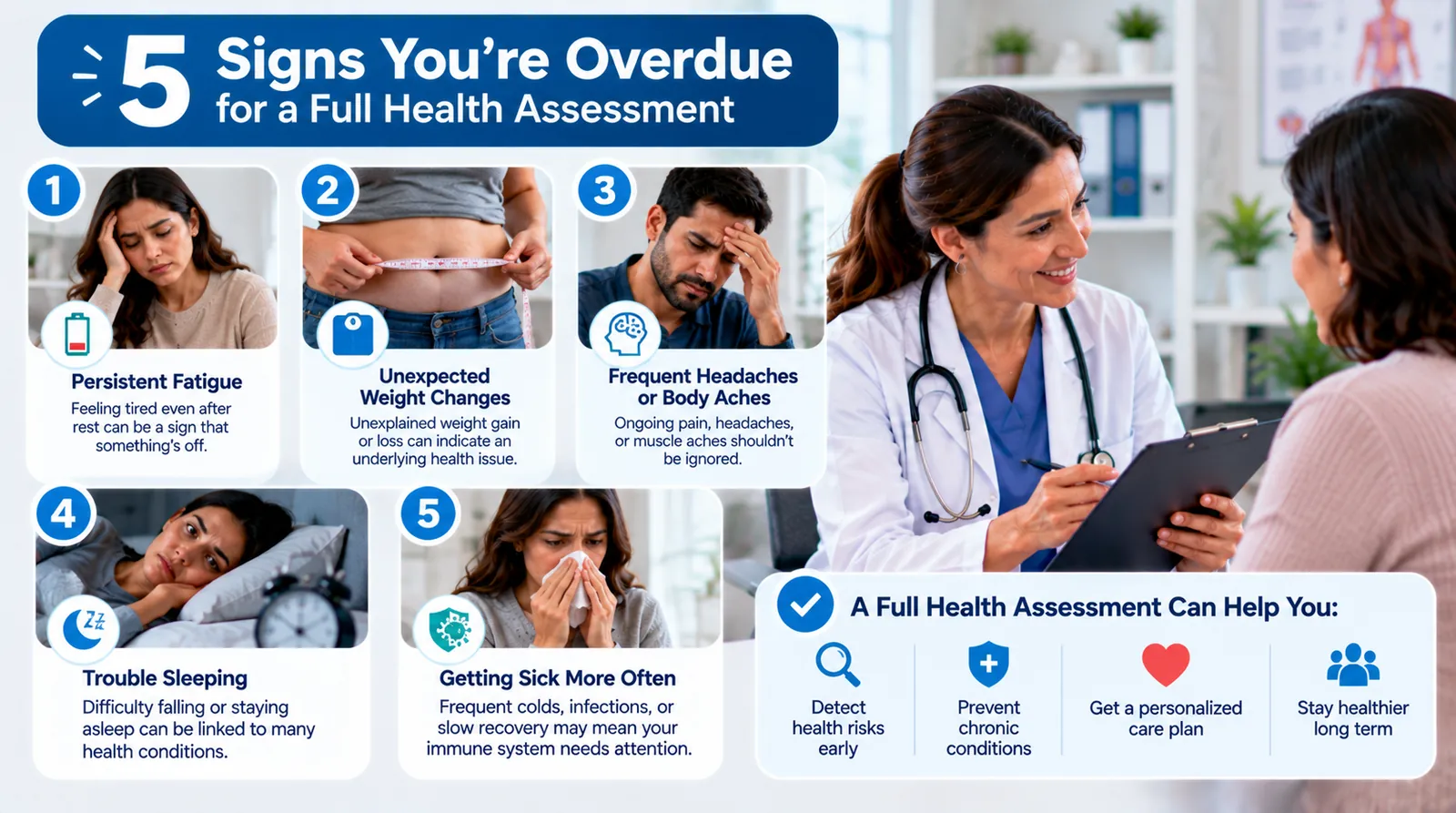 5 Health Assessment
5 Signs You're Overdue for a Full Health Assessment
Life gets busy, and a checkup is easy to keep pushing to "next month." But your body often sends quiet signals long before anything feels seriously wrong, and recognizing these health assessment.
Medically reviewed by Kel Healthcare Medical Team
Read Article Comprehensive Health Assessment
What Really Happens During a Comprehensive Health Assessment
Most people put off their yearly checkup simply because they don't know what to expect. If the words "physical exam" or "screening panel" make you picture a rushed ten-minute visit and a blood.
Medically reviewed by Kel Healthcare Medical Team
Read Article