In-Network vs. Out-of-Network
In-Network vs. Out-of-Network Specialists: How Referral Coordination Helps You Avoid Surprise Bills
Introduction
Few things sour the experience of finally getting specialist care as much as an unexpectedly large bill weeks later. Often, the root cause traces back to a single detail: whether that specialist was in-network with your insurance. Good in-network specialist referral coordination is one of the more overlooked ways a primary care office actively helps you avoid avoiding surprise medical bills, and it's worth understanding how the distinction actually works.
What "In-Network" and "Out-of-Network" Actually Mean
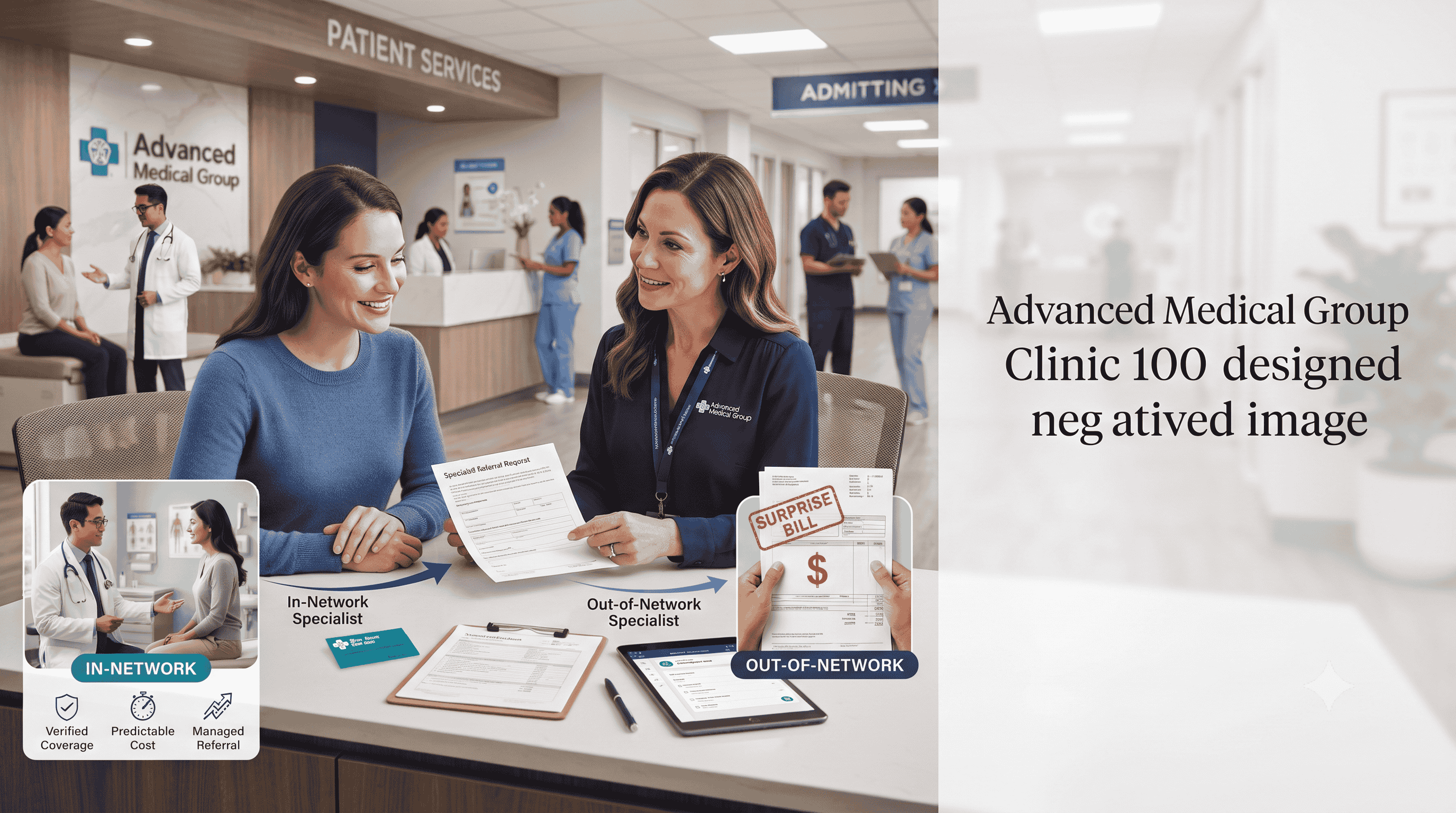
Insurance companies negotiate rates with specific providers and facilities, forming their "network." When you see an in-network provider, you benefit from that negotiated rate, and your plan covers its agreed share of the cost. When you see an out-of-network provider, none of that negotiated pricing applies - the provider can bill their full rate, and your insurance may cover little to none of it, leaving you responsible for a much larger portion.
This distinction matters just as much for specialists as it does for primary care, and it's easy to overlook when a referral is made quickly during a busy visit.
Why This Gets Missed So Often
A few common scenarios lead to unexpected out-of-network bills:
- A referral is made based on quality or reputation alone, without checking network status first
- A specialist's practice includes multiple providers, some in-network and others not, and the referral doesn't specify which one
- Network status changes between when a referral is made and when the appointment actually happens, particularly at the start of a new plan year
- The specialist is in-network, but the facility they operate out of isn't - a distinction that catches many patients off guard, particularly for procedures done at a hospital-affiliated office
How Referral Coordination Helps Prevent This
A well-run referral process builds network verification into the process itself rather than leaving it to chance. This typically includes:
- Confirming network status using your specific insurance plan and not a general assumption before completing the referral
- Check the actual location and provider; the same group may have different network status for different practices
- Checking to see if prior authorization is needed is a separate step from checking network status, but it’s just as likely to land you with a surprise bill if you skip it.
- Rather than provide you with a name and number to verify independently, we provide you with a referral that's already been verified
What You Can Still Confirm on Your Own
Even with good referral coordination, it's worth double-checking a few things yourself before your appointment:
- Call your insurance directly to verify that the specialist and location are in-network for your particular plan
- When you schedule the appointment, ask the specialist’s office directly whether they are in-network with your plan; front-desk staff can usually tell you right away.
- Ask about the facility, not the doctor, especially if it's about imaging, procedures, or practices affiliated with a hospital
- If the visit involves a procedure or testing outside of a standard consultation, get a cost estimate upfront
What to Do If You Get an Unexpected Bill Anyway
If a surprise bill does show up despite these precautions, a few steps can help:
- Request an itemized bill to understand exactly what was charged and why
- Contact your insurance to ask whether the No Surprises Act applies, which offers federal protections in certain out-of-network emergency and facility-based situations
- Ask the provider's billing office about a payment plan or reduced rate, particularly if the error stemmed from a referral coordination gap
- Appeal the claim with your insurance if you believe the provider was represented as in-network at the time of referral
Why This Coordination Is Worth Prioritizing
A referral that skips network verification might still get you seen by a good specialist, but it introduces financial risk that's entirely avoidable with one extra step. Practices that build network checking into their referral process aren't just being thorough for its own sake - they're actively protecting patients from one of the more common and frustrating sources of unexpected medical debt.
Making It Part of Every Referral
Before accepting any specialist referral, it's reasonable to ask directly: has this been confirmed as in-network for my specific plan? A moment of confirmation upfront is a far better use of time than untangling a billing dispute after the fact.
Frequently Asked Questions
More from our blog
 UTI Symptoms
UTI Symptoms and Same-Day Acute Care: What You Should Know
Few things derail a day quite like the sudden onset of UTI symptoms - the urgency, the burning, the sense that you need relief now rather than at your next scheduled appointment weeks away.
Medically reviewed by Kel Healthcare Medical Team
Read Article Cold, Flu, or Something Else?
Cold, Flu, or Something Else? When to Seek Acute Care
Sore throat, congestion, body aches - the symptoms of a cold, the flu, and a handful of other respiratory illnesses overlap so much that it's genuinely hard to tell them apart in the first day or.
Medically reviewed by Kel Healthcare Medical Team
Read Article IV Drip Therapy
7 Ways Hydration Therapy Benefits Your Body in 2026
IV Drip Therapy can help support hydration and fluid balance when clinically appropriate. KEL Healthcare Medical Services provides IV Drip Therapy and Vitamin & Mineral Infusions in Woodside, NY, with care tailored to individual health needs.
Medically reviewed by Dr. Karl E. Latortue
Read Article