What's Actually in the BagBy Kel Healthcare Medical Team
IV Vitamin & Mineral Infusions: What's Actually in the Bag?
IV vitamin bags have become a familiar sight at wellness clinics, but most people have never actually seen what's inside one or understood what each ingredient is doing. If you've ever wondered.

Introduction
IV vitamin bags have become a familiar sight at wellness clinics, but most people have never actually seen what's inside one or understood what each ingredient is doing. If you've ever wondered exactly what you're receiving during a session, this vitamin mineral infusion explained guide breaks it down in plain terms.
At its core, an IV infusion is simply a sterile fluid base combined with specific vitamins, minerals, or antioxidants, delivered directly into the bloodstream. What varies is the exact formulation, and understanding those differences helps you make an informed decision about whether a particular infusion actually fits your goals.
In this guide, we'll walk through what medical IV therapy actually involves, break down common vitamin infusion ingredients, and explain what to expect if you decide to try an infusion at KEL Healthcare.
What Is Medical IV Therapy?
Medical IV therapy refers to the direct delivery of fluids, vitamins, or minerals into the bloodstream through an intravenous line, bypassing the digestive system. This method is used in clinical settings for both medical hydration needs and, increasingly, for wellness-focused vitamin and mineral infusions.
Because the digestive system is bypassed, absorption can be more direct compared to oral supplements, though it's worth noting that scientific evidence on the added benefit of IV delivery for otherwise healthy individuals is still limited and varies by nutrient.
Vitamin Mineral Infusion Explained: The Base Solution
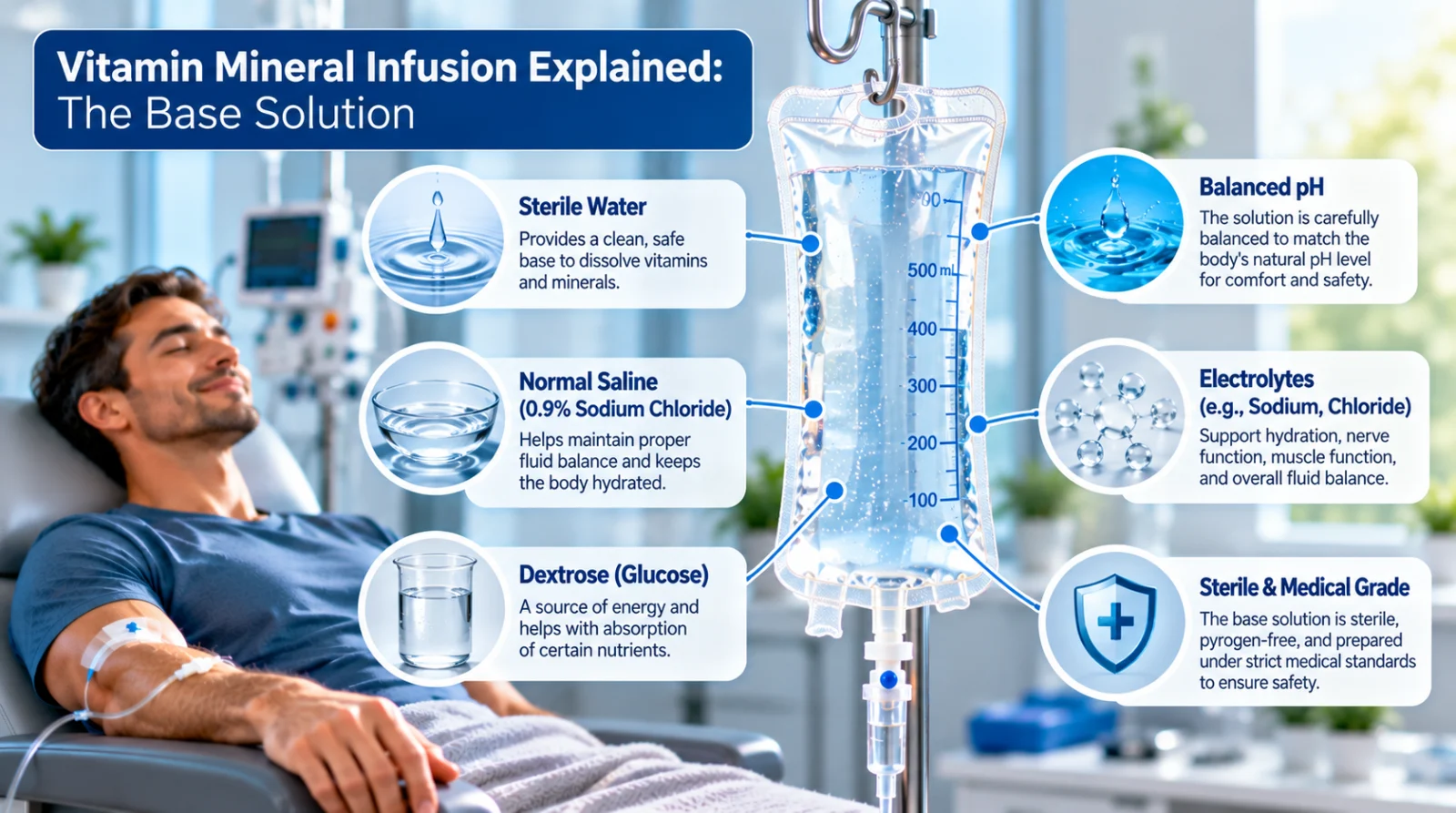
Every infusion starts with a vitamin mineral infusion explained basic: the base solution. Most bags begin with:
- Normal saline is a sterile saltwater solution that supports hydration
- Lactated Ringer's solution is a similar fluid sometimes used, depending on the formulation
This base solution acts as the carrier for whatever vitamins or minerals are added, and it's also responsible for much of the hydration benefit patients notice after a session.
Common Vitamin Infusion Ingredients
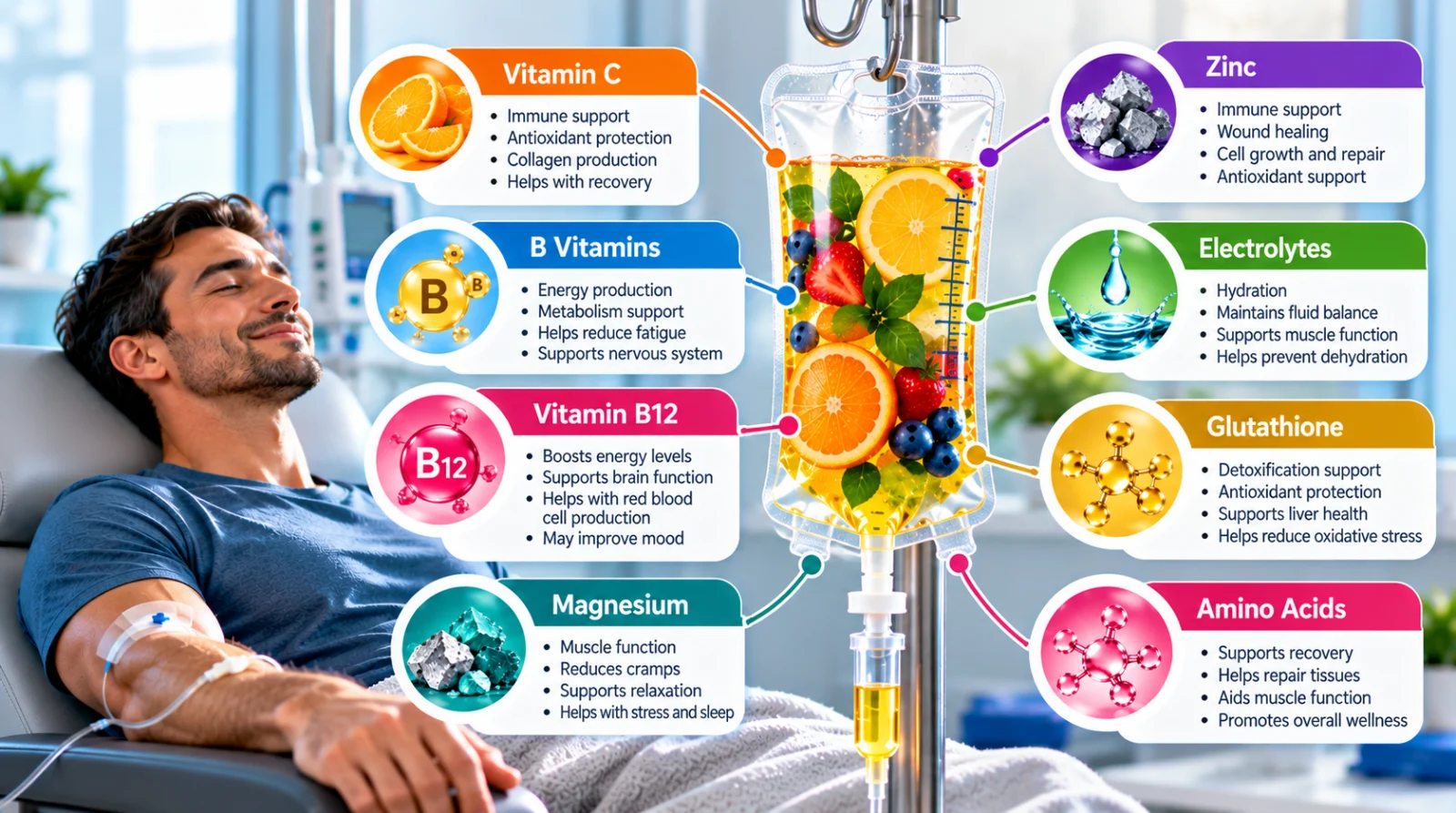
Beyond the base fluid, specific vitamin infusion ingredients are added depending on the formulation. Here are the most common categories.
B Vitamins
B-complex vitamins, including B1, B2, B3, B6, and B12, are frequently included and play roles in energy metabolism and nervous system function.
Vitamin C
Vitamin C is a common addition, often included for its antioxidant properties and role in immune system support.
Electrolytes and Minerals
Magnesium, calcium, and zinc are commonly included minerals, often added to support hydration and general cellular function.
Antioxidants
Some formulations include additional antioxidants such as glutathione, which is sometimes marketed for its role in supporting the body's detoxification processes.
What These Infusions Are Marketed to Help With
IV vitamin and mineral infusions are commonly marketed to support:
- Hydration, especially after illness, travel, or intense exercise
- General energy levels
- Immune system support during cold and flu season
- Recovery support after physical exertion
It's important to note that while many patients report feeling better after a session, robust scientific evidence for these specific benefits in people without an underlying deficiency is still limited. These infusions are generally considered a wellness option rather than a treatment for diagnosed medical conditions.
Who Should (and Shouldn't) Consider IV Therapy
IV vitamin therapy isn't the right fit for everyone. It's worth discussing with a provider first if you:
- Have kidney disease, since your kidneys process excess fluids and minerals
- Have heart conditions, particularly those affecting fluid balance
- Are pregnant or breastfeeding
- Have known allergies to any specific ingredients in a formulation
- Are currently taking medications that could interact with high-dose vitamins or minerals
A quick conversation with your provider before your first session helps confirm that IV therapy is a safe and appropriate option for you specifically.
What to Expect During Your Infusion at KEL Healthcare
A typical session at KEL Healthcare includes:
- A brief health history review to confirm the infusion is appropriate for you
- Placement of a small IV line, usually in the arm
- A relaxed session lasting roughly 30–60 minutes, depending on the formulation
- Monitoring throughout to ensure your comfort and safety
Conclusion
Understanding exactly what's in your IV bag takes the mystery out of vitamin and mineral infusions. From the base saline solution to specific vitamin infusion ingredients like B vitamins, vitamin C, and key minerals, each formulation is designed with a particular wellness goal in mind, though it's worth approaching marketed benefits with realistic expectations.
If you're curious whether an infusion is a good fit for you, talk to our team at KEL Healthcare about your health history and goals before your first session.
Frequently Asked Questions
More from our blog
 Aging Parents
: 5 Signs They Need a Geriatric Care Check-In
Watching a parent age can bring up a mix of emotions: pride in their independence, alongside quiet worry about changes you've started to notice. The tricky part is that early geriatric care signs.
Medically reviewed by Kel Healthcare Medical Team
Read Article Disease Management Needs
Why Chronic Disease Management Needs More Than a Yearly Visit
For many patients, an annual checkup feels like enough a single yearly appointment to confirm everything is still on track. But for anyone living with a chronic condition, that single visit is only.
Medically reviewed by Kel Healthcare Medical Team
Read Article A Step-by-Step Care Plan
Managing Type 2 Diabetes: A Step-by-Step Care Plan
A type 2 diabetes diagnosis can feel overwhelming at first, but it's also one of the most manageable chronic conditions when you have a clear, structured plan. Rather than reacting to numbers day by.
Medically reviewed by Kel Healthcare Medical Team
Read Article