Primary CareBy Kel Healthcare Team
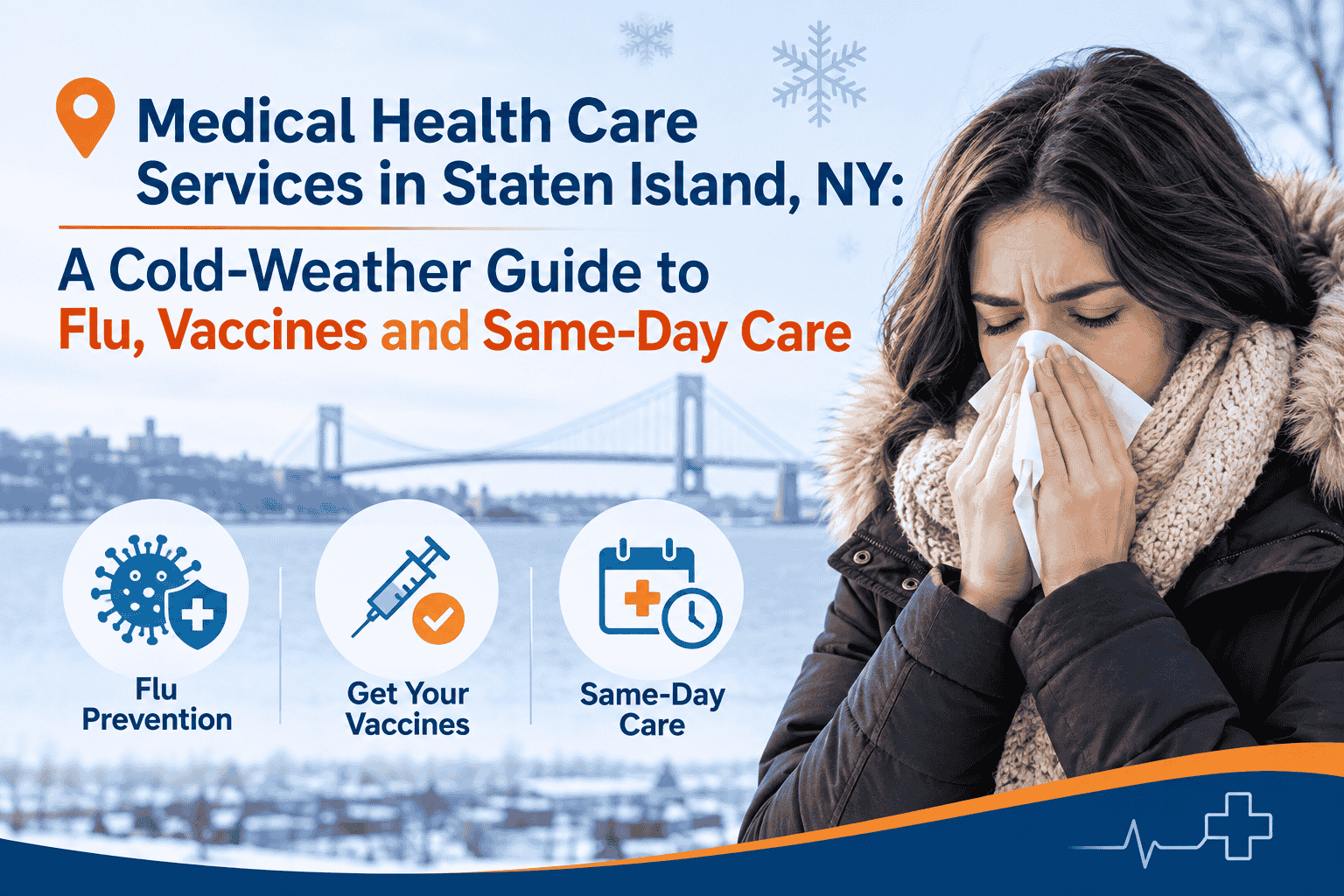
Medical Health Care Services in Staten Island, NY: A Cold-Weather Guide to Flu, Vaccines and Same-Day Care
Flu season is here. See which medical health care services in Staten Island, NY help most this winter, from vaccine conversations and same-day visits to chronic care follow-up, and when to head to the ER.
Introduction
The days get shorter, the subway and ferry get more crowded, and suddenly everyone seems to have a cough. If you live or work on the Island, knowing which medical health care services in Staten Island, NY to use before you get sick can save you a lot of stress, and sometimes a lot of waiting.
This cold-weather guide walks through how to use primary, preventive, same-day and chronic care at KEL Healthcare's Staten Island clinic during flu season, and how to tell when a symptom needs the emergency room instead. For a full service-by-service overview, see our complete guide to medical health care services in Staten Island.
Why Winter Changes What You Need From Care
Respiratory illness tends to rise in the colder months, and in many seasons flu activity peaks between December and February, according to the CDC's flu resources. That matters for two reasons. First, you are more likely to need a quick visit for a cough, sore throat or fever. Second, a bad cold or flu can throw off conditions you already manage, such as asthma, diabetes or high blood pressure.
The good news is that a little planning goes a long way. Think of winter care in four steps: talk about vaccines early, know where to go for each symptom, protect your long-term conditions and recognize emergency warning signs.
Step 1: Talk About Vaccines Before Peak Season
The CDC recommends a yearly flu vaccine for nearly everyone age 6 months and older, with a few exceptions your clinician can review. Depending on your age, health conditions and history, other vaccines may also be worth discussing, including COVID-19, pneumococcal and RSV vaccines. You can browse the CDC's adult vaccine information and bring your questions to a visit.
KEL's preventive care team can review which vaccines and screenings fit you, and a yearly annual health checkup is a natural time to do it. Not sure what a checkup includes? Read our guide to health screenings and checkups in Staten Island. Please call the clinic to confirm which vaccines are available on site.
Step 2: Match the Symptom to the Right Service
| What you are feeling | Where to start | Good to know |
|---|---|---|
| Mild cold, sore throat, cough, congestion | Acute care or a walk-in visit | Walk-ins are welcome; call to confirm provider hours |
| Sudden fever, body aches, chills, exhaustion | Acute care, as soon as you can | Antiviral medicine for flu works best when started early, so do not wait it out |
| Asthma wheeze, blood sugar swings or blood pressure changes during an illness | Chronic disease management or your primary care clinician | Illness can change how your medicines need to be used |
| Prescription refills or follow-up after being sick | Primary care visit | Bring your medication list |
| Chest pain, trouble breathing, confusion, bluish lips | Call 911 or go to the nearest emergency department | KEL is an outpatient clinic, not an emergency service |
Still unsure whether you need a regular appointment or a same-day visit? Our article on primary care vs. urgent care in Staten Island breaks down the difference.
Step 3: Protect Your Long-Term Conditions
If you live with a chronic condition, winter is a good time to check in before you get sick. People with asthma may want to review their action plan and inhaler technique; the CDC's asthma pages are a helpful reference. People with diabetes should ask their clinician for a sick-day plan, and anyone with high blood pressure should ask which over-the-counter cold remedies are safe to take with their medicines.
Questions worth bringing to a pre-winter visit:
- Do my medicines need to change if I get the flu or a bad cold?
- Which over-the-counter cold and cough products should I avoid?
- What readings or symptoms mean I should call you the same day?
- Do I need any labs or a medication review before the holidays?
If you need lab work, KEL's diagnostic testing service includes on-site specimen collection for lab panels, which keeps results close to your care team.
Step 4: Look Out for Older Adults and Higher-Risk Family Members
Older adults, people with chronic conditions, pregnant people and young children are generally at higher risk of serious flu complications. If you help care for a parent or grandparent, consider scheduling a visit before respiratory season ramps up. KEL's geriatric care service includes medication reviews and fall-risk checks, and our geriatric care guide for Staten Island explains what to expect.
When to Skip the Clinic and Call 911
Most colds and flu cases can be treated with rest, fluids and guidance from a clinician. But some symptoms are emergencies. The CDC lists emergency warning signs of flu that include:
- Difficulty breathing or shortness of breath
- Persistent pain or pressure in the chest or abdomen
- Sudden dizziness, confusion or severe weakness
- Not urinating, or signs of serious dehydration
- Seizures
- Fever or cough that improves and then comes back worse
If you or someone with you has any of these, call 911 or go to the nearest emergency department right away.
Visiting KEL Healthcare in Staten Island
Our clinic is at 2052 Richmond Road, Suite D, Staten Island, NY 10306, in the Dongan Hills area and convenient to New Dorp, Grasmere, Todt Hill and Great Kills. Listed provider hours are Monday, Wednesday and Thursday from 9 AM to 4 PM. Because schedules can change, please call (929) 491-4589 before you head over.
KEL's Staten Island clinic lists many major plans, including Medicare, Medicaid and several commercial insurers, and coverage is verified before visits. If you are still choosing coverage, NY State of Health is New York's official marketplace. To make the most of your visit, review the 10 questions to ask your doctor from the Agency for Healthcare Research and Quality, and see our first-visit guide or our article on choosing the right primary care doctor in Staten Island.
Prefer a service-by-service view? Our guide to matching what you need to the right service is a good companion to this one.
Conclusion
Staying well in winter is mostly about preparation: vaccine conversations early, a plan for where to go when symptoms hit, and a check-in on any condition you already manage. KEL Healthcare brings those pieces together in one Staten Island clinic.
Book an appointment or call (929) 491-4589 to get started. This article is for general information and is not medical advice. In an emergency, call 911.
Frequently Asked Questions
More from our blog
 Allergic Reactions
Winter Allergies in New York: Common Symptoms, Causes and Treatment Options
Learn about winter allergy symptoms, common indoor triggers, causes and treatment options. Discover when to seek medical care in New York.
Medically reviewed by Dr. Karl E. Latortue, MD
Read Article Primary Care
Top Primary Care Doctors in Brooklyn, NY: Accepting New Patients
Looking for primary care doctors in Brooklyn? Learn how to compare clinics, meet Dr. Karl E. Latortue and Dr. Amara Osei, MD, and book a first visit with KEL Healthcare.
Medically reviewed by Dr. Karl E. Latortue, MD
Read Article Chronic Disease Management
 in Wading River, NY: Building a Care Plan That Fits Your Life
Living with diabetes, high blood pressure, asthma or another long-term condition? See how chronic disease management in Wading River, NY builds a practical plan you can stick to.
Medically reviewed by Dr. Karl E. Latortue, MD
Read Article