Allergic ReactionsBy Kel Healthcare Team
Winter Allergies in New York: Common Symptoms, Causes and Treatment Options
Learn about winter allergy symptoms, common indoor triggers, causes and treatment options. Discover when to seek medical care in New York.
Introduction
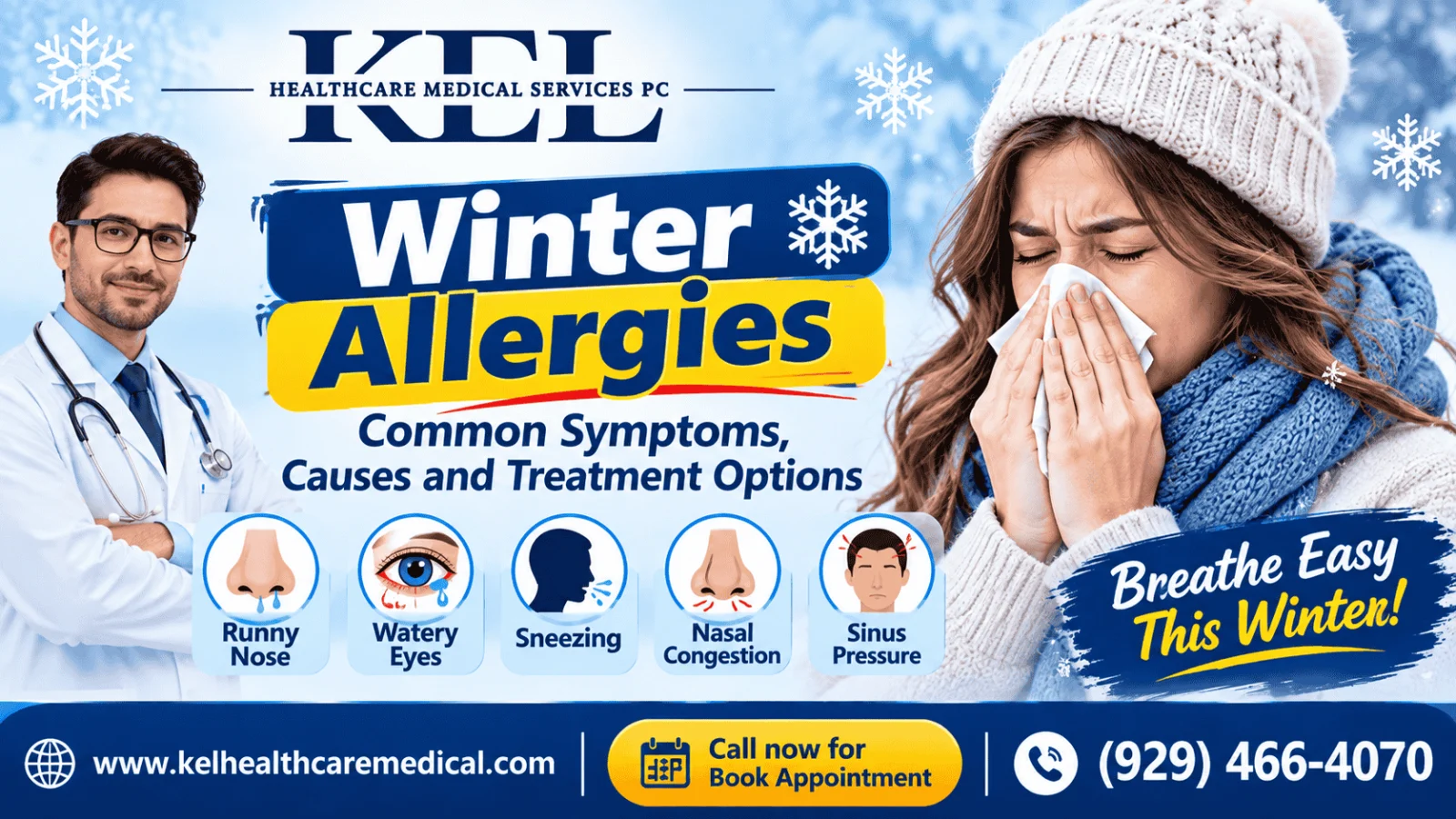
Winter Allergies in New York are more common than many people expect. When temperatures drop and windows stay shut, New Yorkers spend far more time around indoor allergens such as dust mites, mold, pet dander and cockroach particles, and the resulting symptoms are often mistaken for a cold that will not go away. This guide explains winter allergy symptoms, causes and treatment options, and when it is time to see a doctor.
The information below reflects general guidance from established sources such as the American Academy of Allergy, Asthma & Immunology and the Centers for Disease Control and Prevention, and is written for adults living in Queens, Brooklyn, Staten Island and across New York. It is educational and does not replace a personal medical evaluation.
Common Winter Allergy Symptoms in Adults
Winter allergy symptoms happen when the immune system overreacts to normally harmless particles. Because the trigger is usually inside your home or workplace, symptoms can last for weeks rather than days. Common signs of winter allergies in adults include:
- Frequent sneezing, especially in the morning or after dusting and cleaning
- A runny nose with thin, clear mucus
- Nasal congestion and postnasal drip
- Itchy, watery or red eyes
- An itchy nose, throat or ears
- A dry cough or constant throat clearing, particularly at night
- Tiredness and poor sleep caused by nighttime congestion
- Wheezing or chest tightness in people who also have asthma
Winter Allergies vs Common Cold: How to Tell the Difference
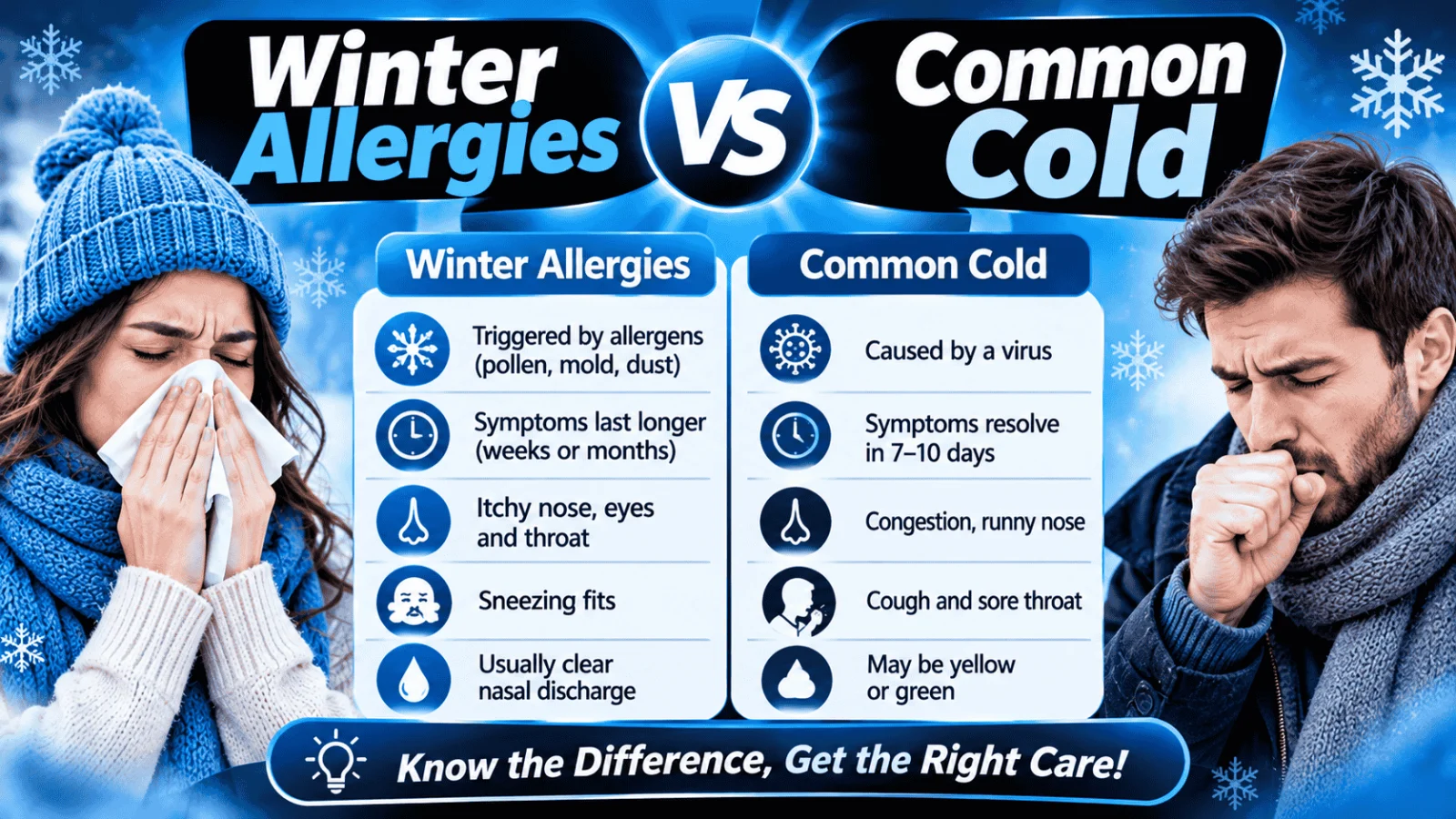
One of the most frequent questions is how to tell the difference between winter allergies and a cold. Itching is the biggest clue: allergies cause itchy eyes and nose, while colds rarely do. Allergies also do not cause fever or body aches.
| Feature | Winter allergies | Common cold |
|---|---|---|
| Itchy eyes or nose | Common | Uncommon |
| Fever and body aches | Not typical | Possible |
| Mucus | Thin and clear | Thicker, may turn yellow or green |
| Sore throat | Mild scratchiness | Common |
| Duration | Weeks, while exposure continues | About 7 to 10 days |
| Pattern | Worse at home, in the bedroom or after dusting | Spreads from person to person |
Still unsure? Our guide, Flu, Cold, or Sinus Infection? How to Tell the Difference, walks through the warning signs of common winter infections.
What Causes Winter Allergies in New York?
Cold weather does not directly cause allergies. Instead, it changes where we spend our time and what we breathe. Winter allergies are mostly indoor allergies, and in New York apartments, older buildings and tightly sealed homes, closed windows, steam radiators and forced-air heating can concentrate allergens in the air you breathe all day.
Common Winter Allergens
- Dust mites: tiny organisms that live in bedding, mattresses, upholstered furniture and carpets
- Mold: grows in damp bathrooms, basements, window sills and around leaking pipes or radiators
- Pet dander: skin flakes and proteins from cats and dogs that circulate more in sealed homes
- Cockroach and rodent allergens: a well-recognized trigger in urban, multi-unit housing
- Holiday items: stored decorations raise dust, and real Christmas trees can carry mold spores
Can Indoor Heating Make Winter Allergies Worse?
Yes, it can. Heating systems stir up settled dust, especially the first time they run each season. Dry indoor air also irritates the lining of the nose, which can make you more reactive. Cold, dry air itself can trigger non-allergic rhinitis, a runny nose that looks like allergy but is not driven by the immune system. Toward late winter, some tree pollen can also begin to appear on unseasonably mild days, which is why seasonal allergies in New York can overlap with winter symptoms.

Allergy symptoms are not always mild. Read Allergic Reactions: When Acute Care Is Enough and When to Call 911 to learn which warning signs need urgent attention.
Winter Allergy Treatment and Prevention
How to treat winter allergies usually means combining trigger control at home with the right medication. Start with the steps that lower your exposure, then add treatment based on your symptoms.
Reduce Indoor Allergies in Winter
- Wash bedding weekly in hot water (about 130°F or 54°C) and use dust-mite-proof covers on pillows and mattresses.
- Keep indoor humidity between roughly 30% and 50%, since very dry or very damp air both cause problems.
- Run a HEPA air filter in the bedroom and replace heating and air filters as the manufacturer recommends.
- Fix leaks, clean visible mold and use bathroom exhaust fans after showers.
- Vacuum with a HEPA-filter vacuum and wipe surfaces with a damp cloth instead of dry dusting.
- Keep pets out of the bedroom, and ask building management to address pests.
Winter Allergy Treatment Options
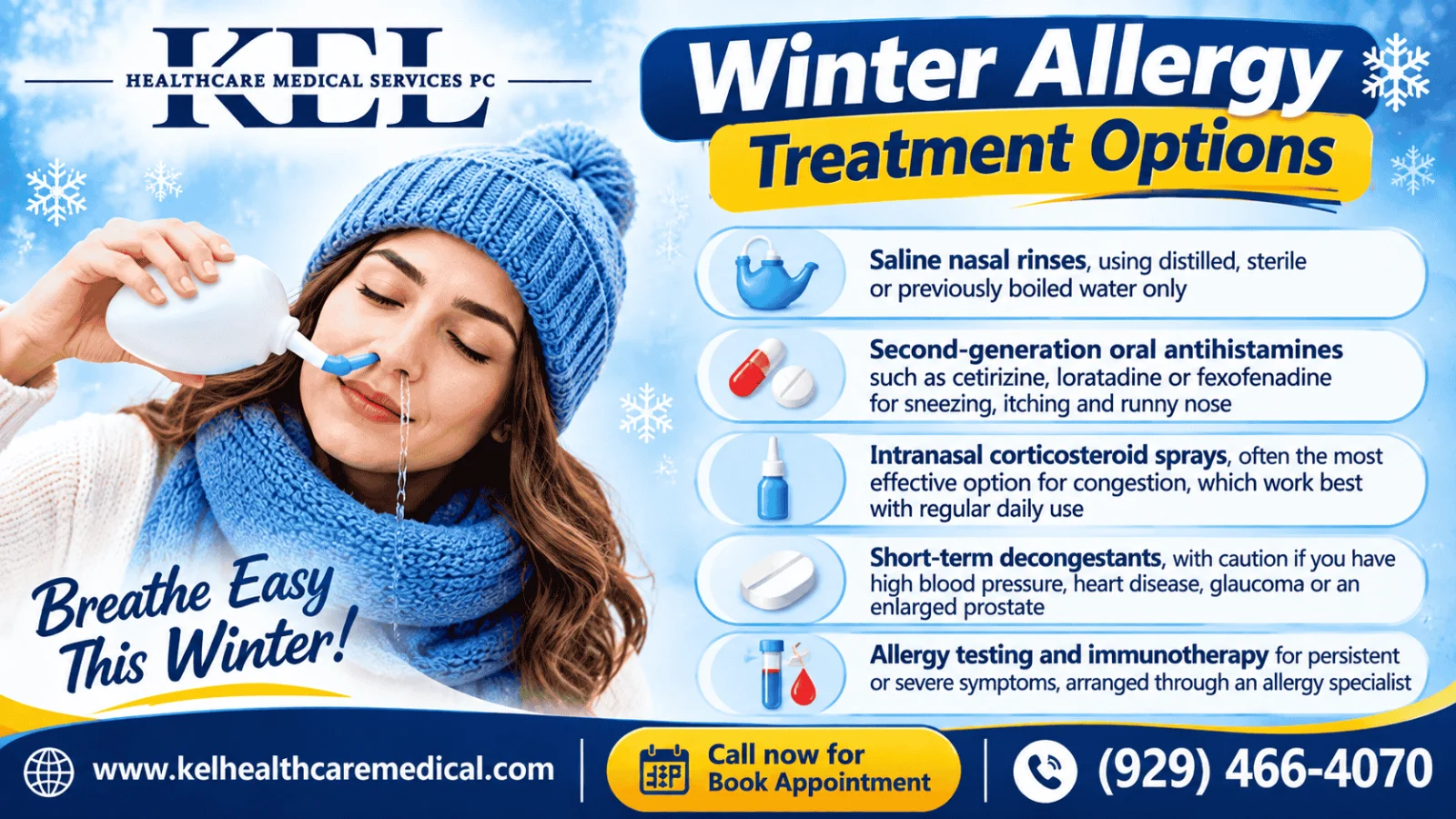
- Saline nasal rinses, using distilled, sterile or previously boiled water only
- Second-generation oral antihistamines such as cetirizine, loratadine or fexofenadine for sneezing, itching and runny nose
- Intranasal corticosteroid sprays, often the most effective option for congestion, which work best with regular daily use
- Short-term decongestants, with caution if you have high blood pressure, heart disease, glaucoma or an enlarged prostate
- Allergy testing and immunotherapy for persistent or severe symptoms, arranged through an allergy specialist
Speak with a clinician before starting a new medicine, especially if you are pregnant, have a chronic condition or take other prescriptions.
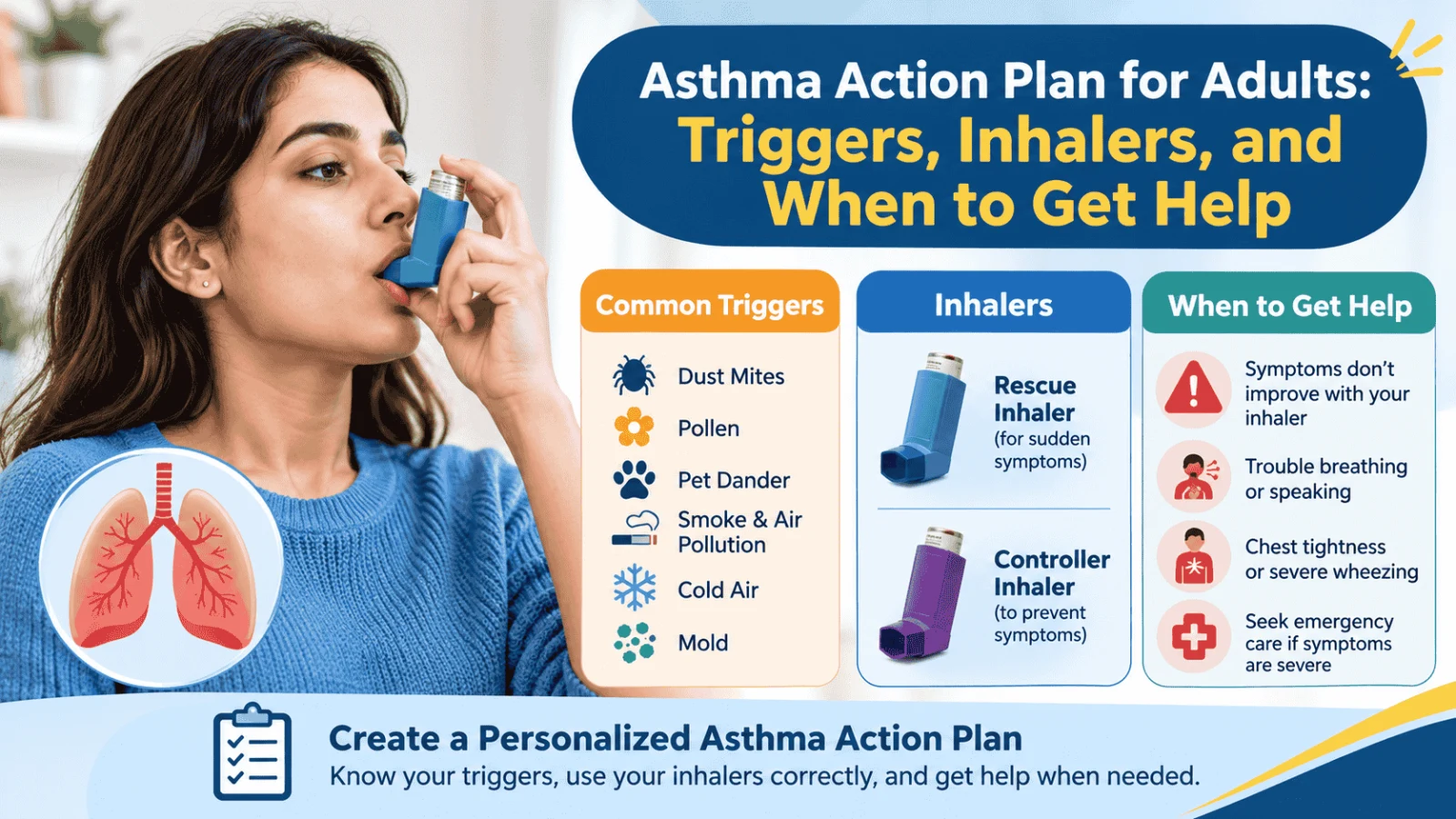
If you also live with asthma, indoor winter triggers can affect your breathing. Our Asthma Action Plan for Adults: Triggers, Inhalers, and When to Get Help explains how to stay prepared.
Winter Allergies Quick Reference
| Key point | What to know |
|---|---|
| Main cause | Indoor allergens such as dust mites, mold, pet dander and pests |
| Best first step | Reduce triggers, then use saline rinses, an antihistamine or a nasal steroid spray |
| Sign it is not a cold | Itchy eyes and nose, no fever, symptoms lasting beyond 10 days |
| See a doctor if | Symptoms last over 10 days, medicines fail, or sleep and work suffer |
| Call 911 if | Trouble breathing, swelling of the lips, tongue or throat, or fainting |
When Should You See a Doctor for Winter Allergies?
Book a visit with a primary care doctor if any of the following apply:
- Symptoms last longer than 10 days without improvement
- Over-the-counter medicines are not working, or you need them every day for weeks
- Congestion disrupts your sleep, work or daily routine
- Facial pain, thick colored mucus or fever suggests a sinus infection
- You notice wheezing, chest tightness or worsening asthma control
- You get repeated sinus or ear infections
Call 911 right away for difficulty breathing, swelling of the face, lips, tongue or throat, or hives with dizziness or fainting. These can be signs of a severe allergic reaction.
Where to Get Allergy Treatment in Queens NY
If you are searching for an allergy doctor in Queens NY, a primary care visit is a practical first step. Kel Healthcare Medical Services PC offers primary care, same-day acute care and diagnostic testing, and can coordinate specialist referrals when advanced allergy care is needed. Learn more about medical care in Woodside, our cold-weather care guide for Staten Island or primary care doctors in Brooklyn.
Conclusion
Winter allergies are manageable once you know the triggers. Reducing indoor allergens, using proven treatments and knowing when to seek care can help you breathe easier all season. If your symptoms are persistent, interfering with sleep or involving your chest, a medical evaluation can confirm the cause and guide the right plan.
Frequently Asked Questions
More from our blog
 Primary Care
Top Primary Care Doctors in Brooklyn, NY: Accepting New Patients
Looking for primary care doctors in Brooklyn? Learn how to compare clinics, meet Dr. Karl E. Latortue and Dr. Amara Osei, MD, and book a first visit with KEL Healthcare.
Medically reviewed by Dr. Karl E. Latortue, MD
Read Article Chronic Disease Management
 in Wading River, NY: Building a Care Plan That Fits Your Life
Living with diabetes, high blood pressure, asthma or another long-term condition? See how chronic disease management in Wading River, NY builds a practical plan you can stick to.
Medically reviewed by Dr. Karl E. Latortue, MD
Read Article Comprehensive Health Assessment
Health Assessment in Woodside, NY: How to Prepare and What Your Results Mean
Planning a health assessment in Woodside, NY? Learn how to prepare, what is usually reviewed and how to turn your results into a plan you can act on.
Medically reviewed by Dr. Karl E. Latortue, MD
Read Article