Cold, Flu, or Something Else?By Kel Healthcare Team
Flu, Cold, or Sinus Infection? How to Tell the Difference
Stuffy nose and aching all over? Compare flu, cold and sinus infection symptoms, how long each usually lasts, and the signs that mean it is time to see a clinician.
Introduction
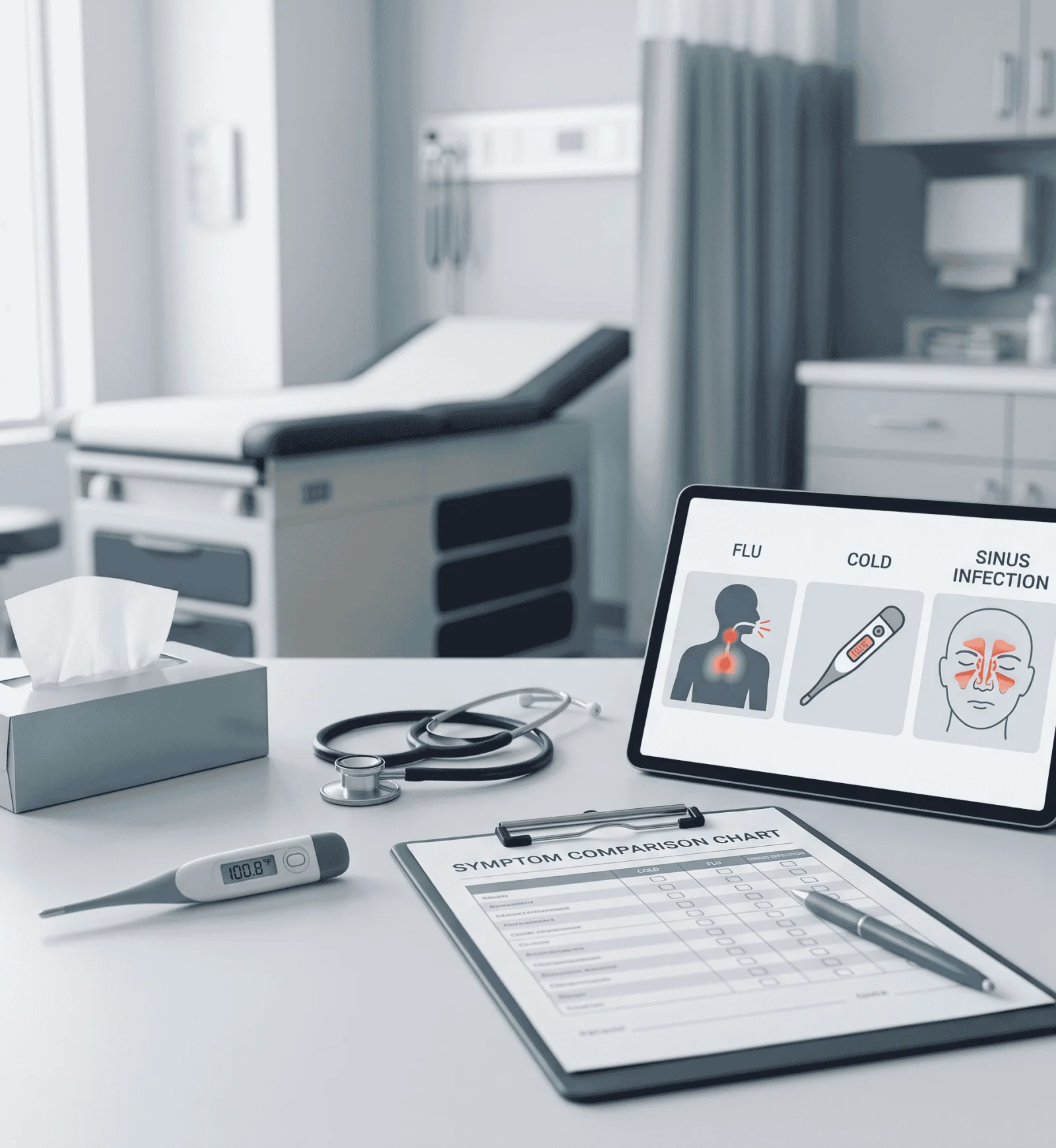
Stuffy nose, sore throat, headache, tired all over. Is it a cold, the flu or a sinus infection? The symptoms overlap, which is why so many people guess wrong and either rush in too early or wait too long.
This guide compares the three conditions, explains how long each usually lasts and lists the signs that mean it is time to get care. It builds on our guide to cold, flu or something else, and when to seek acute care.
Side-by-Side Comparison
| Cold | Flu | Sinus infection | |
|---|---|---|---|
| Onset | Gradual over a day or two | Often sudden | Often follows a cold or allergies |
| Fever | Uncommon or low | Common, sometimes high | Sometimes low-grade |
| Body aches and fatigue | Mild | Often significant | Mild to moderate |
| Nasal symptoms | Runny or stuffy nose, sneezing | Sometimes | Congestion, thick discharge, facial pressure |
| Cough and sore throat | Common | Dry cough common | Cough and postnasal drip |
| Typical course | About a week | Several days to two weeks, fatigue can linger | Often improves in about 10 days; longer or worsening needs a check |
Only a clinician can tell for sure, and a test can confirm the flu. Use this table to decide how quickly to seek care.
Clues Pointing to the Flu
- Sudden fever, chills and aching muscles
- Strong fatigue that makes you want to stay in bed
- Dry cough and headache
- Others around you with flu, or it is flu season
Antiviral medicines work best when started early, so call promptly if you suspect flu, especially if you are older, pregnant or have a chronic condition. See the CDC's flu information.
Clues Pointing to a Sinus Infection
- Facial pain or pressure around the cheeks, forehead or eyes
- Thick yellow or green nasal discharge with congestion
- Symptoms that last more than about 10 days without improving
- Symptoms that improve, then get worse again
- Reduced sense of smell and tooth or ear pressure
Most sinus infections are viral and clear on their own, so antibiotics are not always needed. A clinician can decide whether yours is likely to benefit.
A Sore Throat That Might Be Strep
A sore throat without cough or runny nose, especially with fever and swollen glands, can be strep, which needs testing. The CDC has a helpful page on group A strep. Our guide on flu, strep and sinus infections in Brooklyn explains when to seek same-day care.
What You Can Do at Home
- Rest and drink plenty of fluids.
- Use saline rinses or a humidifier for congestion.
- Ask a pharmacist or clinician which over-the-counter medicines are safe with your other medicines and conditions.
- Stay home while you have a fever, and cover coughs and wash hands.
- Monitor symptoms and seek care if they worsen or last longer than expected.
For more tips, see our post on recovering from the flu faster.
When to Get Care
- Fever that lasts more than a few days or keeps returning
- Symptoms that improve and then suddenly worsen
- Sinus symptoms lasting more than 10 days, or severe facial pain
- Ear pain, a painful sore throat or a cough that will not go away
- Symptoms in older adults, pregnant people or anyone with asthma, COPD, diabetes, heart disease or a weakened immune system
KEL Healthcare's acute care team treats sudden, non-emergency illness such as colds, flu and sinus or ear infections, and walk-ins are welcome. Confirm hours at your location first.
Call 911 or Go to the ER If
- You have trouble breathing or shortness of breath
- You have chest pain or pressure
- You are confused or very hard to wake
- You have a stiff neck with fever and severe headache
- Lips or face turn blue, or a child cannot drink or is unusually limp
Conclusion
Colds, flu and sinus infections look alike, but timing, severity and a few key symptoms can help you choose the right next step. When in doubt, check in with a clinician.
If you need a same-day visit, schedule an appointment or see our locations. This article is for general information only and is not medical advice. In an emergency, call 911.
Frequently Asked Questions
More from our blog
 Vaccines for Adults
Adult Vaccination Schedule: Which Vaccines Do Adults Need?
Which vaccines do adults need, and when? A plain-language look at flu, COVID-19, Tdap/Td, shingles, pneumococcal, RSV, hepatitis B and more, with tips to check your own schedule.
Medically reviewed by Dr. Karl E. Latortue, MD
Read Article Bloodwork Results
High Cholesterol: What Your Test Results Mean and What to Do Next
Understand LDL, HDL, triglycerides and total cholesterol on your lipid panel, what the ranges mean, and the steps to take with your clinician after a high result.
Medically reviewed by Dr. Karl E. Latortue, MD
Read Article Chronic Disease
What Is a Normal Blood Pressure Reading? Understanding Your Numbers
Learn what the two blood pressure numbers mean, how adult readings are categorized, how to measure at home accurately, and when a high reading needs urgent attention.
Medically reviewed by Dr. Karl E. Latortue, MD
Read Article