Bloodwork ResultsBy Kel Healthcare Team
High Cholesterol: What Your Test Results Mean and What to Do Next
Understand LDL, HDL, triglycerides and total cholesterol on your lipid panel, what the ranges mean, and the steps to take with your clinician after a high result.
Introduction
A high cholesterol result can feel alarming, especially because the condition usually causes no symptoms. The good news is that cholesterol is one of the most treatable risk factors for heart disease and stroke.
This guide explains what each number on a lipid panel means, how the commonly used ranges look, and what to do after a high result. For a wider look at lab reports, see our patient's guide to understanding bloodwork results.
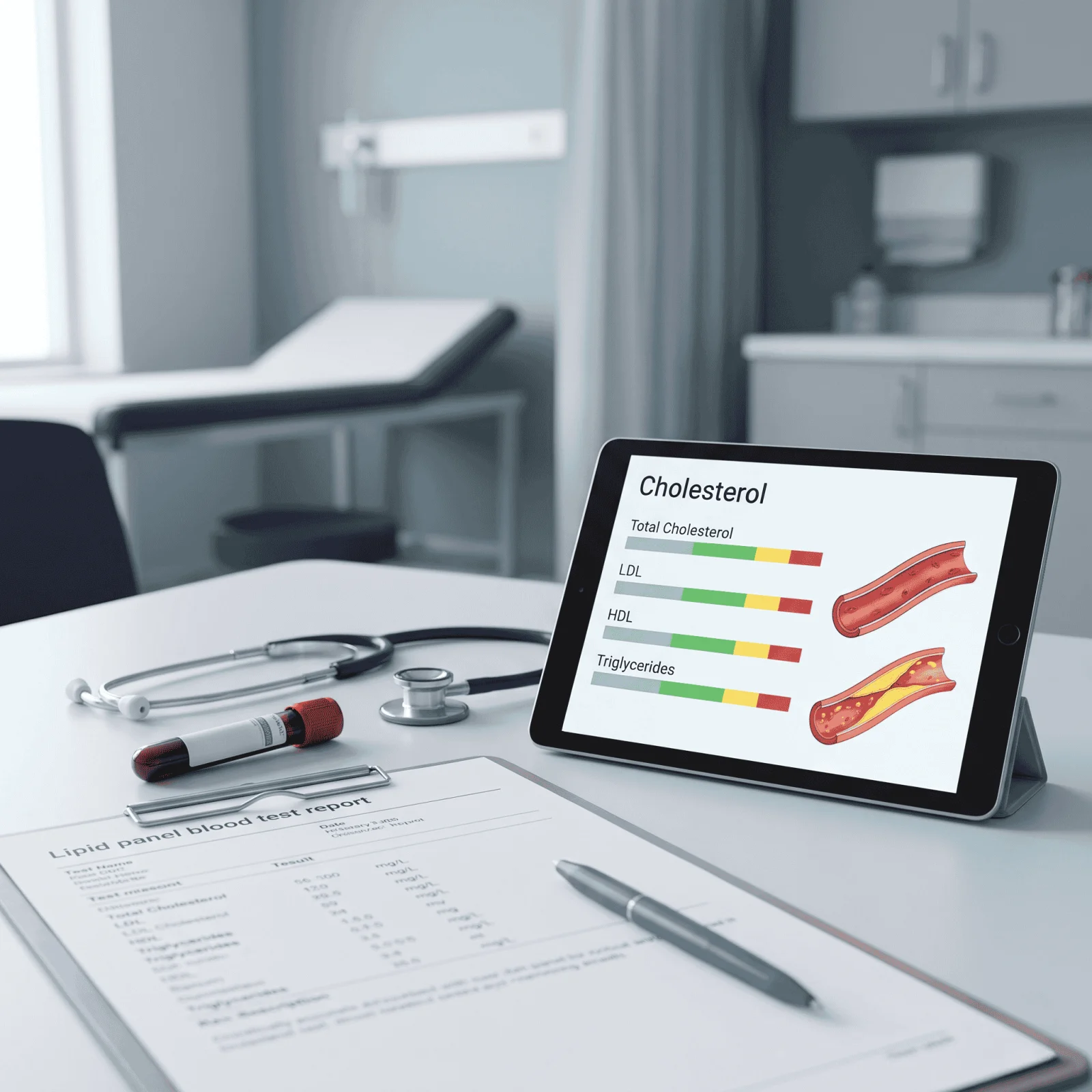
What a Lipid Panel Measures
- Total cholesterol: the overall amount of cholesterol in your blood.
- LDL cholesterol: often called "bad" cholesterol because high levels can build up in artery walls.
- HDL cholesterol: often called "good" cholesterol because it helps carry cholesterol away from the blood.
- Triglycerides: a type of fat in the blood that rises with excess calories, sugar, alcohol and some medical conditions.
Commonly Used Ranges for Adults
Ranges below are commonly used reference values in mg/dL. Your clinician interprets them alongside your age, blood pressure, diabetes status, smoking history and family history, so your own target may differ.
| Measure | Generally favorable | Borderline | High |
|---|---|---|---|
| Total cholesterol | Below 200 | 200 to 239 | 240 and above |
| LDL cholesterol | Below 100 | 130 to 159 (100 to 129 is near optimal) | 160 and above; 190 and above is very high |
| Triglycerides | Below 150 | 150 to 199 | 200 and above |
| HDL cholesterol | 60 and above is protective | Below 40 (men) or below 50 (women) is considered low | Not applicable |
Why a High Result Is Not the Whole Story
Cholesterol is only one piece of your heart risk. Clinicians often combine your lipid numbers with other factors to estimate your overall risk over the coming years. Two people with the same LDL can need very different plans. A single result can also be affected by a recent illness, certain medications, or whether you fasted.
What to Do After a High Result
- Do not panic, and do not stop or start any medicine on your own.
- Ask whether the test should be repeated, and whether fasting is needed.
- Share your family history, medications, supplements and any conditions such as diabetes, thyroid disease or kidney disease.
- Ask what your personal LDL target is and how your overall heart risk was estimated.
- Agree on a plan that may include lifestyle changes, medication, or both, and book a follow-up test.
Lifestyle Steps That Help
- Choose more vegetables, fruit, beans, whole grains and unsalted nuts
- Swap saturated fat from fatty meats and full-fat dairy for unsaturated fats such as olive oil
- Limit sugary drinks, refined carbohydrates and alcohol, which can raise triglycerides
- Move regularly, building up to the activity level your clinician recommends
- Stop smoking, and work toward a healthier weight if advised
Our lifestyle counseling service supports practical changes in nutrition, sleep, stress and activity. See MyHealthfinder's guidance on heart health for more ideas.
When Medication Comes Up
Some people, especially those with very high LDL, diabetes, existing heart disease or a strong family history, benefit from medication in addition to lifestyle changes. Whether you need it is a shared decision. Ask about the expected benefit, side effects, how often to recheck your levels, and what to do if you miss a dose. Ongoing management is part of chronic disease management, and our post on medication adherence offers tips for sticking with a plan.
When to Seek Emergency Care
High cholesterol itself does not cause symptoms, but it can contribute to heart attack and stroke. Call 911 for chest pain or pressure, trouble breathing, or sudden weakness, face drooping or speech trouble. Review the warning signs of a heart attack and stroke symptoms.
Conclusion
A high cholesterol result is a prompt to act, not a verdict. With a clear understanding of your numbers and a plan you can follow, you can lower your risk over time.
To review your results with a clinician, schedule an appointment. This article is for general information only and is not medical advice.
Frequently Asked Questions
More from our blog
 Chronic Disease
What Is a Normal Blood Pressure Reading? Understanding Your Numbers
Learn what the two blood pressure numbers mean, how adult readings are categorized, how to measure at home accurately, and when a high reading needs urgent attention.
Medically reviewed by Dr. Karl E. Latortue, MD
Read Article Preventive care
What Blood Tests Should You Get at Your Annual Physical? A Doctor's Guide
Not sure which blood tests belong in a yearly checkup? See the common panels, what each one looks for, and how your age and history change the list.
Medically reviewed by Dr. Karl E. Latortue, MD
Read Article Why Annual Well-Woman Visits Matter
Woodside Queens Women's Health: Annual Exam, Screenings and Questions to Ask
Preparing for a women's health visit in Woodside, Queens? Learn what an annual exam involves, which screenings to ask about, what to bring, and how to follow up.
Medically reviewed by Dr. Karl E. Latortue, MD
Read Article