Small Habit ChangesBy Kel Healthcare Medical Team
Small Habit Changes That Make the Biggest Health Impact
Building healthy lifestyle habits doesn't require an overnight transformation. In fact, the changes that stick, and actually move the needle on long-term health, are usually small, specific, and.

Introduction
Building healthy lifestyle habits doesn't require an overnight transformation. In fact, the changes that stick, and actually move the needle on long-term health, are usually small, specific, and easy to repeat. Research consistently shows that gradual, sustainable adjustments outperform dramatic overhauls that are difficult to maintain past the first few weeks.
This is also the foundation behind lifestyle counseling for chronic disease prevention: rather than prescribing sweeping changes all at once, providers help patients identify a handful of small, realistic habits that compound into meaningful results over months and years.
Below are the small habit changes that consistently make the biggest difference, along with why they work and how to start building them today.

Why Small Habits Beat Big Overhauls
Large, sudden lifestyle changes often fail because they demand too much willpower too quickly. Small habits work better because they:
- Require less motivation to start and maintain
- Build momentum through early, visible wins
- Fit into an existing routine instead of replacing it entirely
- Reduce the all-or-nothing thinking that leads to giving up after a single setback
Over time, small healthy lifestyle habits compound, much like small deposits building toward a larger financial goal.
Healthy Lifestyle Habits for Nutrition
- Add one vegetable to a meal you already eat, rather than overhauling your entire diet
- Swap sugary drinks for water at just one meal per day
- Eat protein at breakfast to reduce mid-morning energy crashes
- Keep a simple, healthy snack on hand to avoid reaching for convenience food
- Practice slower eating to improve digestion and satiety
Healthy Lifestyle Habits for Movement
- Set a consistent wake-up time, even on weekends
- Dim lights an hour before bed to support natural melatonin production
- Keep phones out of the bedroom, or at least away from the bed
- Avoid caffeine after early afternoon
- Create a short wind-down routine to signal your body it's time to rest
Healthy Lifestyle Habits for Stress Management
- Practice 2–3 minutes of deep breathing during stressful moments
- Write down one thing you're grateful for each day
- Take short breaks between tasks instead of pushing through fatigue
- Limit news or social media scrolling to set times of day
- Spend a few minutes outside daily, even briefly
How Lifestyle Counseling for Chronic Disease Prevention Builds on These Habits
Lifestyle counseling for chronic disease prevention takes this small-habit approach and makes it structured and personalized. Rather than a generic list of tips, a counselor helps identify:
- Which habits will have the biggest impact based on your specific health risks
- Realistic starting points based on your current routine
- Barriers likely to get in the way, and how to plan around them
- A pace of change that's sustainable rather than overwhelming
This approach is especially valuable for preventing or managing conditions like type 2 diabetes, high blood pressure, and heart disease, where small, consistent lifestyle changes have been shown to meaningfully reduce risk.
How to Start Without Feeling Overwhelmed
- Pick one habit, not five. Trying to change everything at once usually backfires.
- Attach the new habit to an existing routine (e.g., stretch right after brushing your teeth).
- Track progress simply: a checkmark on a calendar is often enough.
- Expect setbacks and treat them as normal, not as failure.
- Reassess every few weeks and add a new habit once the first feels automatic.
Conclusion
The biggest health improvements rarely come from dramatic, short-lived changes; they come from small, healthy lifestyle habits repeated consistently over time. Whether it's a daily walk, an earlier bedtime, or a few minutes of deep breathing, these small shifts add up in ways that are easy to underestimate at the start.
If you're managing risk factors for a chronic condition, lifestyle counseling for chronic disease prevention can help turn this approach into a personalized, sustainable plan rather than guesswork.
More from our blog
 Lifestyle Counseling
What Is Lifestyle Counseling and How Does It Support Long-Term Health?
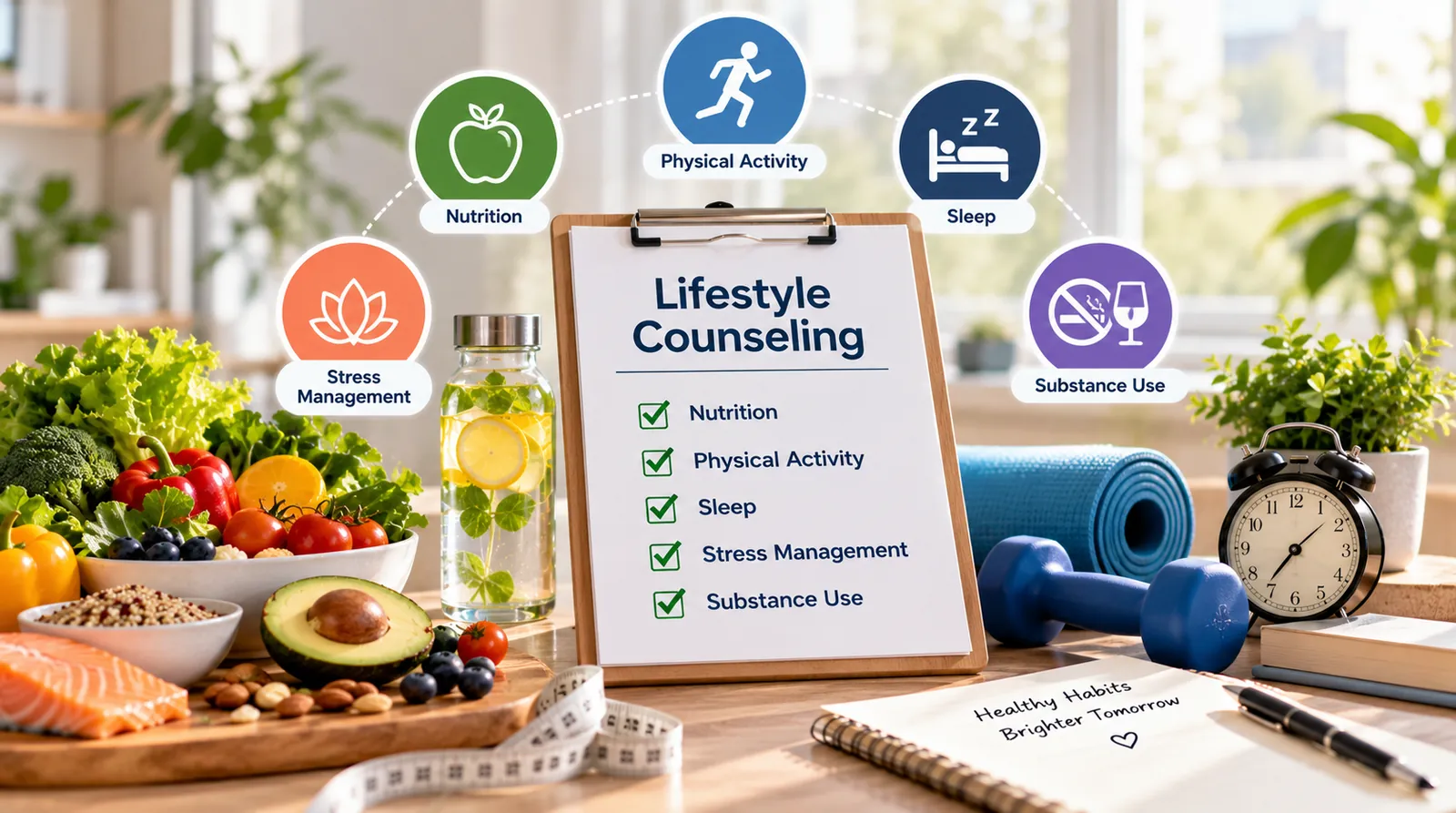
Lifestyle counseling is a structured approach to health that focuses on the daily habits driving chronic disease, nutrition, physical activity, sleep, stress, and substance use, rather than.
Medically reviewed by Kel Healthcare Medical Team
Read Article Why Annual Well-Woman Visits Matter
, Even When You Feel Fine
"I feel fine, so why do I need an appointment?" It's one of the most common reasons women delay scheduling a well-woman visit NY providers recommend every year. But feeling well and being well.
Medically reviewed by Kel Healthcare Medical Team
Read Article Perimenopause and Menopause
: What to Expect and When to See a Doctor
Perimenopause symptoms can show up years before a woman ever expects them, often starting in the mid-to-late 40s with subtle changes that are easy to dismiss as stress or aging. Irregular cycles.
Medically reviewed by Kel Healthcare Medical Team
Read Article