Stress, Sleep, and WeightBy KEL Healthcare Medical
Stress, Sleep, and Weight: How Lifestyle Counseling Connects the Dots
Ask someone struggling with their weight what's going on, and stress and sleep rarely make it into the first sentence. Yet by the time a real conversation happens — the kind lifestyle counseling for.

Introduction
Ask someone struggling with their weight what's going on, and stress and sleep rarely make it into the first sentence. Yet by the time a real conversation happens — the kind lifestyle counseling for stress and sleep is specifically built around — these three issues almost always turn out to be tangled together.
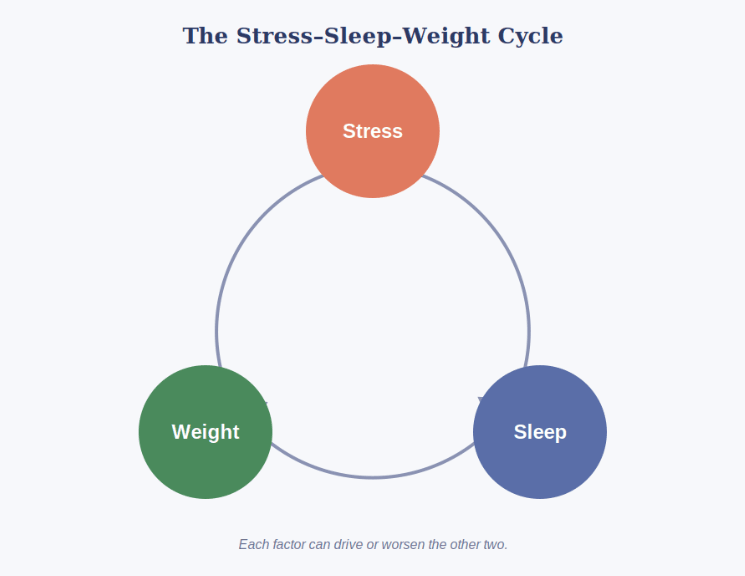
Chronic stress disrupts sleep. Poor sleep disrupts appetite regulation and stress resilience. Weight struggles, in turn, often add a new source of stress and can further interfere with sleep quality. It's a loop, not three separate problems lined up side by side — which is exactly why addressing them one at a time so often falls short.
This guide breaks down how these three factors actually connect, why isolated fixes tend to underperform, and how weight management counseling in NY approaches all three together rather than in isolation.
Why Stress, Sleep, and Weight Are Rarely Separate Problems
These three areas share overlapping biological and behavioral pathways, which is part of why they tend to move together rather than independently:
- Shared hormonal pathways – cortisol, the primary stress hormone, directly affects both sleep architecture and appetite regulation
- Shared behavioral patterns – stress and poor sleep both commonly lead to less structured eating and reduced motivation for activity
- A reinforcing cycle – difficulty in any one area tends to make the other two harder to manage, not easier
- Common root causes – overload, lack of routine, and insufficient recovery time often underlie all three simultaneously
Recognizing this overlap is often the first meaningful step toward actually making progress, rather than treating each symptom as its own isolated project.
How Stress Affects Sleep and Weight
Chronic stress influences both sleep and weight through well-documented mechanisms:
- Elevated cortisol disrupts sleep architecture, making it harder to fall asleep and reducing the amount of restorative deep sleep
- Stress often increases cravings for high-calorie, high-sugar foods, partly through cortisol's effect on appetite-regulating hormones
- Chronic stress can promote abdominal fat storage, independent of overall calorie intake
- Stress reduces the mental bandwidth for healthy routines, making consistent meal planning, exercise, and sleep hygiene harder to sustain
None of this is a character flaw — it's a predictable physiological response to sustained stress that affects nearly everyone to some degree.
How Poor Sleep Affects Stress and Weight
Sleep deprivation, in turn, feeds back into both stress and weight:
- Poor sleep raises cortisol levels, compounding the stress response even without any new stressor present
- Sleep loss disrupts hunger hormones – reducing leptin (which signals fullness) and increasing ghrelin (which signals hunger)
- Fatigue reduces impulse control, making it harder to stick to planned eating or activity goals
- Poor sleep lowers stress resilience, meaning the same stressor feels more overwhelming after a bad night's sleep
This is part of why lifestyle counseling for stress and sleep so often treats the two as a single, connected focus area rather than separate goals.
How Weight Struggles Can Worsen Stress and Sleep
The relationship runs in the other direction too — weight-related challenges often feed back into stress and sleep:
- Weight-related health concerns can themselves become a source of chronic stress
- Excess weight, particularly around the neck and abdomen, is a known risk factor for sleep-disordered breathing, which fragments sleep quality
- Frustration with slow or stalled progress can add a new, ongoing source of stress on top of whatever originally caused the weight changes
- Poor sleep quality from weight-related issues further disrupts stress regulation, closing the loop
This is why the cycle is genuinely circular rather than linear — each factor can be both a cause and a consequence of the others.
Why Treating Each in Isolation Often Falls Short
A common pattern: someone tackles weight through diet alone, without addressing sleep or stress, and finds progress slow, inconsistent, or hard to maintain.
A few reasons isolated approaches tend to underperform:
- Addressing weight without sleep often means fighting against disrupted hunger hormones the entire time
- Addressing sleep without stress often means the underlying driver of poor sleep never actually resolves
- Addressing stress without weight or sleep support can improve wellbeing without translating into the specific outcomes someone is looking for
- Single-focus approaches miss the reinforcing loop, meaning progress in one area can quietly erode if the others go unaddressed
This is precisely the gap lifestyle counseling is designed to close — by treating these three areas as connected rather than sequential projects.
How Lifestyle Counseling Addresses All Three Together
Lifestyle counseling for stress and sleep, when paired with weight-focused goals, typically involves:
- A combined assessment – looking at stress levels, sleep patterns, and weight-related habits together rather than separately
- Identifying the strongest entry point – sometimes sleep is the most tractable starting point, sometimes stress management, depending on the individual
- Coordinated goal-setting – building habits that support more than one area simultaneously, like an evening wind-down routine that improves both stress and sleep
- Tracking connected markers – monitoring how changes in one area affect the others over time, not just isolated outcomes
- Adjusting the plan as patterns emerge – since progress in one area often reveals what's actually driving difficulty in another
This integrated approach tends to produce more durable results than tackling any single piece in isolation.
What Weight Management Counseling in NY Typically Involves
If you're exploring weight management counseling in NY, a comprehensive approach typically includes:
- A full intake covering not just diet and activity, but sleep patterns and stress levels as well
- Personalized, realistic goals – built around your specific barriers rather than generic weight-loss advice
- Regular follow-up sessions – to track progress and adjust the plan as needed
- Coordination with other care – including your primary care provider, especially if underlying conditions like sleep apnea or thyroid issues are contributing factors
- A long-term framework, not a short-term program, since sustainable weight management is rarely achieved through short bursts of intensity
Look for a provider who asks about your sleep and stress levels as part of a weight conversation — that's often a good sign the approach will address the full picture rather than diet alone.
Conclusion
Stress, sleep, and weight rarely move independently — improvement or difficulty in one tends to ripple into the other two. This is exactly why lifestyle counseling for stress and sleep so often expands naturally into weight-related goals, and why effective weight management counseling in NY increasingly treats all three as connected rather than separate concerns.
If you've tried addressing one of these areas without lasting success, it may be worth looking at the full picture rather than another isolated attempt. Understanding how these three factors feed into each other is often the missing piece that makes sustainable change finally possible.
Frequently Asked Questions
More from our blog
 Chronic Disease Management in Queens
Chronic Disease Management in Queens: Treatment and Ongoing Care
There's a particular exhaustion that comes with living alongside a chronic condition - not the illness itself so much as the mental load of it—remembering medications. Tracking numbers. Rearranging.
Medically reviewed by Dr. Karl E. Latortue, MD
Read Article Geriatric Care in Queens
Geriatric Care in Queens: Healthcare Services for Older Adults
There's a shift that tends to sneak up on families as parents or grandparents get older. Suddenly there are more pill bottles on the counter, more appointments to keep track of, and the kind of care.
Medically reviewed by Dr. Karl E. Latortue, MD
Read Article Premier Physicians
How Woodside Premier Physicians Doctors Help You Stay Healthy Year-Round
Staying healthy is more than scheduling a visit when you are sick. It means having a trusted primary care team that gets to know you, helps you prevent health concerns, and supports you through.
Medically reviewed by Urgent Care Specialist in New York
Read Article