What Should Go on a CutBy Kel Health Care Medical
What Should Go on a Cut, and What Should Stay Off It? Comparing the Wound-Care Steps, the Infection Signs and the Tetanus Schedule
Most minor cuts heal well at home, but a rushed rinse or the wrong antiseptic can slow healing and invite infection. Seven simple steps keep the wound clean, covered, and safe.
Introduction
Most minor cuts heal well at home, but a rushed rinse or the wrong antiseptic can slow healing and invite infection. Seven simple steps keep the wound clean, covered, and safe.
Cuts and scrapes feel too small to think about, which is exactly why they go wrong. The National Safety Council recorded roughly 70,250 cut or laceration cases that cost private-sector workers days away from work in 2011, as reported by Safety+Health magazine. Most minor wounds heal fine at home, but a rushed rinse or the wrong bottle from the medicine cabinet can invite trouble. Here's how to do basic wound care properly.
Key Findings
- 70,250 cut and laceration cases led to days away from work in the 2011 U.S. private sector (National Safety Council, via Safety+Health).
- Don't use hydrogen peroxide or iodine on a wound: Mayo Clinic says both can irritate it.
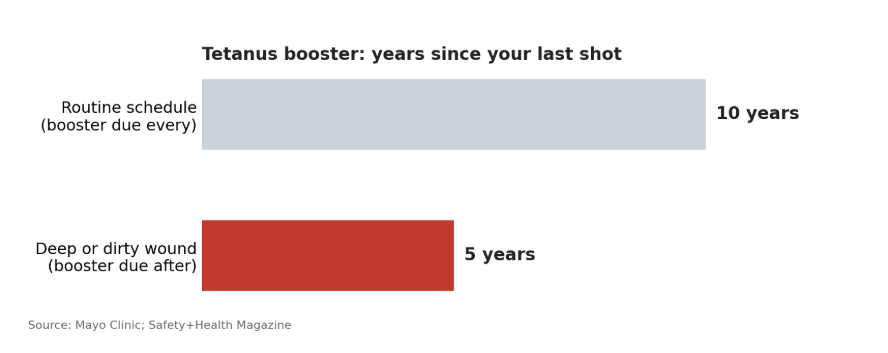
- 5 years is the threshold for a tetanus booster if a wound is deep or dirty; doctors otherwise recommend one every 10 years (Mayo Clinic; Safety+Health).
- Once a day is the minimum for changing a dressing, or sooner if it gets wet or dirty (Mayo Clinic Care Network).
Why do small wounds cause big problems?
Because skin is your barrier, and a break in it lets bacteria in. When a cut is left dirty, picked at, or soaked in harsh antiseptics, healing slows and infection risk rises. Cleaning is the single most useful step. Mayo Clinic says holding the wound under running water lowers the infection risk. It's tempting to reach for something that stings, but stinging doesn't mean it's working.
What should you do, step by step?
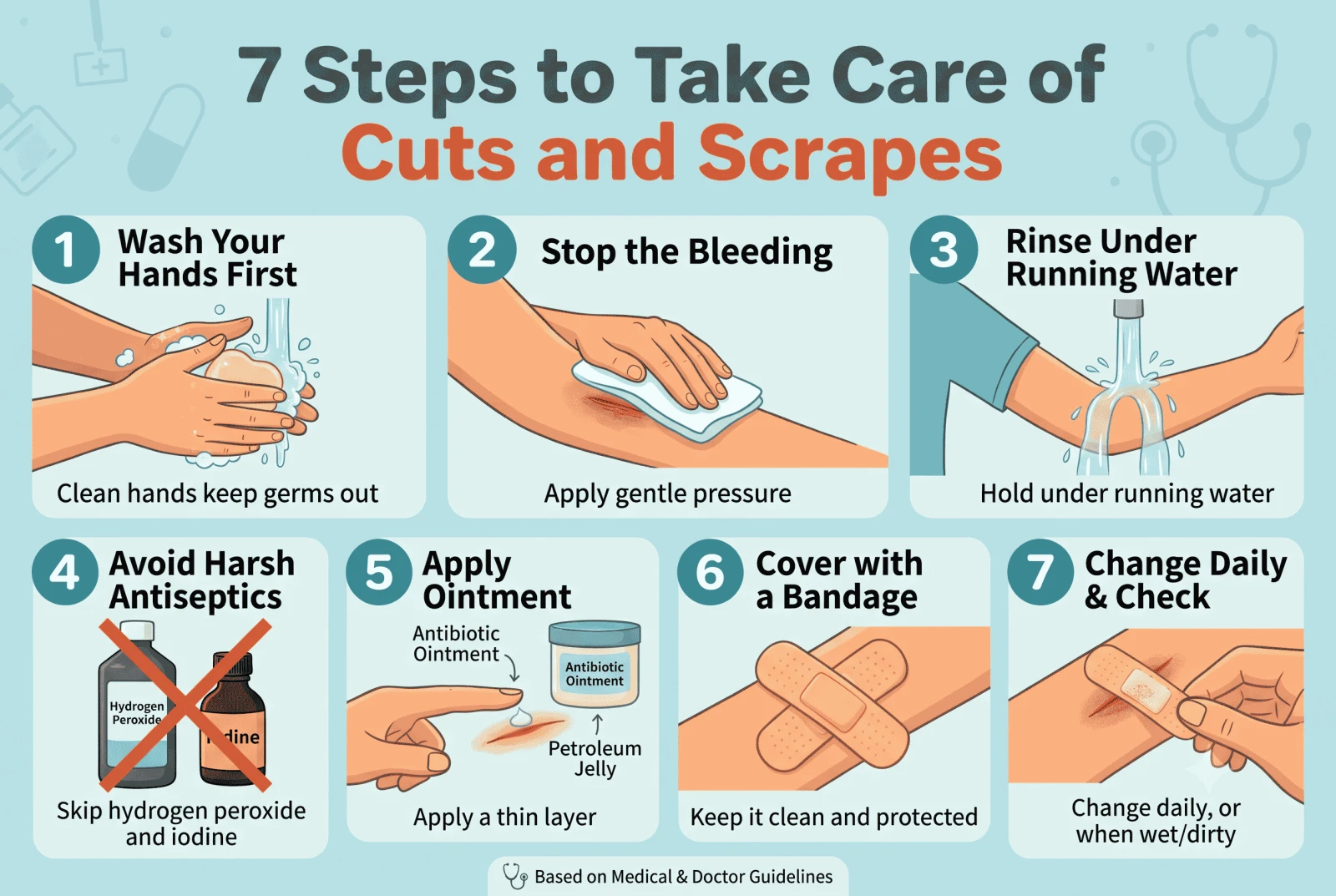
1. Wash your hands first. Clean hands keep new germs out of the wound.
2. Stop the bleeding. Minor cuts and scrapes usually stop on their own. If not, press gently with a clean cloth and raise the area. For a steadier cut, keep pressure on without peeking; Safety+Health suggests 20 to 30 minutes, since checking can disturb the forming clot. If blood keeps flowing, get medical help.
3. Rinse under running water. Wash the skin around the wound with soap, but keep soap out of the wound itself. Skip hydrogen peroxide and iodine. If dirt or grit remains, lift it out with tweezers cleaned with alcohol, and see a professional if you can't get it all.
4. Apply a thin layer of antibiotic ointment or petroleum jelly. It keeps the surface moist and helps reduce scarring. If a rash appears, stop using the ointment.
5. Cover with a bandage. A bandage, rolled gauze or gauze with paper tape keeps the area clean. A tiny scratch can stay uncovered.
6. Change the dressing daily. Swap it sooner if it's wet or dirty.
7. Check your tetanus status. A tetanus shot is needed if your last one was more than five years ago and the wound is deep or dirty.
Do's and don'ts at a glance
| Do | Don't |
| Rinse with plenty of running water | Pour hydrogen peroxide or iodine on the wound |
| Press gently to stop bleeding | Keep lifting the cloth to check |
| Use a thin layer of ointment or petroleum jelly | Slather on thick layers or keep using one that causes a rash |
| Change the bandage daily | Leave a wet, dirty bandage on |
| Keep an eye on the area for a few days | Pick at scabs |
When should you see a doctor?
When the wound or the situation is beyond home care. Mayo Clinic advises seeing a healthcare professional if you notice signs of infection: redness, increasing pain, drainage, warmth, or swelling. Also get help if bleeding won't stop, if you can't remove debris, or if the cut is deep or gaping. Safety+Health notes that closing a deep wound within a few hours helps cut the infection risk, so don't wait a day to decide.
How do you help the skin heal well?
Keep it clean, moist, and protected. Eating properly and staying hydrated support healing. Avoid soaking a fresh wound in a bath or pool until it has begun to close. Once healed, protect new skin from the sun to reduce visible scarring.
Conclusion
Good wound care is mostly about boring basics: clean hands, plenty of running water, a thin layer of ointment, a fresh bandage each day, and a tetanus shot when it's due. Watch for infection over the following days, and don't hesitate to get a deep or dirty wound checked.
Frequently Asked Questions
More from our blog
 Treat a Sinus Infection
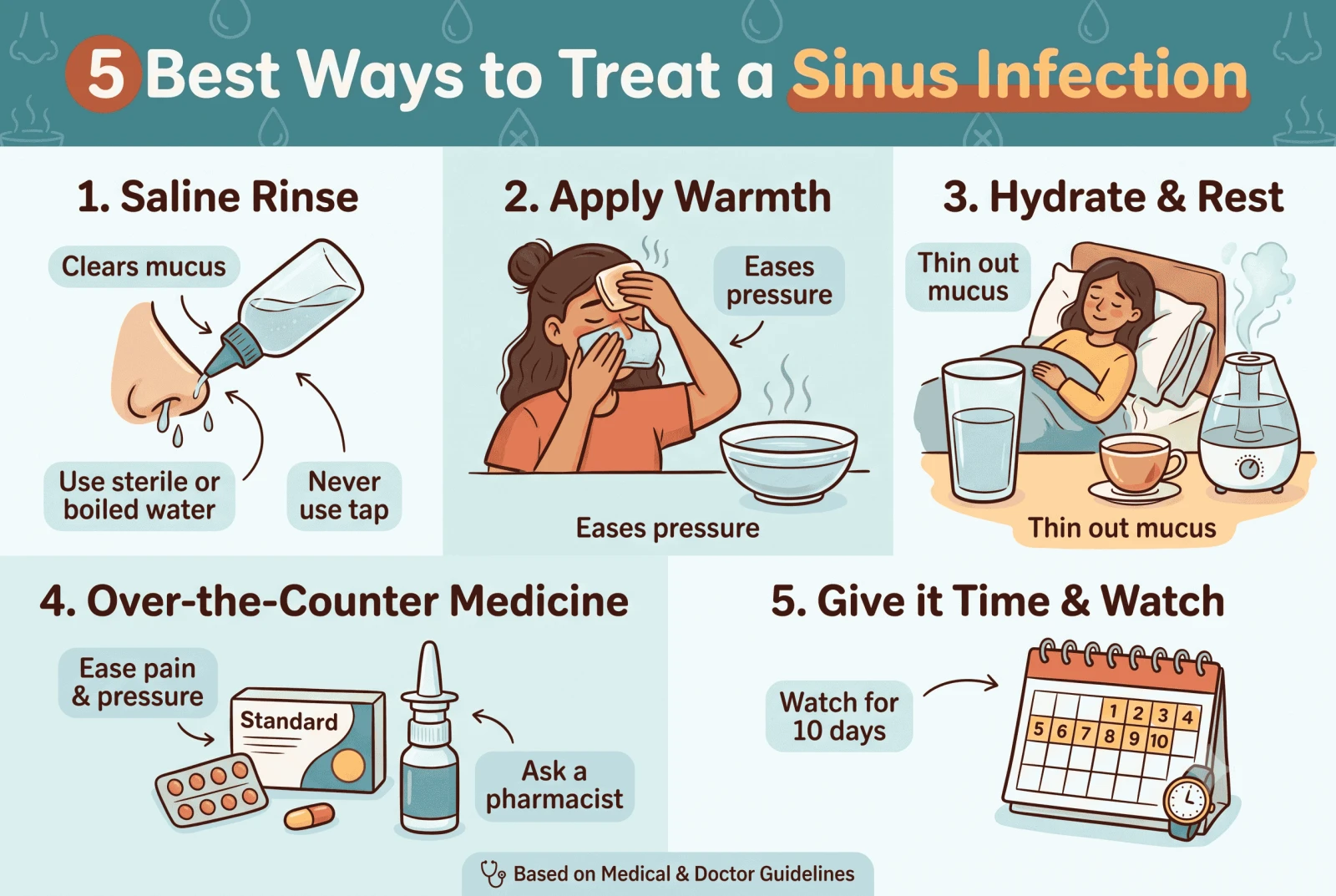
5 Best Ways to Treat a Sinus Infection
More than 90% of acute sinus infections are viral, which is why antibiotics rarely speed recovery. Five simple home treatments ease the pressure while your body does the healing.
Medically reviewed by Dr. Karl E. Latortue, MD
Read Article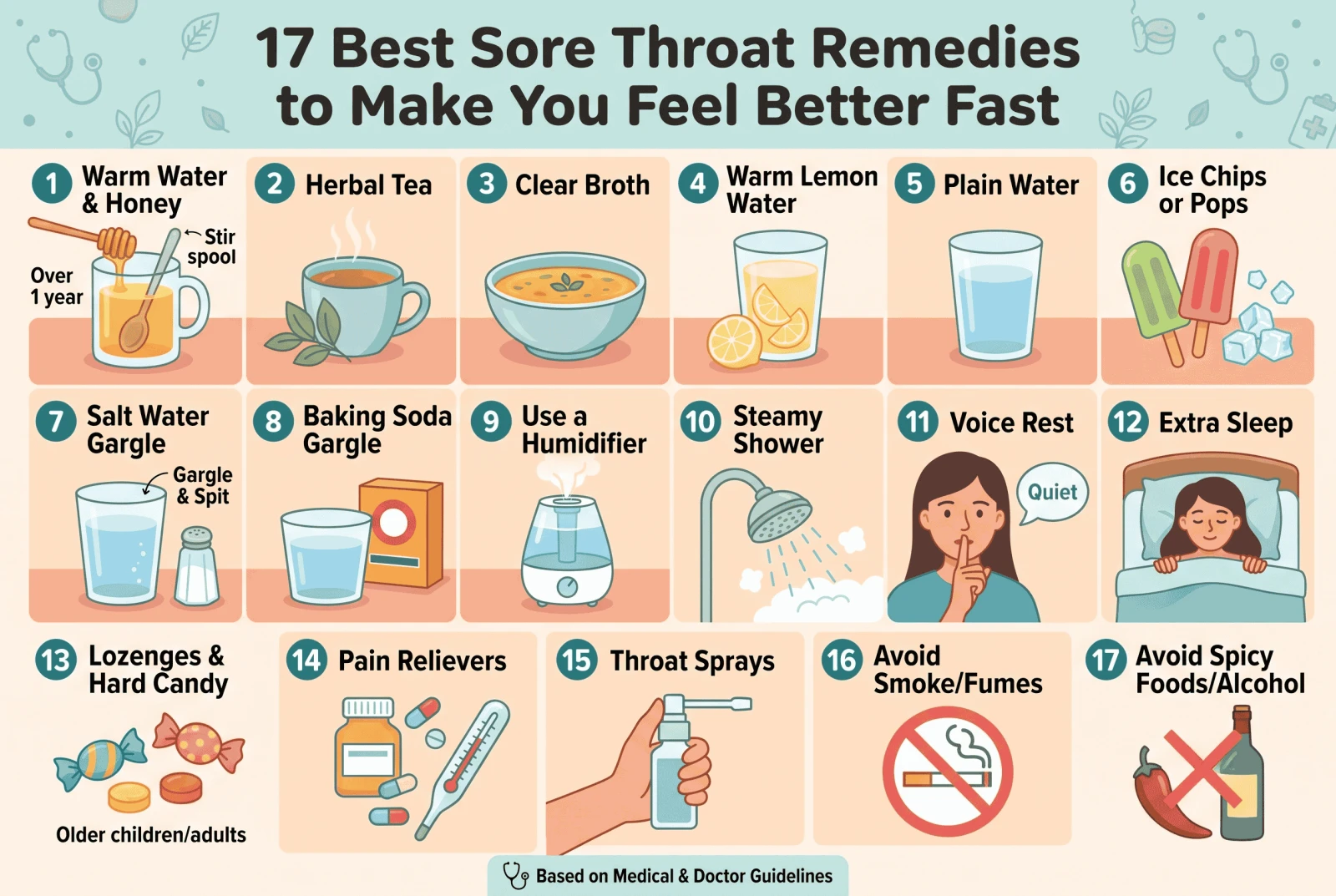 17 Best Sore Throat Remedies
17 Best Sore Throat Remedies to Make You Feel Better Fast, According to Doctors
Viruses cause 85% to 95% of throat infections in adults and children under 5, according to Northwestern Medicine, citing the NIH. That means the antibiotics many people ask for won't help most of.
Medically reviewed by Dr. Karl E. Latortue, MD
Read Article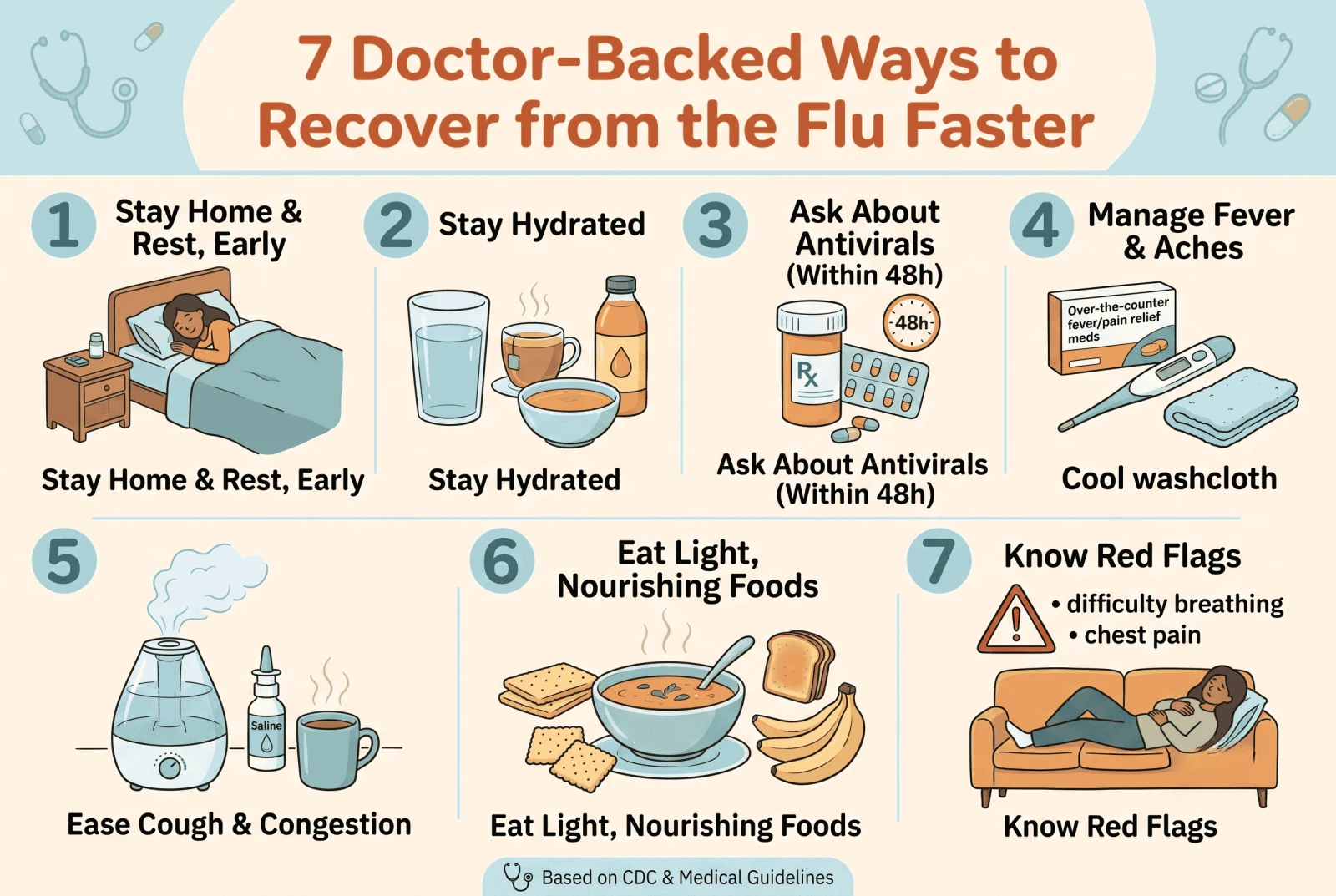 Ways to Recover
7 Ways to Recover From the Flu Faster, According to Doctors
The flu is not a "bad cold." The CDC estimates the 2024–2025 season caused 51 million illnesses, 23 million medical visits, 710,000 hospitalizations and 45,000 deaths in the United States alone.
Medically reviewed by Dr. Karl E. Latortue, MD
Read Article