A Screening ChecklistBy Kel Healthcare Medical Team
Preventive Care Guidelines by Age: A Screening Checklist
Preventive care isn't one-size-fits-all; what makes sense to screen for in your 20s looks very different from what matters in your 50s or 60s. Following preventive care guidelines by age helps make.

Introduction
Preventive care isn't one-size-fits-all; what makes sense to screen for in your 20s looks very different from what matters in your 50s or 60s. Following preventive care guidelines by age helps make sure you're getting the right tests at the right time, rather than either missing something important or over-testing unnecessarily.
Screening recommendations are generally based on age, sex, and individual risk factors, and they're updated periodically as medical research evolves. Having a general sense of what to expect at each life stage makes it much easier to have informed conversations with your provider.
In this guide, we'll walk through a practical health screening checklist by decade, break down a general cancer screening age chart, and help you understand how to build a preventive care plan that actually fits you.

Why Preventive Care Guidelines by Age Matter
Preventive care guidelines by age exist because health risks shift as we get older. Following age-appropriate screening helps:
- Catch conditions in earlier, more treatable stages
- Avoid unnecessary testing for risks that aren't yet relevant to your age group
- Give your provider a consistent baseline to track changes over time
- Support informed, personalized conversations about your specific risk factors
These guidelines are general starting points; your personal or family history may shift the right timeline for you specifically.
Health Screening Checklist by Decade
Here's a general health screening checklist organized by common age ranges. Always confirm specifics with your provider, since individual risk factors can change these recommendations.
Screenings in Your 20s and 30s
- Blood pressure checks at routine visits
- Cholesterol screening, typically starting in your 20s and repeated periodically
- Cervical cancer screening (Pap smear), typically starting around age 21
- Routine dental and vision checkups
- STI screening based on individual risk factors
Screenings in Your 40s
- Continued blood pressure and cholesterol monitoring
- Diabetes screening, often starting around this decade depending on risk factors
- Mammograms, often beginning between ages 40–50 depending on guidelines and personal risk
- Skin checks for unusual moles or changes
Screenings in Your 50s
- Colorectal cancer screening, typically starting around age 45–50
- Continued mammograms for women
- Prostate cancer screening discussion for men, typically starting around this decade
- Lung cancer screening discussion for individuals with a significant smoking history
Screenings in Your 60s and Beyond
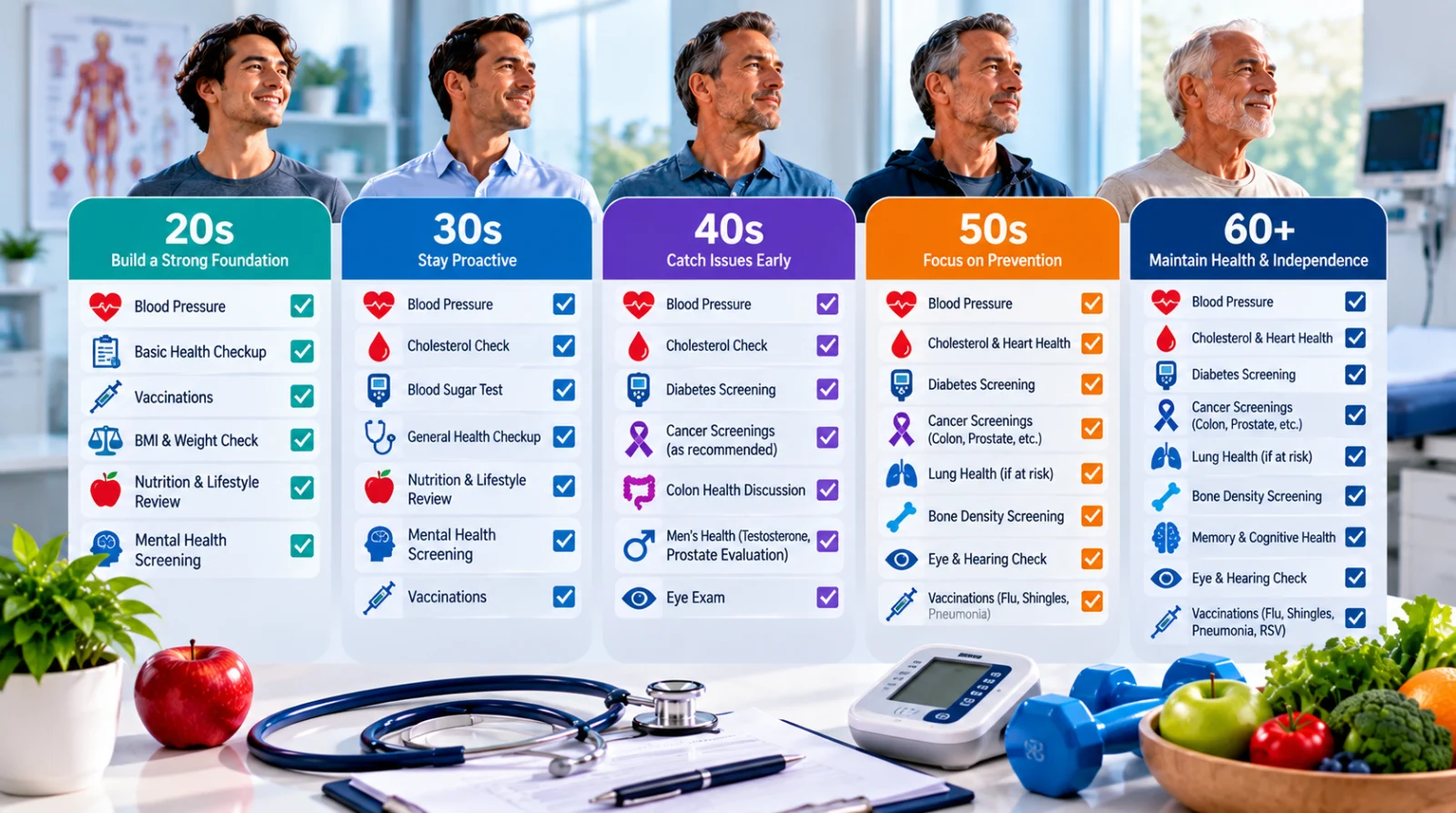
- Bone density screening, especially for women
- Continued cancer screenings as recommended by your provider
- Vision and hearing checks, more frequently as needed
- Cognitive health check-ins during routine visits
Cancer Screening Age Chart: What to Know
A general cancer screening age chart typically includes:
- Cervical cancer: Starting around age 21
- Breast cancer: Often starting between ages 40–50, depending on guidelines and risk
- Colorectal cancer: Typically starting around age 45–50
- Prostate cancer: Discussion typically starting around age 50, or earlier with certain risk factors
- Lung cancer: Screening discussion for those with a significant smoking history, typically starting around age 50
These are general starting points, and exact recommendations can vary by organization and individual risk factors, so it's worth confirming specifics with your provider.
Preventive Care Guidelines by Age for Men vs Women
While many guidelines overlap, some preventive care guidelines by age differ by sex:
- Women typically have earlier and more frequent screening related to cervical and breast cancer, along with bone density screening later in life
- Men typically have prostate cancer screening discussions starting in their 50s, or earlier with specific risk factors
- Both sexes share overlapping guidelines for cardiovascular, diabetes, and general cancer screenings like colorectal cancer
How Often You Should Repeat Key Screenings
Screening frequency varies by test and individual risk, but general patterns include:
- Blood pressure: Checked at most routine visits
- Cholesterol: Typically every few years, more often with risk factors
- Cancer screenings: Vary widely by type, ranging from annual to every several years
- Bone density: Typically repeated every couple of years once screening begins
Your provider can confirm the right interval for your specific screenings based on prior results and risk factors.
Building Your Own Preventive Care Plan
To build a preventive care plan that fits you:
- Start with your age-based general guidelines as a baseline
- Factor in your personal and family health history
- Discuss any specific risk factors with your provider, such as smoking history or genetic predispositions
- Revisit your plan periodically, since guidelines and personal risk factors can change over time
Conclusion
Following preventive care guidelines by age takes the guesswork out of knowing which screenings matter most at each stage of life. Whether you're just starting cholesterol checks in your 20s or navigating a full cancer screening age chart in your 50s and beyond, having a general roadmap makes it easier to stay proactive about your health.
Use this health screening checklist as a starting point, and talk to your provider about building a preventive care plan tailored to your specific age, sex, and risk factors.
Frequently Asked Questions
More from our blog
 What's Actually in the Bag
IV Vitamin & Mineral Infusions: What's Actually in the Bag?
IV vitamin bags have become a familiar sight at wellness clinics, but most people have never actually seen what's inside one or understood what each ingredient is doing. If you've ever wondered.
Medically reviewed by Kel Healthcare Medical Team
Read Article Aging Parents
: 5 Signs They Need a Geriatric Care Check-In
Watching a parent age can bring up a mix of emotions: pride in their independence, alongside quiet worry about changes you've started to notice. The tricky part is that early geriatric care signs.
Medically reviewed by Kel Healthcare Medical Team
Read Article Disease Management Needs
Why Chronic Disease Management Needs More Than a Yearly Visit
For many patients, an annual checkup feels like enough a single yearly appointment to confirm everything is still on track. But for anyone living with a chronic condition, that single visit is only.
Medically reviewed by Kel Healthcare Medical Team
Read Article