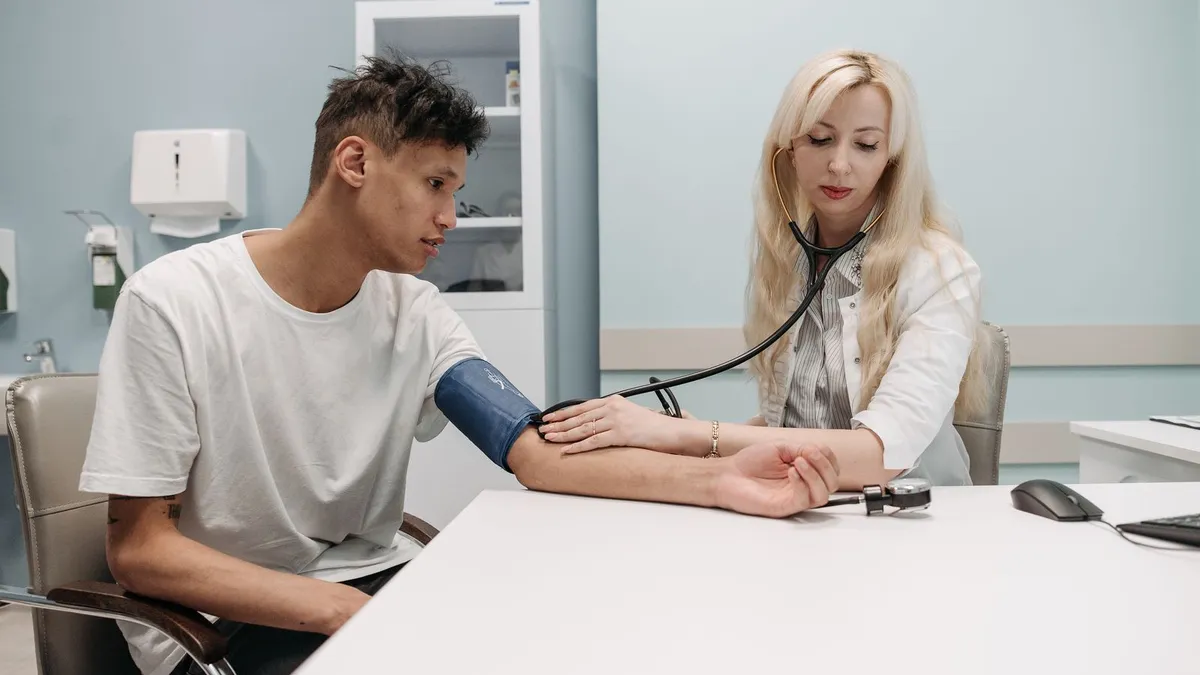
“The provider took the time to listen to my concerns and explain everything clearly.”
Manuela Gabrielle
Google review, Brooklyn clinic, 2026
Challenge
Clinicians know what a rushed explanation feels like from the other side of the desk: a dense paragraph about medication timing, a lab value with no context, a plan that sounds complete in the room and blurry in the car park.
Solution
KEL Healthcare Medical Services designs its visits around explanation. Its stated approach is care guided by current research, with results explained in plain language, and unhurried appointments where patients' questions and priorities shape every decision.
Results
Ritendra Gour's review is brief, but it names three things clinicians work to deliver: time, listening and clarity. At the Brooklyn clinic, the Google listing shows 4.9 out of 5, though from a small base of 10 reviews. Another Brooklyn patient called the primary care doctor "amazing" and described the staff as kind and welcoming.
Most patients are handed more than they can use
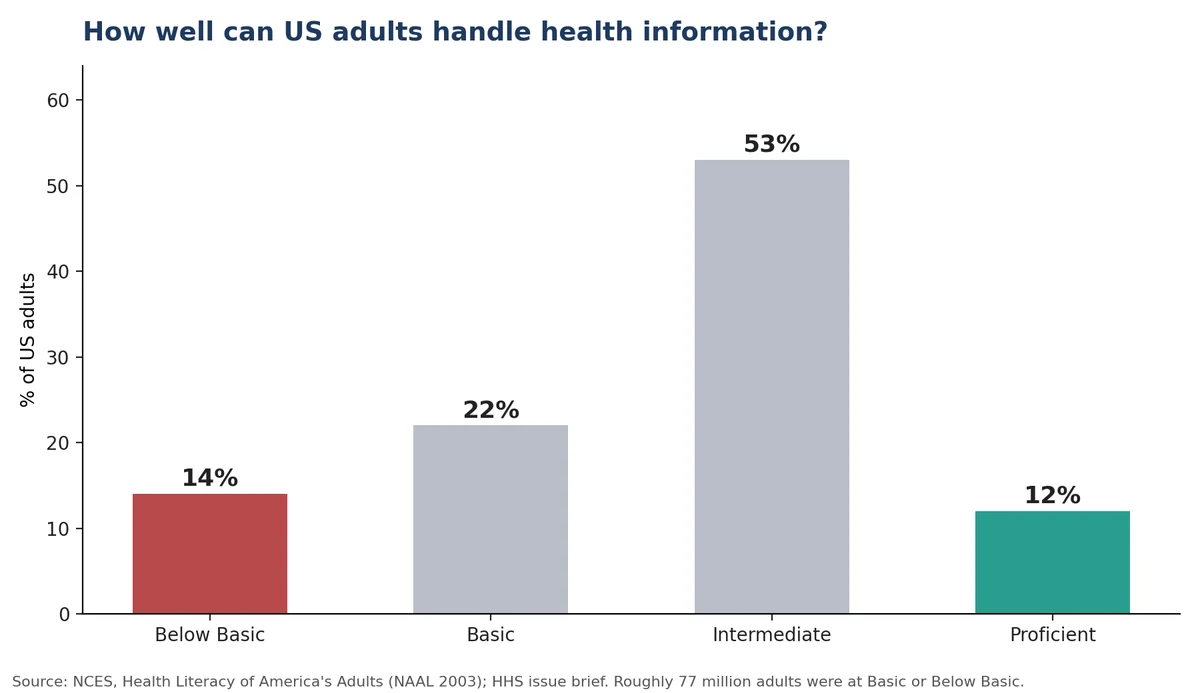
The numbers explain why. The US national assessment of health literacy, the capacity to obtain, process and understand basic health information, found that only 12 percent of adults were proficient. Another 53 percent were at an intermediate level, 22 percent at a basic level and 14 percent below basic. In total, roughly 77 million adults had basic or below basic skills.
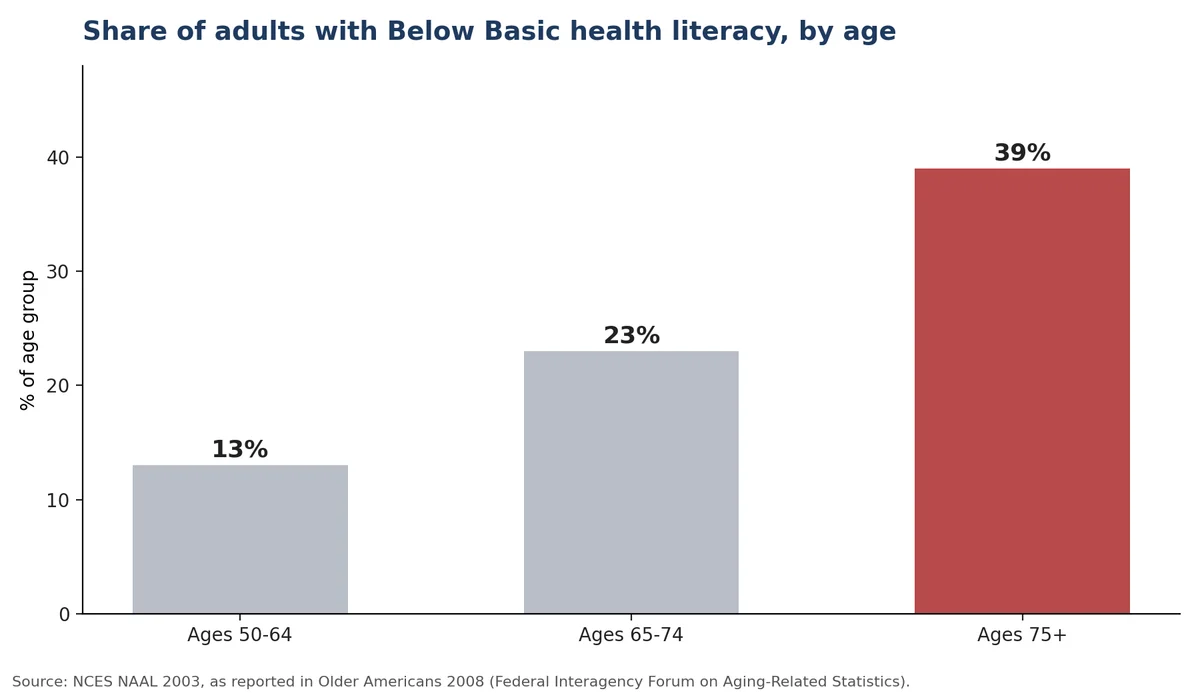
The gap widens with age. Among adults 50 to 64, 13 percent were below basic. That rose to 23 percent for ages 65 to 74 and 39 percent for those 75 and older. These are the patients most likely to be managing several conditions and several medications at once.
The assessment dates from 2003, and later literacy surveys suggest skills have changed little. It remains the standard national benchmark. The takeaway for a practice is plain: a good plan that is not understood does not work.
Explanation built into the visit
The services reinforce that. Comprehensive health assessments produce a personalized report. Chronic disease management sets measurable goals for conditions such as diabetes and hypertension. Geriatric care includes medication review, fall-risk assessment and caregiver coordination, which matters for the older patients most at risk of confusion.
On-site laboratory testing helps too. At the Woodside flagship, patients can complete an assessment, have bloodwork drawn and discuss results without a second trip. Plans are reviewed and adjusted over time, and scheduled follow-ups let the team check what the patient understood the first time.
Results
At Woodside, a patient described the staff as courteous and professional. Across the practice, KEL holds a 4.9 rating from more than 486 Google reviews and reports 98 percent patient satisfaction across more than 25,000 patients over 16-plus years.
A clinician's take on clear explanation
Explaining well is a clinical skill, not a courtesy. It means choosing plain words, giving the most important instruction first and checking that the patient can say it back. It takes seconds when done at the start and far longer when repaired later, after a missed dose or a skipped follow-up.
Patients rarely describe this in technical terms. They write that the provider listened and explained clearly. That is the same thing, seen from the other side. A practice where patients say this consistently is one where plans are more likely to be followed, questions are more likely to be asked and small problems are more likely to be caught early.
What patients can take from this
Before your visit, write down your questions and bring your medication list. During it, ask your clinician to explain the plan in plain words, and say it back in your own words to confirm you understood. If something is unclear, ask again. A good clinician will welcome it.
KEL welcomes walk-ins and accepts most major plans, including Aetna, Cigna, UnitedHealthcare, Healthfirst, Fidelis Care, Medicare and Medicaid.