Same-Day Acute CareBy Kel Healthcare Team
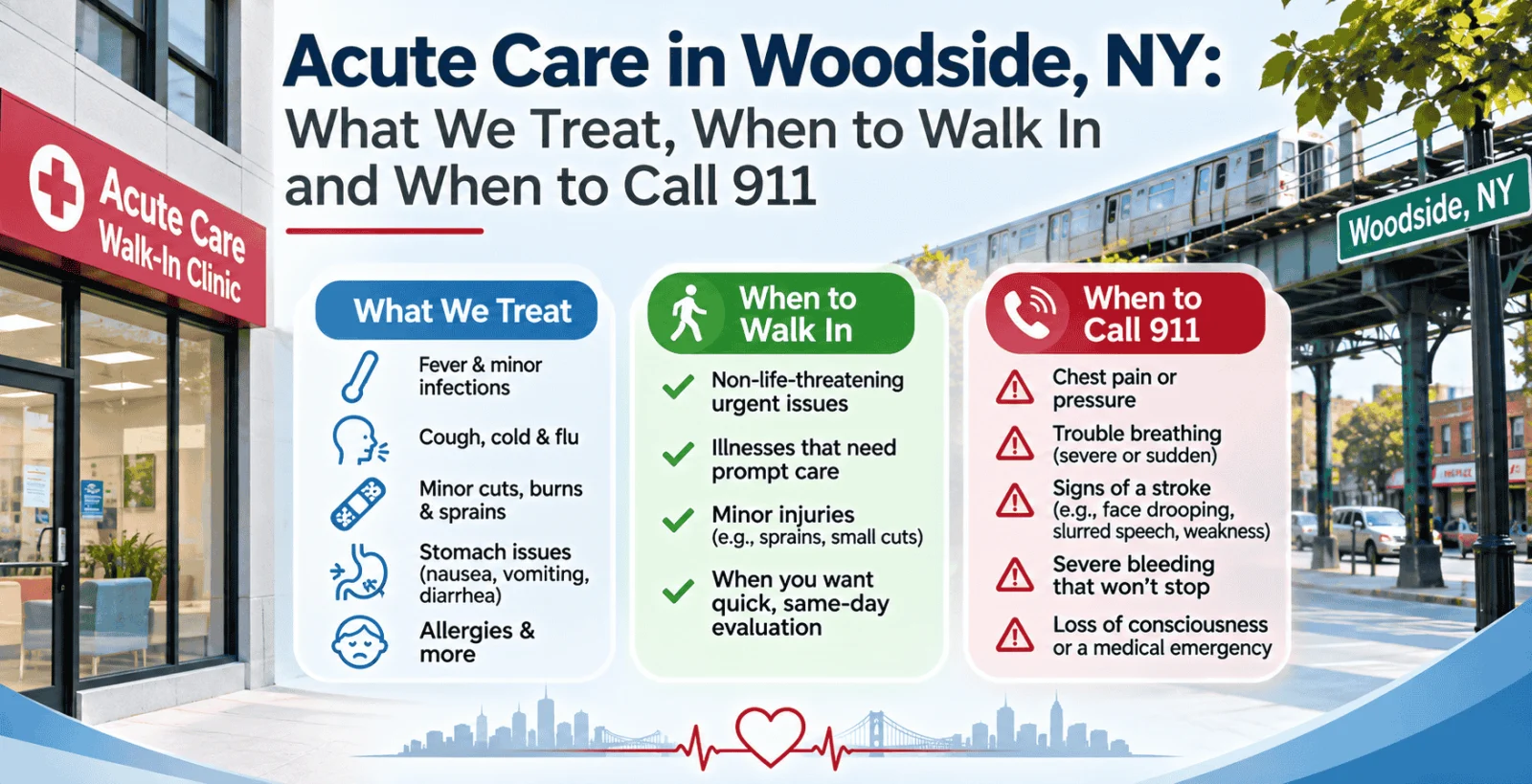
Acute Care in Woodside, NY: What We Treat, When to Walk In and When to Call 911
A practical guide to acute care in Woodside, NY: which illnesses and injuries KEL Healthcare treats the same day, how to choose between a walk-in, a booked visit and 911, and how to get to the clinic on Roosevelt Avenue.
Introduction
A sore throat that started this morning, an ankle twisted on the stairs at the 61st Street station, a fever that will not break: none of these is an emergency, but none of them fits neatly into a calendar either. In Woodside, acute care exists for exactly this gap, the space between "I can wait for my regular appointment" and "I need the emergency room."
At KEL Healthcare's Woodside clinic at 6315 Roosevelt Avenue, acute care means same-day evaluation for non-life-threatening illnesses and injuries. This guide explains what that covers, how to decide between walking in, booking a visit and calling 911, and what to know before you come.
What Acute Care Means (and What It Does Not)
Acute care treats sudden, short-term problems: an infection that came on over a day or two, a minor injury, a flare of symptoms you have not had before. It is not a replacement for a primary care doctor, who looks after your long-term health, and it is not an emergency room. If you want to compare the three options in more depth, our guides to ER vs. urgent care and primary care vs. urgent care in Woodside walk through the differences.
KEL Healthcare lists these as common reasons for an acute care visit:
- Colds, flu and other viral infections
- Sore throat, cough and sinus infections
- Ear infections and mild fevers
- Minor cuts, scrapes and wounds
- Sprains, strains and minor musculoskeletal injuries
Not sure whether your symptoms are a cold, the flu or something else? Our article on when to seek acute care for cold, flu or something else helps you sort it out, and our guides to urinary tract infection symptoms and sports injuries cover two other common reasons people walk in.

Walk In, Book a Visit or Call 911? A Quick Decision Guide
When you feel unwell, a simple rule helps: ask how quickly the problem could become dangerous. The table below is a general guide, not a diagnosis. If you are unsure, call the clinic or, if anything feels severe, call 911.
| What is happening | Usual best next step |
|---|---|
| Sore throat, cough, congestion or a mild fever for a day or two | Acute care visit, same day |
| Twisted ankle or wrist you can still move; a minor cut that stops bleeding with pressure | Acute care visit |
| Burning with urination, new ear pain or a sinus infection that is not improving | Acute care visit |
| Medication refills, blood pressure or diabetes follow-up, long-term symptoms | Primary care or chronic disease management visit |
| Chest pressure, trouble breathing, signs of stroke, fainting, bleeding that will not stop | Call 911 |
| Swelling of the lips or tongue, or trouble breathing after an allergic exposure | Call 911 |
Emergency Warning Signs: Call 911, Do Not Drive Yourself
Acute care is for problems that are not life-threatening. Some symptoms are different. The CDC lists heart attack warning signs such as chest tightness or pressure, lightheadedness with a cold sweat, discomfort in the jaw, neck, back, arms or shoulders, and shortness of breath. It also describes the signs of a stroke: sudden weakness on one side, trouble speaking or seeing, sudden confusion or an unexplained severe headache. In either case, call 911 right away rather than driving to a clinic.
Serious allergic reactions also belong in the emergency category. If you are unsure where an allergy fits, read allergic reactions: when acute care is enough and when to call 911.
What to Expect at a Same-Day Visit
Every visit is different, but most follow the same shape:
- Check in with your photo ID and insurance card, and tell the front desk what brought you in.
- A clinician asks about your symptoms, how long they have lasted, your medical history and the medicines you take.
- You are examined, and on-site testing may be used when it helps clarify the cause. Ask which tests are available on the day you visit.
- You leave with a plan: treatment, home-care instructions, signs that mean you should come back or go to the ER, and any follow-up or referral you need.
Bring a list of your medications and supplements, any allergies, and the name of your regular doctor if you have one so the visit can be shared with them.
Getting to the Woodside Clinic
The clinic is at 6315 Roosevelt Avenue, Woodside, NY 11377, and is easy to reach without a car:
- Subway: the 7 train stops at 61st Street–Woodside, about two blocks away.
- LIRR: Woodside station is roughly a five-minute walk.
- Bus: the Q32, Q60 and Q70 (LaGuardia Link) stop on Roosevelt Avenue.
- Driving: metered street parking is available on Roosevelt Avenue, and a paid garage is about two blocks away on 61st Street.
- Access: the entrance is step-free and there is elevator access and an accessible restroom on the same floor.
The clinic's current listed hours are Tuesday, Thursday and Friday from 11 AM to 7 PM, with walk-ins welcome. Because schedules can change, call (718) 874-3173 before you head over to confirm same-day availability, or book ahead to shorten your wait. Staff speak English, Spanish and Twi, and the clinic accepts most major insurance plans, Medicare and Medicaid managed care. Bring your insurance card so coverage can be verified. Many patients come from nearby Sunnyside, Jackson Heights, Elmhurst, Maspeth, Long Island City and Astoria. You can find full details on our Woodside location page.
After the Sick Visit: When It Becomes a Primary Care Question
A single illness is usually just that. But repeated sinus infections, a blood pressure reading that is higher than expected, or symptoms that keep returning are worth following up with a primary care doctor. If you do not have one, our guide to choosing a medical center in Woodside explains what to look for, and our article on where to get an EKG in Woodside is helpful if your symptoms involve your heart. You can also read about same-day acute care now available in Woodside.
Conclusion
Acute care in Woodside is about getting the right level of care at the right time. For a cold, a sore throat, a sprain or a minor cut, a same-day visit can save you hours in an emergency waiting room. For chest pain, trouble breathing or stroke symptoms, call 911. When in doubt, call the clinic and ask. To be seen, book an appointment or walk in to our Woodside location.
This article is general health information and is not a substitute for medical advice, diagnosis or treatment. If you think you are having a medical emergency, call 911.
Frequently Asked Questions
More from our blog
 Preventive care
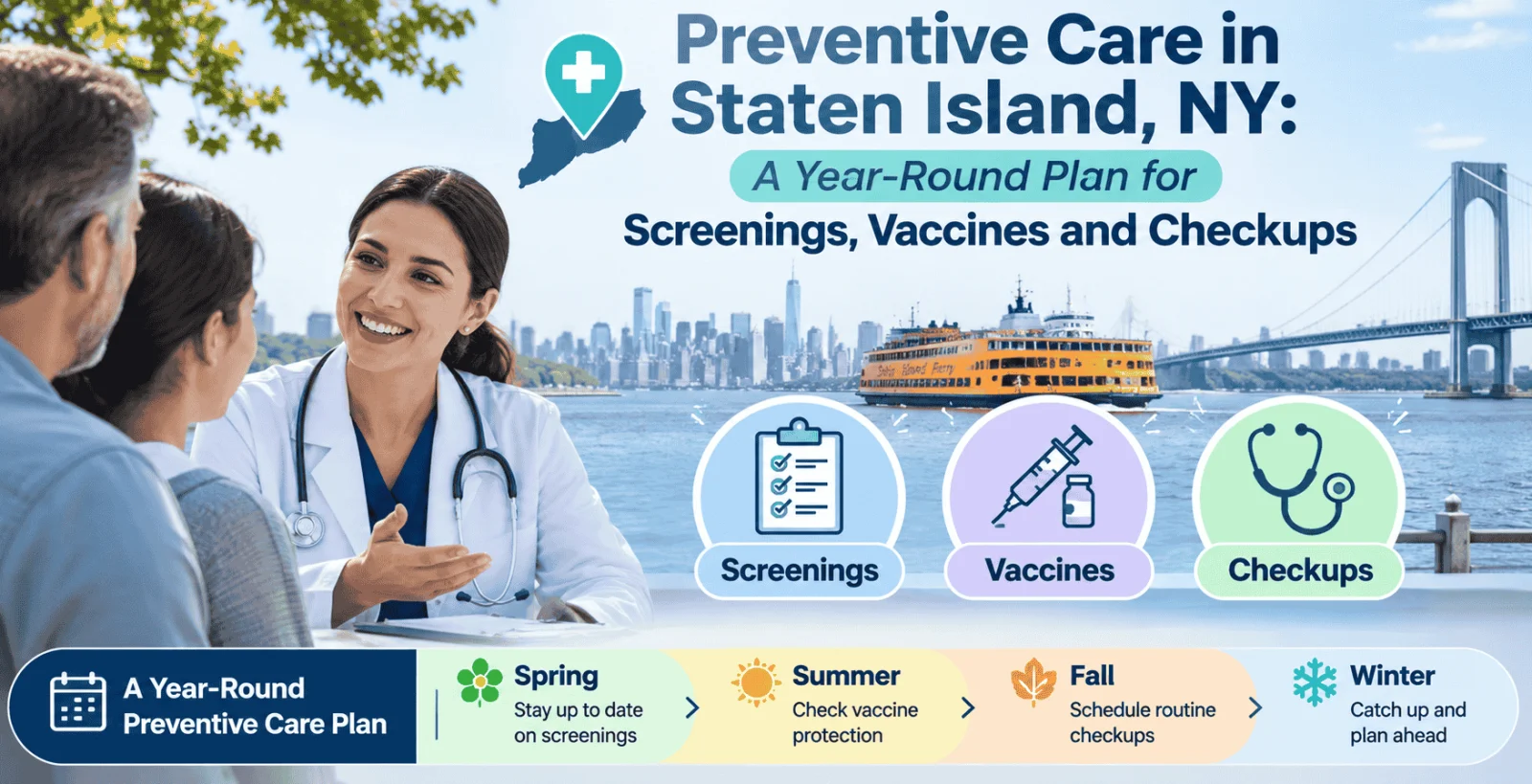
Preventive Care in Staten Island, NY: A Year-Round Plan for Screenings, Vaccines and Checkups
Preventive care works best on a schedule. This Staten Island guide lays out a year-round plan for checkups, screenings and vaccines, what to bring to your visit, and how to reach KEL Healthcare in Dongan Hills.
Medically reviewed by Dr. Karl E. Latortue, MD
Read Article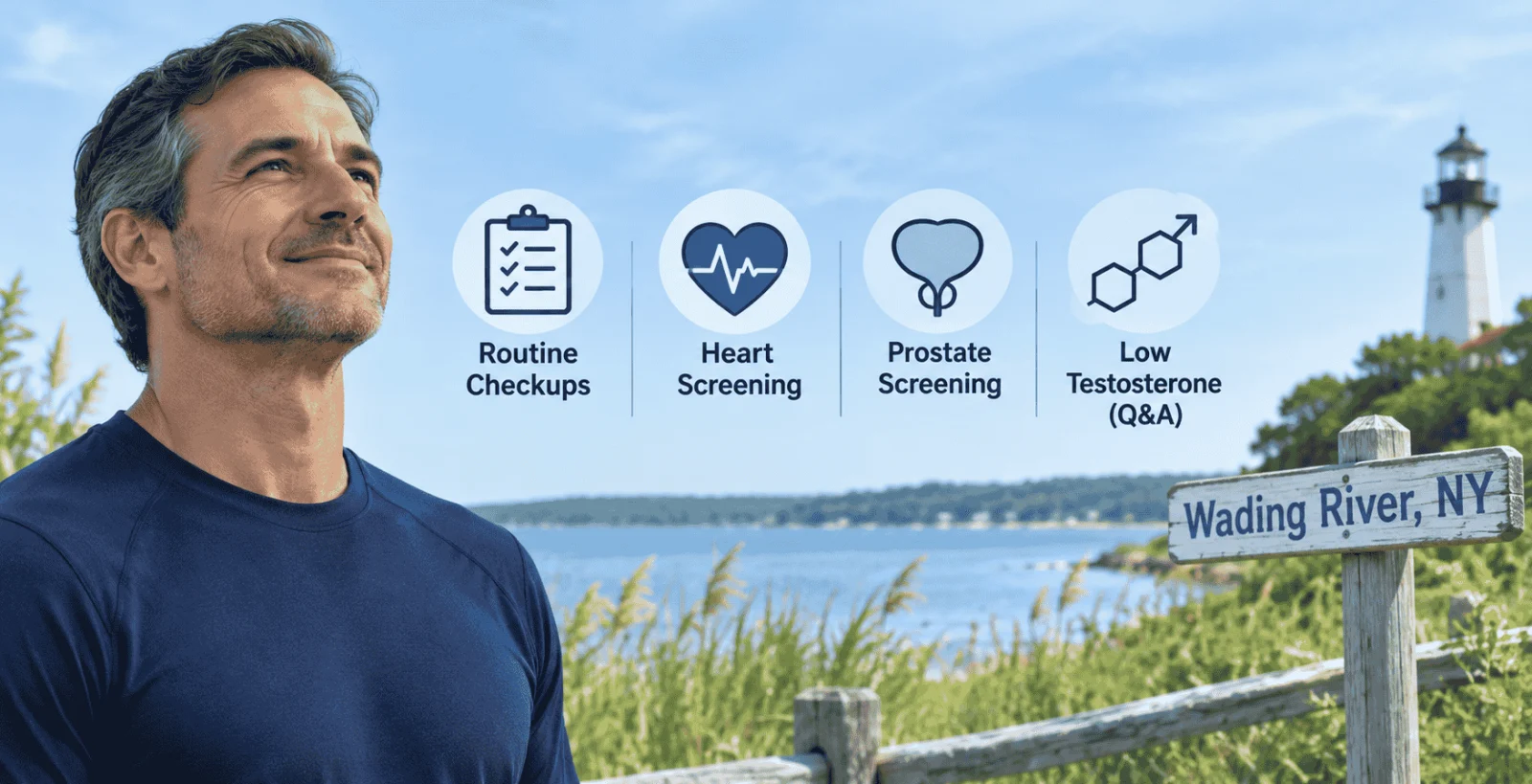 Men's Health
 in Wading River, NY: Checkups, Heart and Prostate Screening, and Low Testosterone Questions
A practical men's health guide for Wading River, NY: what a checkup includes, the heart numbers to know, the American Cancer Society's updated prostate screening guideline, low testosterone questions, and how to reach KEL Healthcare.
Medically reviewed by Dr. Karl E. Latortue, MD
Read Article Same-Day Acute Care
How to Get Rid of a Sore Throat Fast: Doctor-Approved Tips for Same-Day Relief
Wondering how to get rid of a sore throat fast? Learn which sore throat remedies work, what to drink, when to see a doctor, and how to get same-day care in New York.
Medically reviewed by Dr. Karl E. Latortue, MD
Read Article