Preventive careBy Kel Healthcare Team
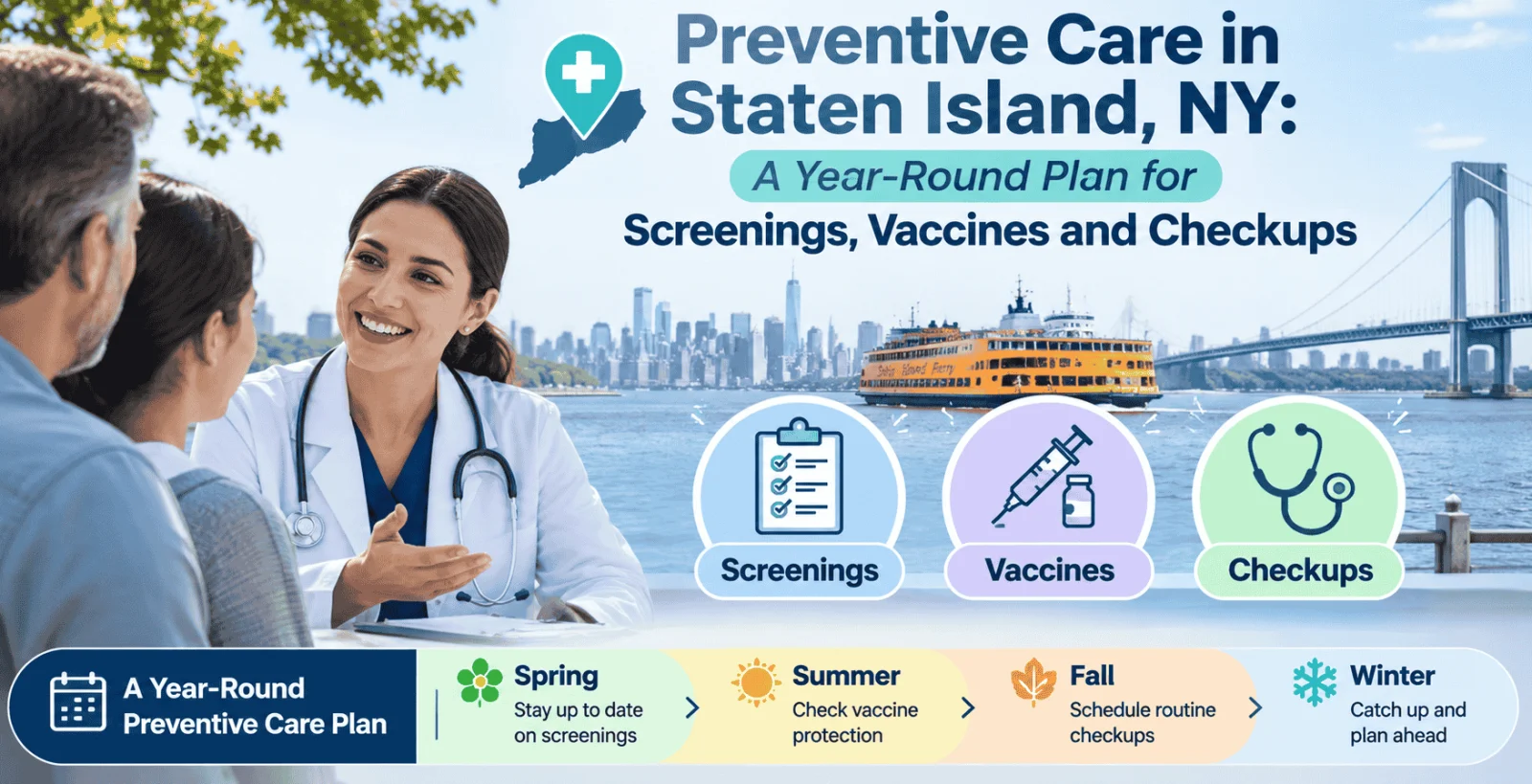
Preventive Care in Staten Island, NY: A Year-Round Plan for Screenings, Vaccines and Checkups
Preventive care works best on a schedule. This Staten Island guide lays out a year-round plan for checkups, screenings and vaccines, what to bring to your visit, and how to reach KEL Healthcare in Dongan Hills.
Introduction
Most serious health problems do not start with a crisis. High blood pressure, high cholesterol, early diabetes and some cancers can build quietly for years before they cause symptoms, which is why doctors lean so heavily on screening: finding something early, when it is easier to manage. The challenge for most of us is not knowing why, it is remembering what to schedule and when.
This guide turns preventive care into a simple year-round plan for Staten Island residents, covering checkups, screenings and vaccines, what to bring to your appointment, and how to reach KEL Healthcare's clinic at 2052 Richmond Road in Dongan Hills.
What Preventive Care Actually Includes
Preventive care means care for people who are not currently sick. At KEL Healthcare it brings together routine checks, screenings, vaccines and a personal risk review:
- Blood pressure, cholesterol and blood sugar checks, including diabetes screening
- Cancer screenings that are appropriate for your age and sex
- Bone density scans, plus vision and hearing checks when needed
- Vaccines such as the annual flu shot, tetanus boosters and shingles vaccine
- A risk assessment and a personalized screening schedule built around you
Some screenings are done in the office while others may be arranged through a referral, so ask your provider how each one will be handled. Our guides to preventive care guidelines by age and health screenings and checkups in Staten Island go deeper on individual tests.
A Year-Round Preventive Care Calendar
Spreading preventive tasks across the year keeps them from piling up. Use this calendar as a starting point and adjust it with your provider.
| Season | What to schedule |
|---|---|
| Fall | Flu vaccine; review your vaccine record for tetanus, shingles and other adult vaccines |
| Winter | Book your annual checkup early in the plan year; ask which bloodwork is due (cholesterol, blood sugar and others) |
| Spring | Age-based screenings that are due; follow up on any result from your checkup |
| Summer | School and camp physicals for children; vision, hearing or bone density checks if recommended |
Many insurance plans, including Medicare and Medicaid, typically cover preventive visits at little or no cost to you. Coverage depends on your plan, so confirm with your insurer or ask the front desk to verify before your visit.

Screening Basics by Age Group
There is no single schedule that fits everyone, because your age, family history and health conditions all change what is recommended. These are general starting points:
| Age group | Common focus |
|---|---|
| 20s and 30s | Baseline bloodwork, blood pressure checks, vision screening, vaccines kept up to date |
| 40s | Cholesterol and blood sugar monitoring; breast cancer screening discussions for women; colorectal cancer screening generally begins at 45 |
| 50s and 60s | Continued colorectal screening, shingles vaccine from age 50, prostate screening discussions for men, lung cancer screening for some current or former heavy smokers |
| 65 and older | Bone density scans, vaccine review, fall and medication safety review |
For the published national recommendations, see the U.S. Preventive Services Task Force's A and B recommendations, the American Cancer Society's prevention and early detection guidelines and the CDC's adult immunization schedule by age. Guidelines are updated over time, so your provider can confirm what applies to you today. Your family history matters too; see how family history should shape your screening schedule.
Vaccines Adults Often Miss
Vaccines are not just for children. Adults need a yearly flu shot, a tetanus booster at recommended intervals and, from a certain age, shingles protection, and some conditions add further recommendations. Many adults are simply unsure what they have had. Bring any records you have, and read the adult vaccination schedule and vaccines for adults: the preventive care schedule most people miss before you come.
How to Prepare for Your Preventive Visit
A little preparation makes a checkup far more useful:
- Photo ID and insurance card
- A list of your medications, vitamins and supplements
- Vaccine records, if you have them
- Your family health history, especially heart disease, diabetes and cancers
- Questions or symptoms you have been meaning to mention, even small ones
- Results from recent tests or visits elsewhere
If bloodwork is planned, ask whether you need to fast. Our guide to which blood tests to get at your annual physical explains what each test measures. If this is your first visit, what to expect at your first primary care visit in Staten Island walks through it step by step.
Getting to the Staten Island Clinic
KEL Healthcare's Staten Island clinic is at 2052 Richmond Road, Suite D, in Dongan Hills (NY 10306). The suite is on the ground floor with a step-free entrance from the parking area.
- Rail: take the Staten Island Railway to Dongan Hills, then walk a short distance up Richmond Road.
- Bus: the S74 and S76 run along Richmond Road, and the S57 connects from New Dorp and Grasmere.
- Driving: there is on-site patient parking, plus street parking on Richmond Road and nearby side streets.
- Hours: listed as Monday, Wednesday and Thursday, 9 AM to 4 PM; walk-ins are welcome. Call (929) 491-4589 to confirm before you visit.
The clinic serves Dongan Hills, New Dorp, Todt Hill, Great Kills, Grant City and Grasmere and accepts most major insurance plans. See our Staten Island location page for details.
When a Screening Finds Something
The point of screening is to find problems early, and sometimes it does. If a result is abnormal, it is a reason to follow up, not a reason to panic. A screening that uncovers a new diagnosis can be handed to KEL Healthcare's chronic disease management team, and lifestyle counseling can help with the daily habits that support your numbers. If you need convincing that prevention is worth the time, read the cost of skipping preventive care: what the research shows.
Conclusion
Preventive care is simple in theory and easy to put off in practice. A calendar, a short list of questions and one appointment can set up the rest of your year. To get started in Staten Island, book an appointment or walk in, and ask your provider to build a personalized screening schedule.
This article is general health information and is not a substitute for medical advice, diagnosis or treatment. Talk to your clinician about which screenings and vaccines are right for you.
Frequently Asked Questions
More from our blog
 Men's Health
 in Wading River, NY: Checkups, Heart and Prostate Screening, and Low Testosterone Questions
A practical men's health guide for Wading River, NY: what a checkup includes, the heart numbers to know, the American Cancer Society's updated prostate screening guideline, low testosterone questions, and how to reach KEL Healthcare.
Medically reviewed by Dr. Karl E. Latortue, MD
Read Article Same-Day Acute Care
How to Get Rid of a Sore Throat Fast: Doctor-Approved Tips for Same-Day Relief
Wondering how to get rid of a sore throat fast? Learn which sore throat remedies work, what to drink, when to see a doctor, and how to get same-day care in New York.
Medically reviewed by Dr. Karl E. Latortue, MD
Read Article Medical Referral
 in Brooklyn, NY: How to Get to a Specialist Without the Runaround
Told you need a specialist? Learn how a medical referral works in Brooklyn, NY, what to ask, and how KEL Healthcare's Crown Heights clinic coordinates the process.
Medically reviewed by Dr. Karl E. Latortue, MD
Read Article